Okay, I am not your average video game reviewer. Mostly because I suck at video games. It's my total lack of hand-eye coordination and my low frustration-threshold that does it. So what I am, is a video game spectator.
But there's only one game that I've ever asked someone to play just so I can watch. It's called "Elder Scrolls IV: Oblivion." And I want people who don't play video games to know what game designers are capable of, these days.
It was this game that actually made us buy an Xbox. My husband had played "Elder Scrolls III" and described it to me as amazing. In particular, he was impressed with the amount of freedom you had. You could walk anywhere you wanted, talk to anyone you wanted, do whatever you wanted, accept a quest, or not, betray your allies, or not. He spent uncountable hours on it, and was willing to lay out $400 for a new video game system in part to be able play the new game, which is even better than the last.
But how can a video game be so entertaining -- so entrancing -- even for a spectator?
It can tell a thousand different stories, each with unique characters and moral dilemmas and particular settings, within its world. It can be visually breathtaking, down to the smallest architectural and botanical details (in this game, you can pick the flowers, or even the weeds.) It can be broad in scope and yet subtle -- six or seven different races sharing dozens of very different cities and villages, all threatened by one supernatural danger, but all facing more immediate problems.
One's character's daughter has been kidnapped by cultists. Another's pets have been killed by an angry neighbor. One character, adopted, wants to know who his real father is. Another is the son of an important official, and wants nothing more than to escape her well-meant protection. One man is going to lose his farm. A woman can't pay off her dead husband's debts. Members of a guild find themselves out of work, and are stirring up trouble. Another group is running a protection racket. There are corrupt imperial guards to catch, and sticky-fingered servants.
There are hundreds if not thousands of stories like this, people who will tell you their problems. You can help all of these people, or not. You can play through the game as a thief, an assassin, a wizard-scholar, or a fighter-for-hire, or none of the above, or more than one. You may end up a vampire, if you fail to take the proper precautions, but being addicted to blood doesn't automatically make you evil -- one of your main allies turns out to be a vampire. This game is rich in shades of gray.
It was last summer that I watched Ken play through most of this, but I still remember characters' names, and stories. Once you've helped them, they don't go away. You will still see them, especially if they live in the town where you end up buying a house. Helping them makes them like you better, and they may give you better deals, if they're merchants or skilled laborers. They'll remember, and thank you. But if you let them down, you feel so bad... To have to tell someone his sons are both dead? It won't interfere with your ability to "beat the game," but you have to reload, and try harder, just to avoid the guilt. Even so, you can't save everyone. The game won't let you.
The main quest has religious themes. It's a made-up religion, to be sure, but the only man who can save the world (it's not you) from the supernatural threat is a priest. He is fallible, full of self-doubt, a little cynical, a little afraid -- one of the best of the many well-drawn characters. And you, helping him, are made to feel the same doubts. The "evil" characters ask you provocative questions. Are you sure you know what "evil" is? Are you sure you're any better than them? Are you sure there's any point in all of this? They reveal information about the world of the game and the gods of its religion that makes you wonder. But you fight on anyway.
After about 130 hours of play over a few months (the game tracks this, along with the number of murders, of items and horses stolen, of days and nights passed within the game world, of hours slept and hours waited) my husband finally finished the main quest, and put the game aside.
But recently they released an addendum, supposedly 30% as big as the original game, with all new characters (each with their own problems) and a new main quest.
It begins with a strange door, which you are asked to investigate. It leads to another dimension, and everyone who comes out of it is insane.
This new place looks very different than anywhere in the original game. That landscape had mountains, plains, and costal cities (each with their own types of architecture) connifer forests and cramped stone streets, but this new landscape looks like Louisiana or eastern Texas. Mossy trees dangling vines, marshy ground, lots of mushrooms. The sunsets are more colorful, and the weather rainier. (Yes, this game has sunsets, and weather.)
This is the kingdom of madness, the "Shivering Isles" and if the main game was full of hard moral questions, the dilemmas in this new game are impossible. You cannot get through it without doing things that shake your self-image as video-game "hero."
And this is something only a video game can do. A book, a movie, a play, can make you identify with people who may be making mistakes, who may be doing the wrong thing, but they can't set up these difficult situations and then force you to make the decisions, and then to live with yourself.
I want to give examples from the game so far, but they're spoilers, so I'll put them in white text -- highlight the text below only if you don't plan on playing "Shivering Isles."
The people here here will ask you to hurt others. The very first thing you have to do is kill a monster using its "mother's" tears, in order to enter. You will then meet characters who say things like "My neighbor is annoying. Will you kill him for me?" And once you begin the main quest, your first task is to re-open a sort of prison facility, where uninvited explorers in this realm are either driven mad by torture or killed outright. The decision is unexpectedly put in our hands. And these prisoners are real characters. You eavesdrop on their conversations. They are not "bad guys" who deserve to die. Their only crime is entering the door uninvited -- the same crime you committed. But you can't get out of this one with your hands clean. You're locked in, and can't leave until they're dead or mad. At the end, you're rewarded with a very powerful sword.
Next, the "Madgod" who created this place (he tells you that you are helping him save it from another kind of supernatural threat -- an invasion by the god of order) sends you to his Duchess, who is paranoid, and believes that there is a conspiracy to kill her. You are supposed to torture her subjects, apparently at random, until one of them confesses to being involved. After seeing a few characters fall to their knees and beg you to stop, insisting that they know nothing, the experience becomes disturbing enough that you may want to cheat (as we did), looking up the answer on the internet. Otherwise you will become paranoid yourself. Some of these characters are lying -- you just don't know who.
Next, you are sent to help a Duke, who wants you to enter a certain cave full of monsters and retrieve an item for him. But to get through the enchanted door, you must take a drug... And the drug is addictive. Your character will initially become stronger, but as the effects wear off, you become weaker, less able to defend yourself from the monsters, and eventually, start losing health points as withdrawal pain kicks in. Wait long enough and it's game over, so you have to spend a lot of your time in the cave frantically searching for more of the drug. Eventually, you don't care about anything else, the prizes you'd normally collect, the mission, the monsters. You have to find more of the drug, or none of the rest will matter.
According to Ken, it felt like a real need. And that's something that no book or movie or play could have done. They can't make you frantic, can't make you search, can't make you hurry. They are passive forms of story telling. Video games can take you further outside of your comfort zone, potentially, force you to make decisions. Force you to do things you don't want to. Make you empathize with people who are in similar positions.
That is what video game designers can do these days. They can create works of art both massive and intricate, visually beautiful and emotionally moving and full of surprises, which unfold over hundreds of hours and involve the audience in an unpredented, deeply personal way. "Oblivion" is a masterpiece.
Showing posts with label entertainment. Show all posts
Showing posts with label entertainment. Show all posts
Saturday, April 14, 2007
Tuesday, October 31, 2006
Scary Ideas
Happy Halloween! I've still got the costume I bought and never wore last year -- Natasha, as in "Boris and Natasha," as in "The Rocky and Bullwinkle Show." It has a rubber wig and a tube dress, and really long fake eyelashes, and purple eye shadow, and bright red lipstick. It's scary, all right. If only I had somewhere to wear it...
Girl Hacker has posted a programming schedule for her personal television channel, and it seems like a good meme to steal for a post of my own. Rocky and Bullwinkle will be on it, of course. But mine's got to be much longer, because I really like television, and have watched a lot of it.
7:00a - Breakfast Time
(Wikipedia describes it as "an off-the-cuff morning show with lifestyle segments and 'roving reporters' who visited unique sites across the country each day. This was the network's flagship show and utilized every room of the [New York City] apartment [that fX used to broadcast from]. Hosted by Tom Bergeron, Laurie Hibberd and Bob the Puppet.")
9:00a - Game Shows
(Wheel of Fortune, Family Feud, Love Connection... Whatever. Game shows are good in the morning, a cheerful way to start the day. I'm scheduling three hours of them. Also: Blind Date and Fear Factor count as game shows.)
12:00p - Sports on weekends, or TechTV on Weekdays (These days its "G4TV". But back in the day it was Kate and Leo all day long from a single studio set, making it up as they went along. Obviously I'm not usually home at this time, but if I am, this is just the kind of friendly company and infotainment I'd like to have. Apparentely other people miss it, too. Better than court shows, anyway.)
3:00p - Kids' Shows
(Rocky and Bullwinkle, as promised, and also the Muppets, and You Can't Do that on Television, and Out of Control, and Clarissa Explains it All, and the Tomorrow People, and Spellbinder, and Liberty's Kids, and Danger Mouse and Count Duckula. Two shows a day.)
4:00p - British Comedy
(Monty Python, Red Dwarf, Blackadder, the original Whose Line is it Anyway, Have I Got News For You, etc. I think these are all half hour shows...)
4:30p - The Simpsons
5:00p - Sitcoms
(Roseanne, Dharma and Greg, The King of Queens, Malcolm in the Middle, The Dick Van Dyke Show, the Mary Tyler Moore Show, Scrubs, and Get Smart. Because those are my favorites, not because they have anything at all in common.)
6:00p - Action Adventure
(The Incredible Hulk, MacGuyver, Dr. Who, The Bionic Woman, Star Trek The Original Series, Mission: Impossible, and Alias. Which seems to fit better with these older, more light hearted shows than with the "serious" later shows... I'll schedule some Due South in this slot too.)
7:00p - The Aaron Sorkin / Amy Sherman-Palladino hour
(The West Wing, Sports Night, Studio 60, Gilmore Girls)
8:00p - "Serious" New Shows
(24, Heroes, House, and Jericho, but Jericho'd better get better quick or I'm cancelling it. Maybe fill in with some CSI.)
9:00p - Buffy and Veronica etc.
(Buffy the Vampire Slayer, Angel (yeah, why not?), Firefly, and Veronica Mars. And shortlived Dead Like Me and Wonderfalls. And possibly Joan of Arcadia. I liked the little bit I saw.)
10:00p - The Daily Show
10:30p - M*A*S*H (or maybe sometimes "Moonlighting." I haven't actually seen that at all, but Ken tells me I'd like it.)
11:00p - Svengoolie and Mystery Science Theater 3000.
Overnight - More Sitcoms. Doesn't really matter which ones, but I'd include I Dream of Jeanie, Bewitched, and Mork and Mindy, for starters. And The Wonder Years, even though that's not exactly a sitcom.
Luckily, I'm married to the one person in the world who would actually want to watch this with me.
Girl Hacker has posted a programming schedule for her personal television channel, and it seems like a good meme to steal for a post of my own. Rocky and Bullwinkle will be on it, of course. But mine's got to be much longer, because I really like television, and have watched a lot of it.
7:00a - Breakfast Time
(Wikipedia describes it as "an off-the-cuff morning show with lifestyle segments and 'roving reporters' who visited unique sites across the country each day. This was the network's flagship show and utilized every room of the [New York City] apartment [that fX used to broadcast from]. Hosted by Tom Bergeron, Laurie Hibberd and Bob the Puppet.")
9:00a - Game Shows
(Wheel of Fortune, Family Feud, Love Connection... Whatever. Game shows are good in the morning, a cheerful way to start the day. I'm scheduling three hours of them. Also: Blind Date and Fear Factor count as game shows.)
12:00p - Sports on weekends, or TechTV on Weekdays (These days its "G4TV". But back in the day it was Kate and Leo all day long from a single studio set, making it up as they went along. Obviously I'm not usually home at this time, but if I am, this is just the kind of friendly company and infotainment I'd like to have. Apparentely other people miss it, too. Better than court shows, anyway.)
3:00p - Kids' Shows
(Rocky and Bullwinkle, as promised, and also the Muppets, and You Can't Do that on Television, and Out of Control, and Clarissa Explains it All, and the Tomorrow People, and Spellbinder, and Liberty's Kids, and Danger Mouse and Count Duckula. Two shows a day.)
4:00p - British Comedy
(Monty Python, Red Dwarf, Blackadder, the original Whose Line is it Anyway, Have I Got News For You, etc. I think these are all half hour shows...)
4:30p - The Simpsons
5:00p - Sitcoms
(Roseanne, Dharma and Greg, The King of Queens, Malcolm in the Middle, The Dick Van Dyke Show, the Mary Tyler Moore Show, Scrubs, and Get Smart. Because those are my favorites, not because they have anything at all in common.)
6:00p - Action Adventure
(The Incredible Hulk, MacGuyver, Dr. Who, The Bionic Woman, Star Trek The Original Series, Mission: Impossible, and Alias. Which seems to fit better with these older, more light hearted shows than with the "serious" later shows... I'll schedule some Due South in this slot too.)
7:00p - The Aaron Sorkin / Amy Sherman-Palladino hour
(The West Wing, Sports Night, Studio 60, Gilmore Girls)
8:00p - "Serious" New Shows
(24, Heroes, House, and Jericho, but Jericho'd better get better quick or I'm cancelling it. Maybe fill in with some CSI.)
9:00p - Buffy and Veronica etc.
(Buffy the Vampire Slayer, Angel (yeah, why not?), Firefly, and Veronica Mars. And shortlived Dead Like Me and Wonderfalls. And possibly Joan of Arcadia. I liked the little bit I saw.)
10:00p - The Daily Show
10:30p - M*A*S*H (or maybe sometimes "Moonlighting." I haven't actually seen that at all, but Ken tells me I'd like it.)
11:00p - Svengoolie and Mystery Science Theater 3000.
Overnight - More Sitcoms. Doesn't really matter which ones, but I'd include I Dream of Jeanie, Bewitched, and Mork and Mindy, for starters. And The Wonder Years, even though that's not exactly a sitcom.
Luckily, I'm married to the one person in the world who would actually want to watch this with me.
Monday, September 11, 2006
The Final Frontier
I'm a fan of the space program. Not a hardcore fan, maybe, not a self-made expert like some I've known. But, y'know, I watched Apollo 13 four or five times in theaters and the HBO series "From the Earth to the Moon" and "The Right Stuff" and then I read some of the books that those are based on. And yesterday I picked up We Seven, purporting to be an account of the "most magnificent adventure of modern times, told by the heroes who achieved it" -- the Mercury astronauts.
And then there's all the science fiction dating back to the early days of the space program that I still love. When I bought the Mercury book, I also picked up Stowaway to Mars by John Wyndham. "An international prize of over a million dollars was being offered to the first man to complete an interplanetary journey. Target -- Mars. [...] Dale Curtance of England didn't need the fortune. He was a millionaire. He was an eccentric. But most of all he was an adventurer and he was determined to win. [...] There were going to be many surprises. And they all began with the stowaway aboard Curtance's ship. A stowaway to Mars. A woman."
Who could resist that?
The great part about space travel is that it blurs the line between science fiction and reality. For instance, there is the X Prize Cup, which has already awarded a ten million dollar prize to a spacecraft developed by a billionaire. Now they plan to offer more prizes. And a British billionaire has joined forces with the American one to try to put the prize-winning craft to use.
And NASA really is planning to go to Mars, and back to the moon. The Constellation program borrows ideas from Apollo (and so resembles the science fiction of that era too) for the design of a vehicle versatile enough to handle both, supposedly, and dock with a space station too. Lockheed Martin got the contract. They're hiring in Colorado. My mom sent me an e-mail alert. But I don't really want to build it, so much as fly in it... Maybe I'll stow away.
Realistically, private space tourism is probably is the only way I'm ever going to get any kind of taste of space. Right now it's a little out of my price range, around $20 million to go up aboard a Russian Soyuz and an extra $15 million if you actually want to do a spacewalk. I'm saving up.
There is one other option. You can move to a small country and talk them into buying fighter planes from Russia, and hope the Russians throw a trip in to "sweeten the deal". That's how Malaysia's getting its first astronaut to space. Whoever it is will attempt to make Teh Tarik (pulled tea) in space. This will be a challenge because, normally, it involves pouring "boiling-hot milky tea swiftly and repeatedly from one vessel held high in one hand into another held low, producing a distinctive layer of froth."
If I ever go into space, I'm going to drink my national beverage: Diet Coke. I can think of all kinds of experiments to do with that. Shaking the can, ditching the can altogether, maybe even bringing along some Mentos.
And then there's all the science fiction dating back to the early days of the space program that I still love. When I bought the Mercury book, I also picked up Stowaway to Mars by John Wyndham. "An international prize of over a million dollars was being offered to the first man to complete an interplanetary journey. Target -- Mars. [...] Dale Curtance of England didn't need the fortune. He was a millionaire. He was an eccentric. But most of all he was an adventurer and he was determined to win. [...] There were going to be many surprises. And they all began with the stowaway aboard Curtance's ship. A stowaway to Mars. A woman."
Who could resist that?
The great part about space travel is that it blurs the line between science fiction and reality. For instance, there is the X Prize Cup, which has already awarded a ten million dollar prize to a spacecraft developed by a billionaire. Now they plan to offer more prizes. And a British billionaire has joined forces with the American one to try to put the prize-winning craft to use.
And NASA really is planning to go to Mars, and back to the moon. The Constellation program borrows ideas from Apollo (and so resembles the science fiction of that era too) for the design of a vehicle versatile enough to handle both, supposedly, and dock with a space station too. Lockheed Martin got the contract. They're hiring in Colorado. My mom sent me an e-mail alert. But I don't really want to build it, so much as fly in it... Maybe I'll stow away.
Realistically, private space tourism is probably is the only way I'm ever going to get any kind of taste of space. Right now it's a little out of my price range, around $20 million to go up aboard a Russian Soyuz and an extra $15 million if you actually want to do a spacewalk. I'm saving up.
There is one other option. You can move to a small country and talk them into buying fighter planes from Russia, and hope the Russians throw a trip in to "sweeten the deal". That's how Malaysia's getting its first astronaut to space. Whoever it is will attempt to make Teh Tarik (pulled tea) in space. This will be a challenge because, normally, it involves pouring "boiling-hot milky tea swiftly and repeatedly from one vessel held high in one hand into another held low, producing a distinctive layer of froth."
If I ever go into space, I'm going to drink my national beverage: Diet Coke. I can think of all kinds of experiments to do with that. Shaking the can, ditching the can altogether, maybe even bringing along some Mentos.
Sunday, July 30, 2006
Blue Man Group
A cheerful post to push the last one down the page a bit. Yesterday as an anniversary present, Ken took me to see the Blue Man Group.
I don't want to describe it in too much detail. Part of the fun was realizing how closely "confusion" and "delight" are related. Part of the fun is being constantly surprised.
But before I went I was really curious to know what I was going to see. They were expensive tickets. How could I be sure this was really up my alley?
So the whole time I was there I was trying to think of how to describe it, what I would tell people so that they would know what alley it was up.
When you first enter the lobby (of the Briar St. Theater in Chicago which has hosted the Blue Men every night of the week since 1997) the network of pipes and tubes above your head -- like the intestines of some plastic-and-metal animal -- and the weird lighting, and the wire sculptures, and the surrealist paintings made even more surreal by the insertion of blue men into them, give you the sense of being in line for a theme park ride. It reminded me a bit of the Heineken Experience in Amsterdam, not that I expect that will help anyone else. That was billed as "multimedia experience," which I suppose is what the Blue Man lobby also is. Look out for tubes that seem to be breathing. Or those labelled "chat tubes." Use the bathroom before taking your seat and enjoy the "Blue Man Lobby Bathroom" song. Damn catchy.
When the show started, it was hard to be sure whether it had started at all. I felt like a subject in a psychology experiment. Something about group dynamics and susceptibility to suggestion. The whole crowd was reacting... Started to feel like the call and response parts of church, or when the whole congregation welcomes new parishoners. And yet we were all still waiting for the lights to go down and the curtains to open, at that point.
But when it did really begin, it was with a bang. Literally. The Blue Men are all drummers. That is probably the simplest true description you could give. They don't talk except through the drums (although that doesn't mean there are no words in the show. Just that they don't say them) so they might be called the loudest mimes you've ever seen. But the percussion is not the only thing going on, although it is amazing, and they do have an album. The drumming parts of the performance are also a light show of sorts. The parts in between the drum performances are not without music -- there is another live, three piece band above the stage. They play while the Blue Men do prop comedy or magic or puppet theater or concept art or hilariously surreal improv with victims from the audience. The prop comedy is also surreal. You keep thinking, "where did that come from?" Like Wyle E. Coyote pulling signs from behind his back. Where did he get them?
They keep straight faces, always. Can't crack that blue paint. It makes them seem even more otherworldly. It's like being entertained by aliens -- aliens from the future.
When we first arrived, what I was expecting was something maybe a little like the luau show we went to in Hawaii, which did have lots of drums and dancing and light... And it was like that. If the luau were hosted by aliens. Ken said it reminded him a little of the people who filled the time at his high school variety show between acts, interacting with the audience. If those people were aliens.
When we were actually seated and confused about whether the show had begun or not and I asked him for the last time what to expect, he told me to expect "a party." And that was maybe the best description. Except it was a party without anyone standing apart and feeling awkward. At no time was the audience not involved. Everybody there was having a good time. This is an experience that I wouldn't hestitate to recommend to anyone, of any age, no matter what your tastes -- unless you're an alien from the future, this isn't like anything you've ever seen anyway.
So just to recap, here are the things the Blue Man Group is "just like":
A theme park ride
The Heineken Experience
Church
A rock concert
A mime show
A magic show
A light show
A puppet show
Stand up comedy
Concept art
Wyle E. Coyote cartoons
Aliens from the future
A luau
A variety show continuity act
A party
If any of that sounds like something you would like, you should go see them.
I don't want to describe it in too much detail. Part of the fun was realizing how closely "confusion" and "delight" are related. Part of the fun is being constantly surprised.
But before I went I was really curious to know what I was going to see. They were expensive tickets. How could I be sure this was really up my alley?
So the whole time I was there I was trying to think of how to describe it, what I would tell people so that they would know what alley it was up.
When you first enter the lobby (of the Briar St. Theater in Chicago which has hosted the Blue Men every night of the week since 1997) the network of pipes and tubes above your head -- like the intestines of some plastic-and-metal animal -- and the weird lighting, and the wire sculptures, and the surrealist paintings made even more surreal by the insertion of blue men into them, give you the sense of being in line for a theme park ride. It reminded me a bit of the Heineken Experience in Amsterdam, not that I expect that will help anyone else. That was billed as "multimedia experience," which I suppose is what the Blue Man lobby also is. Look out for tubes that seem to be breathing. Or those labelled "chat tubes." Use the bathroom before taking your seat and enjoy the "Blue Man Lobby Bathroom" song. Damn catchy.
When the show started, it was hard to be sure whether it had started at all. I felt like a subject in a psychology experiment. Something about group dynamics and susceptibility to suggestion. The whole crowd was reacting... Started to feel like the call and response parts of church, or when the whole congregation welcomes new parishoners. And yet we were all still waiting for the lights to go down and the curtains to open, at that point.
But when it did really begin, it was with a bang. Literally. The Blue Men are all drummers. That is probably the simplest true description you could give. They don't talk except through the drums (although that doesn't mean there are no words in the show. Just that they don't say them) so they might be called the loudest mimes you've ever seen. But the percussion is not the only thing going on, although it is amazing, and they do have an album. The drumming parts of the performance are also a light show of sorts. The parts in between the drum performances are not without music -- there is another live, three piece band above the stage. They play while the Blue Men do prop comedy or magic or puppet theater or concept art or hilariously surreal improv with victims from the audience. The prop comedy is also surreal. You keep thinking, "where did that come from?" Like Wyle E. Coyote pulling signs from behind his back. Where did he get them?
They keep straight faces, always. Can't crack that blue paint. It makes them seem even more otherworldly. It's like being entertained by aliens -- aliens from the future.
When we first arrived, what I was expecting was something maybe a little like the luau show we went to in Hawaii, which did have lots of drums and dancing and light... And it was like that. If the luau were hosted by aliens. Ken said it reminded him a little of the people who filled the time at his high school variety show between acts, interacting with the audience. If those people were aliens.
When we were actually seated and confused about whether the show had begun or not and I asked him for the last time what to expect, he told me to expect "a party." And that was maybe the best description. Except it was a party without anyone standing apart and feeling awkward. At no time was the audience not involved. Everybody there was having a good time. This is an experience that I wouldn't hestitate to recommend to anyone, of any age, no matter what your tastes -- unless you're an alien from the future, this isn't like anything you've ever seen anyway.
So just to recap, here are the things the Blue Man Group is "just like":
A theme park ride
The Heineken Experience
Church
A rock concert
A mime show
A magic show
A light show
A puppet show
Stand up comedy
Concept art
Wyle E. Coyote cartoons
Aliens from the future
A luau
A variety show continuity act
A party
If any of that sounds like something you would like, you should go see them.
Wednesday, July 05, 2006
Americana
So much celebrating!
We had a four day weekend -- now I'm looking forward to the coming weekend to recover from it.
Sunday, we gave Simon a tour of Chicago. You know Simon; he comments here sometimes. He'd been for a river tour that morning, and then came up on the El to meet us for Giordano's. You could see from his expression that he'd never had a Chicago style pizza before.
We showed him around the lab, and hiked over to the Metra for a super-swift (compared to the El) ride downtown. Then we all walked down Madison St. to Millenium Park. He seemed as fascinated by the bean and the band shell as everyone else, and we didn't warn him about the faces on the Crown fountain's impolite habit of spitting at people, so the spray took him by surprise. Then we wandered into Taste of Chicago, stayed just long enough to buy drinks and pick our way through the crowd for some country-music star, with a peak at Buckingham fountain and the lake, and made our way back up Michigan Ave. along the Magnificent Mile to the Hancock building, which is much better for going up than the Sears Tower.
Sunday was July 3rd, the day of our local community festival and fireworks. We saw jugglers, stilt walkers, magicians, and tumblers (the Jesse White Tumblers, to be precise, named after their sponsor, the Illinois secretary of state. Their tricks and flips and trampoline launches took them so high into the air that just watching gave us vertigo.) Ken got dogs from a hot dog stand, and I bought a toy that lights up and spins -- which I'm still playing with three days later, and everyone at the lab loved it too. Then the fireworks. What can you say about fireworks, besides "Ooh... Ahh!" They had some kinds we'd never seen before.
July 4th, we went to our neighboring community's parade. Everybody marched in this parade. Here's a sample from the program. (Yes, this parade had a program.)
58 North Suburban Peace Initiative (they were probably one of the chanting groups with "Down with Bush" signs.)
58a Warriors Drum and Bugle Corps
59 FAAM Youth Basketball Program
60 Amnesty International
61 St. Mark's Episcopal Church
62 Illinois Council Against Handguns and Brady Campaign / Million Mom March
63 Circ Estem and the Chicago Youth Circus (they rolled in on giant hamster wheel things, one person on the top, one person in the bottom)
64 Maxwell St. Klezmer band (tied for best music with the Cavaliers Drum and Bugle Corps, number 119.)
65 Women's Club of Evanston
66 Copia Records, Inc (apparently a hip hop label, featuring live rap and some awesome dancers.)
All in all, there were a hundred and twenty-something groups, including late entries like Senator Dick Durbin. Local business, political candidates and parties -- yes, both parties, but the Democrats got a lot more cheers. Also some military groups (U.S. Army recruiter, American Legion, and Bernard H. Baum, Brigadier Gen. (Ret.) marching all by himself), football teams, a drag racing club, a penny-farthing bicycle club, the Windy City Miata club, antique fire engines, a clown, a calliope, two bagpipe bands, Indonesian Performing Arts of Chicago (they were good!), and the Lawndale Lawnmowers Precision Drill and Marching Brigade. Yes, with lawnmowers. And a lot more that I can't really describe, but they were fantastic.
What flag waving Republicans need to realize is that the flag stands for all of that. The hip hop label, the peace protestors, the drag racers, and the gay and lesbian group that was sitting in front of us, with both American flags and rainbow flags on their lawnchairs. And this is the way to respect and celebrate it -- with a gigantic party!
They can't claim the flag for themselves. They can't tame the flag. They shouldn't try.
After the parade all that remained was more fireworks. We got the best spot in the house, closer than I've ever been before. Had to look straight up to see them, filling the whole sky. And while they didn't have as many crazy varieties as the ones the night before, they did have quantity!
What else can you say about fireworks? Here's the best description I can give you:







Happy 4th of July!
Don't forget to watch Master of Champions tonight!
We had a four day weekend -- now I'm looking forward to the coming weekend to recover from it.
Sunday, we gave Simon a tour of Chicago. You know Simon; he comments here sometimes. He'd been for a river tour that morning, and then came up on the El to meet us for Giordano's. You could see from his expression that he'd never had a Chicago style pizza before.
We showed him around the lab, and hiked over to the Metra for a super-swift (compared to the El) ride downtown. Then we all walked down Madison St. to Millenium Park. He seemed as fascinated by the bean and the band shell as everyone else, and we didn't warn him about the faces on the Crown fountain's impolite habit of spitting at people, so the spray took him by surprise. Then we wandered into Taste of Chicago, stayed just long enough to buy drinks and pick our way through the crowd for some country-music star, with a peak at Buckingham fountain and the lake, and made our way back up Michigan Ave. along the Magnificent Mile to the Hancock building, which is much better for going up than the Sears Tower.
Sunday was July 3rd, the day of our local community festival and fireworks. We saw jugglers, stilt walkers, magicians, and tumblers (the Jesse White Tumblers, to be precise, named after their sponsor, the Illinois secretary of state. Their tricks and flips and trampoline launches took them so high into the air that just watching gave us vertigo.) Ken got dogs from a hot dog stand, and I bought a toy that lights up and spins -- which I'm still playing with three days later, and everyone at the lab loved it too. Then the fireworks. What can you say about fireworks, besides "Ooh... Ahh!" They had some kinds we'd never seen before.
July 4th, we went to our neighboring community's parade. Everybody marched in this parade. Here's a sample from the program. (Yes, this parade had a program.)
58 North Suburban Peace Initiative (they were probably one of the chanting groups with "Down with Bush" signs.)
58a Warriors Drum and Bugle Corps
59 FAAM Youth Basketball Program
60 Amnesty International
61 St. Mark's Episcopal Church
62 Illinois Council Against Handguns and Brady Campaign / Million Mom March
63 Circ Estem and the Chicago Youth Circus (they rolled in on giant hamster wheel things, one person on the top, one person in the bottom)
64 Maxwell St. Klezmer band (tied for best music with the Cavaliers Drum and Bugle Corps, number 119.)
65 Women's Club of Evanston
66 Copia Records, Inc (apparently a hip hop label, featuring live rap and some awesome dancers.)
All in all, there were a hundred and twenty-something groups, including late entries like Senator Dick Durbin. Local business, political candidates and parties -- yes, both parties, but the Democrats got a lot more cheers. Also some military groups (U.S. Army recruiter, American Legion, and Bernard H. Baum, Brigadier Gen. (Ret.) marching all by himself), football teams, a drag racing club, a penny-farthing bicycle club, the Windy City Miata club, antique fire engines, a clown, a calliope, two bagpipe bands, Indonesian Performing Arts of Chicago (they were good!), and the Lawndale Lawnmowers Precision Drill and Marching Brigade. Yes, with lawnmowers. And a lot more that I can't really describe, but they were fantastic.
What flag waving Republicans need to realize is that the flag stands for all of that. The hip hop label, the peace protestors, the drag racers, and the gay and lesbian group that was sitting in front of us, with both American flags and rainbow flags on their lawnchairs. And this is the way to respect and celebrate it -- with a gigantic party!
They can't claim the flag for themselves. They can't tame the flag. They shouldn't try.
After the parade all that remained was more fireworks. We got the best spot in the house, closer than I've ever been before. Had to look straight up to see them, filling the whole sky. And while they didn't have as many crazy varieties as the ones the night before, they did have quantity!
What else can you say about fireworks? Here's the best description I can give you:







Happy 4th of July!
Don't forget to watch Master of Champions tonight!
Monday, June 26, 2006
Why God Made Television
If you were from the past, and I told you that I had invented a technology which would allow you to watch people do things long after the event, and far away from it, what would you want to watch?
Surely the same things people have always loved to watch: Acrobats! Jugglers! Dancers and daredevils! Spectacle!
For some reason, American television hasn't really gone this route. Circuses remain popular in this country as they have been throughout history... (Ken and I saw the Greatest Show on Earth last year, featuring the amazing Sylvia Zerbini and Crazy Wilson. I've had those pages bookmarked for a long time now, waiting for a blog post I could work them into.) Do television producers here think this stuff won't sell on TV? But it does in other countries! For that matter, it does fine in this country on the Spanish language channels. And what do you think professional wrestling is, really, besides wildly successful? And then there are stunt-based reality shows like Fear Factor. And, prosaic by comparison, all of the different talent shows, from Star Search to whatever this new Simon Cowell thing is to "Ice Skating with Celebrities" or whatever it's called.
But the country best known for pushing the limits of the ridiculous is Japan, and it is from Japan that the concept for the purest spectacle on American television comes:
Master of Champions. You've got to love it for the name alone.
The format is, weirdly enough, almost exactly like "Iron Chef." Three judges (including Oksana Baiul!) and inappropriate sports-caster commentary from confused hosts (one of whom is apparently married to the White Sox's Scott Podsednik.) Only there are more competitors, and the judges don't really get to choose the winners. They -- look, don't try to understand it. How the winner is chosen really doesn't matter. They're all champions.
The series premiere started with people doing donuts in their cars around a block of cheese. There was a cheese grater attached by a long arm to the top of their cars. They had to grate as much cheese as possible by driving around it.
Pure, delicious absurdity? You may think so, but to the drift car driving community it made perfect sense.
The next act pitted a contortionist who shoots arrows with her feet (and was blindfolded for this trial) against a group of acrobat/dancers with spring loaded stilts and fireworks. In that kind of competition, the it's the audience that wins.
The final segment was a competition between two unicyclists. These guys are apparently well known in the unicycling community. (People who think skateboarding or stunt biking is too easy, I guess.)
There's a photo gallery on the official site, if you want the flavor.
The winner was the contortionist, Princess Elayne. This was as it should be.
Okay, I understand that this kind of thing isn't exactly intellectually demanding. But there's no reason why it should be. Are parades intellectually demanding? Are fireworks? Does anyone dislike fireworks? (Other than America-hating communist terrorists, of course?) No!
This is what you call "innocent fun." And we need it. Watching this stuff makes us all kids again. Complete with sense of wonder and childlike glee. Helps us resist the temptation to take ourselves too seriously. Helps us relax and enjoy. What I'm saying is, the world is a better, happier place, and we are better, happier people because of this kind of show.
So all of you, if you can't run off and join the circus, at least do your part to keep this show on the air. You know you want to. It's your civic duty.
Thursday, June 29 at 8/7c on ABC. This week features a low-rider car jumping rope.
Surely the same things people have always loved to watch: Acrobats! Jugglers! Dancers and daredevils! Spectacle!
For some reason, American television hasn't really gone this route. Circuses remain popular in this country as they have been throughout history... (Ken and I saw the Greatest Show on Earth last year, featuring the amazing Sylvia Zerbini and Crazy Wilson. I've had those pages bookmarked for a long time now, waiting for a blog post I could work them into.) Do television producers here think this stuff won't sell on TV? But it does in other countries! For that matter, it does fine in this country on the Spanish language channels. And what do you think professional wrestling is, really, besides wildly successful? And then there are stunt-based reality shows like Fear Factor. And, prosaic by comparison, all of the different talent shows, from Star Search to whatever this new Simon Cowell thing is to "Ice Skating with Celebrities" or whatever it's called.
But the country best known for pushing the limits of the ridiculous is Japan, and it is from Japan that the concept for the purest spectacle on American television comes:
Master of Champions. You've got to love it for the name alone.
The format is, weirdly enough, almost exactly like "Iron Chef." Three judges (including Oksana Baiul!) and inappropriate sports-caster commentary from confused hosts (one of whom is apparently married to the White Sox's Scott Podsednik.) Only there are more competitors, and the judges don't really get to choose the winners. They -- look, don't try to understand it. How the winner is chosen really doesn't matter. They're all champions.
The series premiere started with people doing donuts in their cars around a block of cheese. There was a cheese grater attached by a long arm to the top of their cars. They had to grate as much cheese as possible by driving around it.
Pure, delicious absurdity? You may think so, but to the drift car driving community it made perfect sense.
The next act pitted a contortionist who shoots arrows with her feet (and was blindfolded for this trial) against a group of acrobat/dancers with spring loaded stilts and fireworks. In that kind of competition, the it's the audience that wins.
The final segment was a competition between two unicyclists. These guys are apparently well known in the unicycling community. (People who think skateboarding or stunt biking is too easy, I guess.)
There's a photo gallery on the official site, if you want the flavor.
The winner was the contortionist, Princess Elayne. This was as it should be.
Okay, I understand that this kind of thing isn't exactly intellectually demanding. But there's no reason why it should be. Are parades intellectually demanding? Are fireworks? Does anyone dislike fireworks? (Other than America-hating communist terrorists, of course?) No!
This is what you call "innocent fun." And we need it. Watching this stuff makes us all kids again. Complete with sense of wonder and childlike glee. Helps us resist the temptation to take ourselves too seriously. Helps us relax and enjoy. What I'm saying is, the world is a better, happier place, and we are better, happier people because of this kind of show.
So all of you, if you can't run off and join the circus, at least do your part to keep this show on the air. You know you want to. It's your civic duty.
Thursday, June 29 at 8/7c on ABC. This week features a low-rider car jumping rope.
Sunday, February 12, 2006
Lab Lit
I have been reading more "Piled Higher and Deeper". I already linked to my favorite cartoons, but now I have a few more.
They're all depressing, but number 136 and number 137 particularly so, because hit so close to home... Still, it's nice to know I'm not the only one who feels this way.
Then there's one about what grad school doesn't teach you...
And the answer to a moral dilemma, which is very similar to the one a friend gave me when I first started...
And some practical advice for group meetings...
And how funding problems are resolved.
I was prompted to start re-reading these by the true lab story post over on Uncertain Principles, which explains
He mentions this in the context of lab lit, of which "true lab stories" are a sub-genre. Following his links, I find more examples of lab lit. There's a couple of books I've read on that list. And if the Connie Willis books there are classified as "lab lit," then so is all of "Piled Higher and Deeper." So now I'm trying to write a story of my own, and reading PhD forprocrastination inspiration.
I'll let you know if I ever finish it...
They're all depressing, but number 136 and number 137 particularly so, because hit so close to home... Still, it's nice to know I'm not the only one who feels this way.
Then there's one about what grad school doesn't teach you...
And the answer to a moral dilemma, which is very similar to the one a friend gave me when I first started...
And some practical advice for group meetings...
And how funding problems are resolved.
I was prompted to start re-reading these by the true lab story post over on Uncertain Principles, which explains
'A true lab story is never moral. It does not instruct, nor encourage virtue, nor suggest models of proper scientific practice, nor restrain graduate students from doing the things that graduate students have always done. If a story seems moral, do not believe it. If at the end of a lab story, you feel uplifted, or if you feel that you have learned some useful fact about science, you have been made the victim of an old and terrible lie.
He mentions this in the context of lab lit, of which "true lab stories" are a sub-genre. Following his links, I find more examples of lab lit. There's a couple of books I've read on that list. And if the Connie Willis books there are classified as "lab lit," then so is all of "Piled Higher and Deeper." So now I'm trying to write a story of my own, and reading PhD for
I'll let you know if I ever finish it...
Saturday, January 14, 2006
The Toolmaker
I just read a book by Jill Patton Walsh, who is one of my favorite authors...
I first heard of her when she finished Dorothy Sayers’ unfinished novel Thrones, Dominions. I liked this enough to pick up her book about an atheist in a fantasy Inquisition-era Spain, called Knowledge of Angels. That one really got under my skin, with its portrayal of the suffering of a man of the sort I described in my last entry, a bishop whose faith is built on logic alone, when that faith is undermined by logical counter-arguments. So I read more. A book about aristocratic refugees in an imaginary Eastern European country, during and after their communist revolution (A Desert in Bohemia). A book about survivor guilt, years later, after a lifeboat accident (The Serpentine Cave). And then I discovered that she was primarily known for her children’s books. My university library had one. A story about a family who escapes Earth just before it is destroyed (The Green Book). A (true) story about a light-house keeper’s daughter who goes from isolation to celebrity after she rescues boaters. (Grace). A story about the fall of Byzantium (The Emporer’s Winding Sheet.) A story about the plague ( A Parcel of Patterns.) She is one of the least known of my favorite authors -- probably because she is still alive and writing. And she answered my e-mails a couple of times.
I wrote to her because some of the things she’d written were about women and academia (the Imogen Quy mysteries) and because she was clearly a Dorothy Sayers fan, and Dorothy Sayers was all about the kind of questions I was facing... After a year in grad school, I was starting to feel like I was wasting my time. I was starting to wonder if an academic career was really enough to give my life meaning. This was before I knew Ken (although I’d already seen him in our quantum mechanics class – okay, stared at him in quantum mechanics class – I figured he was way out of my league). The future I pictured for myself, if I stayed in grad school and kept on as I was going, was as bookish spinster. I didn’t really want that future. It didn’t seem like enough. I couldn’t imagine that I would ever do important enough work to justify my life by work alone. I certainly wasn’t doing it as a first year grad student. On the other hand, I didn’t really want to believe that I needed a husband and a family to make my life meaningful. Did I want to say Donna Reed’s life was more meaningful than Emily Noether’s? Did men need families to make their lives meaningful? Now, facing a much different future, I’m embarrassed by the memory of asking these questions of practically every woman I admired, or who was still single. Professors and authors. I put them in an uncomfortable position, and must have sounded hopelessly young. But Jill Patton Walsh was very gentle with me. I think she told me, more or less, that I was going to be disappointed if I was hoping for someone else to give my life meaning. But I couldn’t count on my work doing that for me either.
Okay, so the book of hers I just finished was called Toolmaker. It’s about a man in a prehistoric hunter-gatherer tribe who is better than his fellow tribesmen at making flint axes and arrow heads and so on. So they ask him to do it for them, leaving him no time to hunt. They bring him food. But he becomes too specialized, losing the ability to hunt for himself, and when times are lean, they are no longer interested in his toolmaking ability. He loses his status in his tribe. I won’t tell you how it ends. It’s a sort of parable, but you can take lots of different lessons from it... One of the most obvious being that it’s a bad idea to look down on your toolmakers, just because they don’t hunt. (Another being that it’s dangerous to become too specialized...)
Now, when you hear this story, who do you think of as the modern "toolmakers"? Are you thinking "intellectuals," scientists, professors, etc? ‘Cause I’m not. I’m thinking of the guys in the machine shop, who make the tools. The longer I stay in this field, the more natural the analogy of research scientist as hunter seems to me. (Their elusive prey? Grants.) And too often they do look down at the people who do the real, dangerous, and difficult work of shaping precision instruments capable of probing the smallest scales under the worst extremes of temperature, pressure, and in the presence of dangerous chemicals.
I finally started the machine shop class. The instructor has told us we should not hope to become machinists after only eight weeks (their apprenticeships last for years) but I am hoping to at least gain a better appreciation of what it takes. We spent the first day grinding a cutting tool that we will later use with the milling machine (I don’t know how or why, yet.) And we cut the our raw materials for our other products into rough outlines of the shapes we needed – and I do mean rough.
I still want meaningful work. In some ways the stuff I do in the machine shop seems more meaningful than the stuff I do in the lab. Ken says he felt the same, when he took the class. He misses that. But I also don’t want to rely on work alone to give my life meaning. The toolmaker in the book spends a lot of his time lonely, outcast, at one point, almost suicidal.
It’s so funny. I used to worry about this stuff, and think that what I needed was either to do something more important than homework, real research, or find a man, and I agonized over which was more important... Now I’m in a lab and I’m married, and I see that the problem never really had anything to do with either one.
I first heard of her when she finished Dorothy Sayers’ unfinished novel Thrones, Dominions. I liked this enough to pick up her book about an atheist in a fantasy Inquisition-era Spain, called Knowledge of Angels. That one really got under my skin, with its portrayal of the suffering of a man of the sort I described in my last entry, a bishop whose faith is built on logic alone, when that faith is undermined by logical counter-arguments. So I read more. A book about aristocratic refugees in an imaginary Eastern European country, during and after their communist revolution (A Desert in Bohemia). A book about survivor guilt, years later, after a lifeboat accident (The Serpentine Cave). And then I discovered that she was primarily known for her children’s books. My university library had one. A story about a family who escapes Earth just before it is destroyed (The Green Book). A (true) story about a light-house keeper’s daughter who goes from isolation to celebrity after she rescues boaters. (Grace). A story about the fall of Byzantium (The Emporer’s Winding Sheet.) A story about the plague ( A Parcel of Patterns.) She is one of the least known of my favorite authors -- probably because she is still alive and writing. And she answered my e-mails a couple of times.
I wrote to her because some of the things she’d written were about women and academia (the Imogen Quy mysteries) and because she was clearly a Dorothy Sayers fan, and Dorothy Sayers was all about the kind of questions I was facing... After a year in grad school, I was starting to feel like I was wasting my time. I was starting to wonder if an academic career was really enough to give my life meaning. This was before I knew Ken (although I’d already seen him in our quantum mechanics class – okay, stared at him in quantum mechanics class – I figured he was way out of my league). The future I pictured for myself, if I stayed in grad school and kept on as I was going, was as bookish spinster. I didn’t really want that future. It didn’t seem like enough. I couldn’t imagine that I would ever do important enough work to justify my life by work alone. I certainly wasn’t doing it as a first year grad student. On the other hand, I didn’t really want to believe that I needed a husband and a family to make my life meaningful. Did I want to say Donna Reed’s life was more meaningful than Emily Noether’s? Did men need families to make their lives meaningful? Now, facing a much different future, I’m embarrassed by the memory of asking these questions of practically every woman I admired, or who was still single. Professors and authors. I put them in an uncomfortable position, and must have sounded hopelessly young. But Jill Patton Walsh was very gentle with me. I think she told me, more or less, that I was going to be disappointed if I was hoping for someone else to give my life meaning. But I couldn’t count on my work doing that for me either.
Okay, so the book of hers I just finished was called Toolmaker. It’s about a man in a prehistoric hunter-gatherer tribe who is better than his fellow tribesmen at making flint axes and arrow heads and so on. So they ask him to do it for them, leaving him no time to hunt. They bring him food. But he becomes too specialized, losing the ability to hunt for himself, and when times are lean, they are no longer interested in his toolmaking ability. He loses his status in his tribe. I won’t tell you how it ends. It’s a sort of parable, but you can take lots of different lessons from it... One of the most obvious being that it’s a bad idea to look down on your toolmakers, just because they don’t hunt. (Another being that it’s dangerous to become too specialized...)
Now, when you hear this story, who do you think of as the modern "toolmakers"? Are you thinking "intellectuals," scientists, professors, etc? ‘Cause I’m not. I’m thinking of the guys in the machine shop, who make the tools. The longer I stay in this field, the more natural the analogy of research scientist as hunter seems to me. (Their elusive prey? Grants.) And too often they do look down at the people who do the real, dangerous, and difficult work of shaping precision instruments capable of probing the smallest scales under the worst extremes of temperature, pressure, and in the presence of dangerous chemicals.
I finally started the machine shop class. The instructor has told us we should not hope to become machinists after only eight weeks (their apprenticeships last for years) but I am hoping to at least gain a better appreciation of what it takes. We spent the first day grinding a cutting tool that we will later use with the milling machine (I don’t know how or why, yet.) And we cut the our raw materials for our other products into rough outlines of the shapes we needed – and I do mean rough.
I still want meaningful work. In some ways the stuff I do in the machine shop seems more meaningful than the stuff I do in the lab. Ken says he felt the same, when he took the class. He misses that. But I also don’t want to rely on work alone to give my life meaning. The toolmaker in the book spends a lot of his time lonely, outcast, at one point, almost suicidal.
It’s so funny. I used to worry about this stuff, and think that what I needed was either to do something more important than homework, real research, or find a man, and I agonized over which was more important... Now I’m in a lab and I’m married, and I see that the problem never really had anything to do with either one.
Sunday, December 11, 2005
So Much Sci-FI!
I thought about doing a sciency post today, but it seemed like work. I did a little searching on uninspired topics (in the course of which I did learn that the sky is really violet (scroll down)) but figured I was too confused to write about it. I'm more in the mood for mindless entertainment, so instead, you get an entry about sci-fi television.
I will be the first to acknowledge that not all sci-fi TV is mindless. I do know the difference between the good stuff and the bad stuff (I even know the difference between sci-fi and SF). But the thing about me is, I like them both.
So I decided to search for sites about the stuff I grew up watching, first in syndication and then on the Sci-Fi Channel. I figured maybe I could find some hilarious merchandise like this:

and put together a sort of holiday gift list.
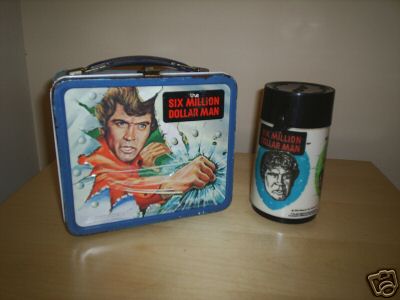
But what shows to include? Well, obviously the Bionic Woman, and the Six Million Dollar Man
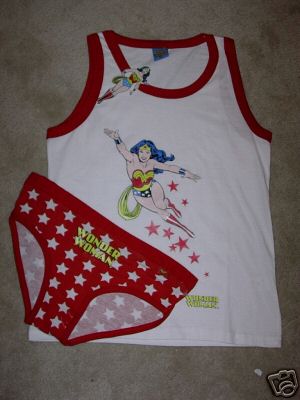
And Wonder Woman
And MacGyver
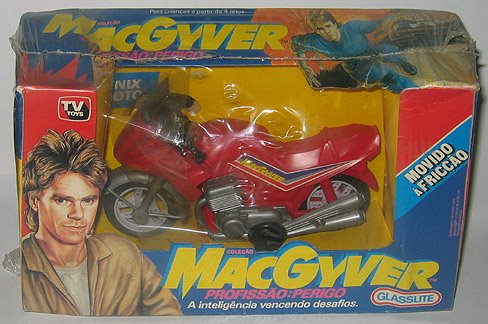
(Is that Portuguese?)
And Quantum Leap
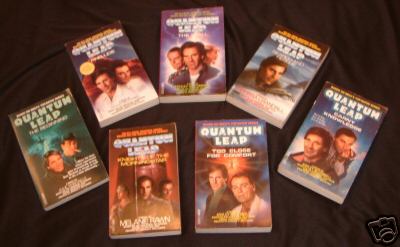
(I read all of those!)
And The Incredible Hulk
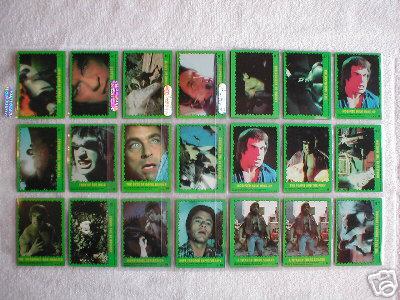
(This and Quantum Leap were by far my favorites of all the shows listed here.)
And I have to include Knight Rider
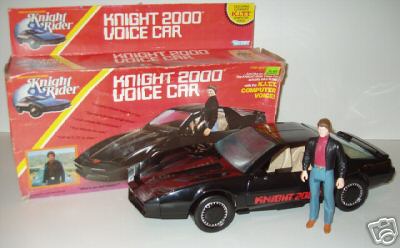
But what about all those great Irwin Allen TV shows? Time Tunnel, Lost in Space, Land of the Giants, Voyage to the Bottom of the Sea?
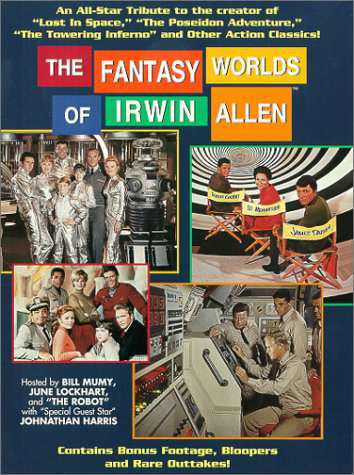
I'm beginning to think this post is going to be even more work than the sciency one would've been, what with all the searching and uploading and formatting. And I haven't even scratched the surface!
What about Mission: Impossible?
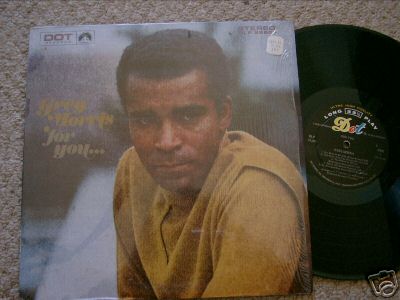
And the shows I never watched regularly, but which definitely belong to the same class, like
Battlestar Gallactica
Probe
VR.5
Forever Knight
Space: 1999
The Powers of Matthew Star
And what about the anthology shows
Twilight Zone,
Ray Bradbury Theater
The Outer Limits
And the British shows?
Dr. Who
Red Dwarf
Blake's Seven
The Prisoner
The Avengers
And the new bad Sci-Fi (I am, of course, not including big, almost mainstream shows like the Star Treks, Buffy, Angel, Babylon 5, Farscape, Firefly, and Alias -- the last of which Ken and I are currently working our way through on DVD). But...
Xena
Hercules
Beastmaster
Stargate (both versions)
Andromeda
Mutant X
Highlander
Land of the Lost
Cleopatra 2525
She Spies
Space, Above and Beyond
Seaqest DSV/2032
JAG
Charmed
Sliders
The Invisible Man
I've watched all of these too, some regularly. I have a deep knowledge of the backstory on many of them, and can name cast members... And I don't have the excuse of having been a kid at the time. These aren't old enough to justify watching for kitch value or nostalgia. I just like them.
And I can think of half a dozen others, too, which I'm not listing mainly because either I can't remember the name (what was that show that got cancelled about the guy in Seattle who was an expert in every field, but couldn't remember his name? John Doe? Something like that) or I don't think anyone else will remember them (Nowhere Man?) or I don't really know anything about them (M.A.N.T.I.S? Robocop? Swamp Thing? V? Never watched)
Enough! I must either draw the line, or decide to write a book.
I can't believe how much TV I watch. I can't believe how many shows like this get made. And I can't believe you can find episodes guides and merchandise for all of them on the internet... This is the power of the internet.
I will be the first to acknowledge that not all sci-fi TV is mindless. I do know the difference between the good stuff and the bad stuff (I even know the difference between sci-fi and SF). But the thing about me is, I like them both.
So I decided to search for sites about the stuff I grew up watching, first in syndication and then on the Sci-Fi Channel. I figured maybe I could find some hilarious merchandise like this:

and put together a sort of holiday gift list.
But what shows to include? Well, obviously the Bionic Woman, and the Six Million Dollar Man
And Wonder Woman
And MacGyver
(Is that Portuguese?)
And Quantum Leap
(I read all of those!)
And The Incredible Hulk
(This and Quantum Leap were by far my favorites of all the shows listed here.)
And I have to include Knight Rider
But what about all those great Irwin Allen TV shows? Time Tunnel, Lost in Space, Land of the Giants, Voyage to the Bottom of the Sea?
I'm beginning to think this post is going to be even more work than the sciency one would've been, what with all the searching and uploading and formatting. And I haven't even scratched the surface!
What about Mission: Impossible?
And the shows I never watched regularly, but which definitely belong to the same class, like
Battlestar Gallactica
Probe
VR.5
Forever Knight
Space: 1999
The Powers of Matthew Star
And what about the anthology shows
Twilight Zone,
Ray Bradbury Theater
The Outer Limits
And the British shows?
Dr. Who
Red Dwarf
Blake's Seven
The Prisoner
The Avengers
And the new bad Sci-Fi (I am, of course, not including big, almost mainstream shows like the Star Treks, Buffy, Angel, Babylon 5, Farscape, Firefly, and Alias -- the last of which Ken and I are currently working our way through on DVD). But...
Xena
Hercules
Beastmaster
Stargate (both versions)
Andromeda
Mutant X
Highlander
Land of the Lost
Cleopatra 2525
She Spies
Space, Above and Beyond
Seaqest DSV/2032
JAG
Charmed
Sliders
The Invisible Man
I've watched all of these too, some regularly. I have a deep knowledge of the backstory on many of them, and can name cast members... And I don't have the excuse of having been a kid at the time. These aren't old enough to justify watching for kitch value or nostalgia. I just like them.
And I can think of half a dozen others, too, which I'm not listing mainly because either I can't remember the name (what was that show that got cancelled about the guy in Seattle who was an expert in every field, but couldn't remember his name? John Doe? Something like that) or I don't think anyone else will remember them (Nowhere Man?) or I don't really know anything about them (M.A.N.T.I.S? Robocop? Swamp Thing? V? Never watched)
Enough! I must either draw the line, or decide to write a book.
I can't believe how much TV I watch. I can't believe how many shows like this get made. And I can't believe you can find episodes guides and merchandise for all of them on the internet... This is the power of the internet.
Sunday, October 30, 2005
New Aaron Sorkin / Tommy Schlamme Show
Just a quick note to pass on the news: "Studio 7 on the Sunset Strip"
Sunday, October 02, 2005
Freeman Dyson and Richard Feynman
Freeman Dyson is a physicist who also writes gracefully, a rare beast. I would rather be Freeman Dyson than Albert Einstein or Isaac Newton, I think.
(Aside: I am reading Neal Stephenson's Baroque Cycle right now; Ken got me the first one for my birthday. It makes being Isaac Newton seem very unappealing indeed. That link goes to a picture of the longhand manuscript.)
Via Not Even Wrong, I see that Freeman Dyson has written an article about Richard Feynman, in the guise of a review of a new collection of his letters.
Book reviews aren't usually quite as long, and are rarely so touching. This is the tribute of one great man to another, honest admiration, with no hint of envy or self-service. It is full of insight.
"Great scientists come in two varieties, which Isaiah Berlin, quoting the seventh-century-BC poet Archilochus, called foxes and hedgehogs. Foxes know many tricks, hedgehogs only one. Foxes are interested in everything, and move easily from one problem to another. Hedgehogs are interested only in a few problems which they consider fundamental, and stick with the same problems for years or decades. Most of the great discoveries are made by hedgehogs, most of the little discoveries by foxes. Science needs both hedgehogs and foxes for its healthy growth, hedgehogs to dig deep into the nature of things, foxes to explore the complicated details of our marvelous universe. Albert Einstein was a hedgehog; Richard Feynman was a fox."
I like that. I am a follower of the foxes, myself.
Dyson gives a brief summary of the important role of Feynman diagrams in modern physics, of the textbooks and popularizations that are really just edited transcriptions of his lectures, because he didn't like to write.
He has an anecdote that illustrates: "After Feynman's work on the diagrams was done, a year went by before it was published. He was willing and eager to share his ideas in conversation with anyone who would listen, but he found the job of writing a formal paper distasteful and postponed it as long as he could. His seminal paper, "Space-Time Approach to Quantum Electrodynamics,"[4] might never have been written if he had not gone to Pittsburgh to stay for a few days with his friends Bert and Mulaika Corben. While he was in the Corbens' house, they urged him to sit down and write the paper, and he made all kinds of excuses to avoid doing it. Mulaika, who was a liberated woman with a forceful personality, decided that drastic measures were needed. She was one of the few people who could stand up to Feynman in a contest of wills. She locked him in his room and refused to let him out until the paper was finished. That is the story that Mulaika told me afterward. Like other Feynman stories, it may have been embellished in the telling, but to anyone who knew both Mulaika and Feynman it has the ring of truth."
This is the Feynman his fans already know. But "In spite of his pretense of being illiterate, the letters are written in lucid and grammatical English. They rarely mention his work as a creative scientist. They say nothing about his current research. In these letters we see Feynman as a teacher. He spent much of his life teaching, and he threw himself into teaching as passionately as he threw himself into research. He wrote these letters because he wanted to help anyone who sincerely tried to understand. The letters that he preferred to answer were those which posed problems that he could explain in simple language. The problems were usually elementary, and Feynman's answers were pitched at a level that his correspondent could understand. He was not trying to be clever. His purpose was to be clear. Every one of the letters is personal. He responded to people's personal needs as well as to their questions."
I could quote the whole article here, with its wealth of Feynman stories which were mostly new to me, even though I've read all the collections of Feynman stories I can find, but it's probably easier if you just read it yourself. They depict a more sensetive, kind, generous man than I imagined before. Dyson was Feynman's friend, as well as his admirer.
I'll get the book too, eventually, but I wish I could read it over Freeman Dyson's shoulder.
(Aside: I am reading Neal Stephenson's Baroque Cycle right now; Ken got me the first one for my birthday. It makes being Isaac Newton seem very unappealing indeed. That link goes to a picture of the longhand manuscript.)
Via Not Even Wrong, I see that Freeman Dyson has written an article about Richard Feynman, in the guise of a review of a new collection of his letters.
Book reviews aren't usually quite as long, and are rarely so touching. This is the tribute of one great man to another, honest admiration, with no hint of envy or self-service. It is full of insight.
"Great scientists come in two varieties, which Isaiah Berlin, quoting the seventh-century-BC poet Archilochus, called foxes and hedgehogs. Foxes know many tricks, hedgehogs only one. Foxes are interested in everything, and move easily from one problem to another. Hedgehogs are interested only in a few problems which they consider fundamental, and stick with the same problems for years or decades. Most of the great discoveries are made by hedgehogs, most of the little discoveries by foxes. Science needs both hedgehogs and foxes for its healthy growth, hedgehogs to dig deep into the nature of things, foxes to explore the complicated details of our marvelous universe. Albert Einstein was a hedgehog; Richard Feynman was a fox."
I like that. I am a follower of the foxes, myself.
Dyson gives a brief summary of the important role of Feynman diagrams in modern physics, of the textbooks and popularizations that are really just edited transcriptions of his lectures, because he didn't like to write.
He has an anecdote that illustrates: "After Feynman's work on the diagrams was done, a year went by before it was published. He was willing and eager to share his ideas in conversation with anyone who would listen, but he found the job of writing a formal paper distasteful and postponed it as long as he could. His seminal paper, "Space-Time Approach to Quantum Electrodynamics,"[4] might never have been written if he had not gone to Pittsburgh to stay for a few days with his friends Bert and Mulaika Corben. While he was in the Corbens' house, they urged him to sit down and write the paper, and he made all kinds of excuses to avoid doing it. Mulaika, who was a liberated woman with a forceful personality, decided that drastic measures were needed. She was one of the few people who could stand up to Feynman in a contest of wills. She locked him in his room and refused to let him out until the paper was finished. That is the story that Mulaika told me afterward. Like other Feynman stories, it may have been embellished in the telling, but to anyone who knew both Mulaika and Feynman it has the ring of truth."
This is the Feynman his fans already know. But "In spite of his pretense of being illiterate, the letters are written in lucid and grammatical English. They rarely mention his work as a creative scientist. They say nothing about his current research. In these letters we see Feynman as a teacher. He spent much of his life teaching, and he threw himself into teaching as passionately as he threw himself into research. He wrote these letters because he wanted to help anyone who sincerely tried to understand. The letters that he preferred to answer were those which posed problems that he could explain in simple language. The problems were usually elementary, and Feynman's answers were pitched at a level that his correspondent could understand. He was not trying to be clever. His purpose was to be clear. Every one of the letters is personal. He responded to people's personal needs as well as to their questions."
I could quote the whole article here, with its wealth of Feynman stories which were mostly new to me, even though I've read all the collections of Feynman stories I can find, but it's probably easier if you just read it yourself. They depict a more sensetive, kind, generous man than I imagined before. Dyson was Feynman's friend, as well as his admirer.
I'll get the book too, eventually, but I wish I could read it over Freeman Dyson's shoulder.
Call of Cthulu
My friend Jennifer appears in a new version of "Call of Cthulhu." Now I feel connected to greatness, because I once created a character for the Call of Cthulhu RPG that she tried to organize. (Unfortunately, everyone's schedules prevented us from meeting to play more than once.)
Now, she is a part of Cthulu mythology.
Anyway, the movie looks really cool. According to the makers, "The story is brought richly to life in the style of a classic 1920s silent movie, with a haunting original symphonic score. ... From the cultists of the Louisana bayous to the man-eating non-euclidean geometry of R'lyeh, the HPLHS brings Cthulhu to the screen as it was meant to be seen."
I already ordered my copy. Get yours here.
Now, she is a part of Cthulu mythology.
Anyway, the movie looks really cool. According to the makers, "The story is brought richly to life in the style of a classic 1920s silent movie, with a haunting original symphonic score. ... From the cultists of the Louisana bayous to the man-eating non-euclidean geometry of R'lyeh, the HPLHS brings Cthulhu to the screen as it was meant to be seen."
I already ordered my copy. Get yours here.
Sunday, July 31, 2005
What Lab Work is Like
"Dr. X and his assistants would gather around whichever subsystem was believed to be farthest out of line and shout at each other in a mixture of Shanghainese, Mandarin, and technical English for a while. Therapies administered included but were not limited to: turning things off, then on again; picking them up a couple of inches and then dropping them; turning off nonessential appliances in this and other rooms; removing lids and wiggling circuit boards; extracting small contaminants, such as insects and their egg cases, with nonconducting chopsticks [Ken actually did have an insect in his vacuum once. It was freeze dried by the time they found it] cable-wiggling; incense-burning; putting folded-up pieces of paper beneath table legs; drinking tea and sulking; invoking unseen powers; sending runners to other rooms, buildings, or precincts with exquisitely calligraphed notes and waiting for them to come back carrying spare parts in dusty, yellowed cardboard boxes; and a similarly diverse suite of troubleshooting techniques in the realm of software. Much of this performance seemed to be genuine, the rest merely for Hackworth's consumption, presumably laying the groundwork for a renegotiation of the deal."
-The Diamond Age, "Hackworth in the Hong of Dr. X"
Neal Stephenson is clearly a man who knows.
I also meant to post a link to Google Moon as long as we were mapping... Make sure to try zooming in. Today, the moon, tomorrow, the whole solar system.
And that's it. The next post here will either be from an internet cafe in a country with funny symbols on its keyboards, or will be at the end of August.
-The Diamond Age, "Hackworth in the Hong of Dr. X"
Neal Stephenson is clearly a man who knows.
I also meant to post a link to Google Moon as long as we were mapping... Make sure to try zooming in. Today, the moon, tomorrow, the whole solar system.
And that's it. The next post here will either be from an internet cafe in a country with funny symbols on its keyboards, or will be at the end of August.
Wednesday, July 20, 2005
Buckminster Fuller Quotes
"There is something patently insane about all the typewriters sleeping with all the beautiful plumbing in the beautiful office buildings —and all the people sleeping in the slums."
"I set about fifty-five years ago (1927) to see what a penniless, unknown human individual with a dependent wife and newborn child might be able to do effectively on behalf of all humanity…"
"I do not look upon human beings as good or bad. I don't think of my feet as a right foot and a wrong foot."
"The physical is inherently entropic, giving off energy in ever more disorderly ways. The metaphysical is antientropic, methodically marshalling energy. Life is antientropic. It is spontaneously inquisitive. It sorts out and endeavors to understand."
"Every time man makes a new experiment he always learns more. He cannot learn less."
"Dare to be naïve."
(From http://en.wikiquote.org/wiki/Buckminster_Fuller)
"People should think things out fresh and not just accept conventional terms and the conventional way of doing things."
"I am convinced all of humanity is born with more gifts than we know. Most are born geniuses and just get de-geniused rapidly."
"Parents are usually more careful to bestow knowledge on their children rather than virtue, the art of speaking well rather than doing well; but their manners should be of the greatest concern."
"I look for what needs to be done. After all, that's how the universe designs itself."
"I'm not a genius. I'm just a tremendous bundle of experience."
"Let architects sing
of aesthetics that bring
Rich clients in hordes to their knees;
Just give me a home,
in a great circle dome
Where stresses and strains are at ease."
"By 2000, politics will simply fade away. We will not see any political parties."
(from http://www.brainyquote.com/quotes/authors/r/r_buckminster_fuller.html)
"A self-balancing, 28-jointed adaptor-based biped; an electro-chemical reduction plant, integral with segregated stowages of special energy extracts in storage batteries, for subsequent actuation of thousands of hydraulic and pneumatic pumps, with motors attached; 62,000 miles of capillaries..."
"Children are born true scientists. They spontaneously experiment and experience and reexperience again. They select, combine, and test, seeking to find order in their experiences - "which is the mostest? which is the leastest?" They smell, taste, bite, and touch-test for hardness, softness, springiness, roughness, smoothness, coldness, warmness: the heft, shake, punch, squeeze, push, crush, rub, and try to pull things apart."
"I think I am a verb."
(From http://www.quotationspage.com/search.php3?Author=R.+Buckminster+Fuller&file=other)
"We have a habit in writing articles published in scientific journals to make the work as finished as possible, to cover up all the tracks, to not worry about the blind alleys or describe how you had the wrong idea at first, and so on. So there isn't any place to publish, in a dignified manner, what you actually did in order to get to do the work."
(From http://www.worldofquotes.com/author/Buckminster-Fuller/1/)
"When I'm working on a problem, I never think about beauty. I think only how to solve the problem. But when I have finished, if the solution is not beautiful, I know it is wrong."
(Lots of sources. Any of these may be apocryphal though; I didn't check attributions.)
Books online at the Buckminster Fuller Institute
"I set about fifty-five years ago (1927) to see what a penniless, unknown human individual with a dependent wife and newborn child might be able to do effectively on behalf of all humanity…"
"I do not look upon human beings as good or bad. I don't think of my feet as a right foot and a wrong foot."
"The physical is inherently entropic, giving off energy in ever more disorderly ways. The metaphysical is antientropic, methodically marshalling energy. Life is antientropic. It is spontaneously inquisitive. It sorts out and endeavors to understand."
"Every time man makes a new experiment he always learns more. He cannot learn less."
"Dare to be naïve."
(From http://en.wikiquote.org/wiki/Buckminster_Fuller)
"People should think things out fresh and not just accept conventional terms and the conventional way of doing things."
"I am convinced all of humanity is born with more gifts than we know. Most are born geniuses and just get de-geniused rapidly."
"Parents are usually more careful to bestow knowledge on their children rather than virtue, the art of speaking well rather than doing well; but their manners should be of the greatest concern."
"I look for what needs to be done. After all, that's how the universe designs itself."
"I'm not a genius. I'm just a tremendous bundle of experience."
"Let architects sing
of aesthetics that bring
Rich clients in hordes to their knees;
Just give me a home,
in a great circle dome
Where stresses and strains are at ease."
"By 2000, politics will simply fade away. We will not see any political parties."
(from http://www.brainyquote.com/quotes/authors/r/r_buckminster_fuller.html)
"A self-balancing, 28-jointed adaptor-based biped; an electro-chemical reduction plant, integral with segregated stowages of special energy extracts in storage batteries, for subsequent actuation of thousands of hydraulic and pneumatic pumps, with motors attached; 62,000 miles of capillaries..."
"Children are born true scientists. They spontaneously experiment and experience and reexperience again. They select, combine, and test, seeking to find order in their experiences - "which is the mostest? which is the leastest?" They smell, taste, bite, and touch-test for hardness, softness, springiness, roughness, smoothness, coldness, warmness: the heft, shake, punch, squeeze, push, crush, rub, and try to pull things apart."
"I think I am a verb."
(From http://www.quotationspage.com/search.php3?Author=R.+Buckminster+Fuller&file=other)
"We have a habit in writing articles published in scientific journals to make the work as finished as possible, to cover up all the tracks, to not worry about the blind alleys or describe how you had the wrong idea at first, and so on. So there isn't any place to publish, in a dignified manner, what you actually did in order to get to do the work."
(From http://www.worldofquotes.com/author/Buckminster-Fuller/1/)
"When I'm working on a problem, I never think about beauty. I think only how to solve the problem. But when I have finished, if the solution is not beautiful, I know it is wrong."
(Lots of sources. Any of these may be apocryphal though; I didn't check attributions.)
Books online at the Buckminster Fuller Institute
Sunday, June 19, 2005
Archy And Mehitabel
Way back in December, after I saw the "Series of Unfortunate Events" movie and read all of Becca's Lemony Snicket books, I wrote: "I need to look up some of the references which went over my head -- 'Morel' Behavior in a Free Society, Archy and Mahitabel, Comyns, and Carl Van Vechten."
And yesterday I was reading a series of Buffy the Vampire Slayer fan-fic (A Raising in the Sun, Necessary Evils, and A Parliament of Monsters, professional quality stuff recommended by a professional SF editor on her blog, Making Light) when I came across this:
"Buffy propped her chin on her fist and frowned. 'Did you know Spike likes poetry?'
This proved sufficient to distract Willow from the mutilation of her napkin. Her brows quirked. 'He never told me so in so many words, but he was helping me catch up with my Western Lit when I was out of school for that week, and no one knows that much about archy and mehitabel if they don’t like poetry.'"
(This is a nice touch by the author, I think. We viewers know that Spike wrote terrible poetry before he became a vampire, because we've seen the flashbacks. But that tough, evil, vampire Spike still puts on reading glasses in his crypt sometimes and scans some Shelley? That, he hides well.)
Okay, anyway, that's two pop culture references to Archy and Mehitabel. I had to Google it. (And this time, I spelled Mehitabel correctly.)
I suppose lots of my hypothetical readers already know all about them, but for those as ignorant as me, here's what I found:
Archy is a cockroach who can only hit one typewriter key at a time, and so can't do capital letters:
" expression is the need of my soul
i was once a vers libre bard
but i died and my soul went into the body of a cockroach
it has given me a new outlook upon life
i see things from the under side now
thank you for the apple peelings in the wastepaper basket
but your paste is getting so stale i cant eat it
there is a cat here called mehitabel i wish you would have
removed she nearly ate me the other night why dont she
catch rats that is what she is supposed to be fore
there is a rat here she should get without delay
most of these rats here are just rats
but this rat is like me he has a human soul in him
he used to be a poet himself
night after night i have written poetry for you
on your typewriter
and this big brute of a rat who used to be a poet
comes out of his hole when it is done
and reads it and sniffs at it
he is jealous of my poetry
he used to make fun of it when we were both human
he was a punk poet himself
and after he has read it he sneers
and then he eats it"
(read the rest here).
It turns out that a cockroach has a unique point of view. No human writer could say:
"i once heard the survivors
of a colony of ants
that had been partially
obliterated by a cow s foot
seriously debating
the intention of the gods
towards their civilization"
I am very pleased to meet Archy and Mehitabel both.
.
And yesterday I was reading a series of Buffy the Vampire Slayer fan-fic (A Raising in the Sun, Necessary Evils, and A Parliament of Monsters, professional quality stuff recommended by a professional SF editor on her blog, Making Light) when I came across this:
"Buffy propped her chin on her fist and frowned. 'Did you know Spike likes poetry?'
This proved sufficient to distract Willow from the mutilation of her napkin. Her brows quirked. 'He never told me so in so many words, but he was helping me catch up with my Western Lit when I was out of school for that week, and no one knows that much about archy and mehitabel if they don’t like poetry.'"
(This is a nice touch by the author, I think. We viewers know that Spike wrote terrible poetry before he became a vampire, because we've seen the flashbacks. But that tough, evil, vampire Spike still puts on reading glasses in his crypt sometimes and scans some Shelley? That, he hides well.)
Okay, anyway, that's two pop culture references to Archy and Mehitabel. I had to Google it. (And this time, I spelled Mehitabel correctly.)
I suppose lots of my hypothetical readers already know all about them, but for those as ignorant as me, here's what I found:
Archy is a cockroach who can only hit one typewriter key at a time, and so can't do capital letters:
" expression is the need of my soul
i was once a vers libre bard
but i died and my soul went into the body of a cockroach
it has given me a new outlook upon life
i see things from the under side now
thank you for the apple peelings in the wastepaper basket
but your paste is getting so stale i cant eat it
there is a cat here called mehitabel i wish you would have
removed she nearly ate me the other night why dont she
catch rats that is what she is supposed to be fore
there is a rat here she should get without delay
most of these rats here are just rats
but this rat is like me he has a human soul in him
he used to be a poet himself
night after night i have written poetry for you
on your typewriter
and this big brute of a rat who used to be a poet
comes out of his hole when it is done
and reads it and sniffs at it
he is jealous of my poetry
he used to make fun of it when we were both human
he was a punk poet himself
and after he has read it he sneers
and then he eats it"
(read the rest here).
It turns out that a cockroach has a unique point of view. No human writer could say:
"i once heard the survivors
of a colony of ants
that had been partially
obliterated by a cow s foot
seriously debating
the intention of the gods
towards their civilization"
I am very pleased to meet Archy and Mehitabel both.
.
Tuesday, May 24, 2005
Only a Sith Speaks in Absolutes
I've seen Revenge of the Sith twice already. Ken kidnapped me away from work on opening day, and then we went again on Friday.
I'm not gonna write a review. Obviously I loved it. I was always going to. I liked the other prequels too. I don't think dialogue or acting has ever been the point. Spectacle and melodrama are respectable art forms too -- look at opera, or ancient Greek dramas. Critics may think Star Wars was made to a formula, but if it were easy to make something larger-than-life on this scale that doesn't collapse under its own weight, it would have been done more often. Star Wars isn't literature. It's architecture.
Anyway, I found it thought provoking. First of all, and I'll leave this vague for spoiler reasons, I want to know if we're supposed to consider the question of Anakin's parentage resolved. The hint was too subtle for me (Star Wars isn't supposed to be subtle!) but Ken thought it was obvious, and intentional, and if so, it makes me like the Phantom Menace much better. The virgin-birth-via-midichlorians thing was always my least favorite part.
Secondly, I've been thinking about Anakin's incredibly sudden change of heart in his scene with Mace Windu. I've decided that when he was lecturing Mace on the Jedi way, he wasn't really stating his own beliefs about good and evil (which then suddenly change.) He was reminding Mace of what the Jedi are supposed to believe. I think by this point Anakin has convinced himself that the Jedi are hypocrites. They've asked him to spy on his own government, his own friend and mentor. They say they defend democracy, but their own heirarchy is rigid, and closed to him. They took him away from his mother. He has had to keep his relationship with his wife a secret. When he goes to them for help, to save her life, they seem not to care. They preach about peace, but they are warriors, and have trained him for war. And they may say they don't want power, but they do definitely have strong opinions on how the galactic government should work, and are willing to use violence and deception to achieve their ends. Whatever ethical problems they may have with a clone army, ultimately, they use it.
Anakin has never really believed in those things the Jedi profess. As Ken points out, he didn't have a problem with dictatorships, in the second prequel. He did the very thing he's telling Mace Windu not to do, at the beginning of this movie. All he's trying to do is appeal to the principles Mace claims to live by, to stop what's happening... And when Mace shows himself a hypocrite, Anakin finally decides, I think, that there really is no difference between the Jedi and the Sith.
Orson Scott Card says Anakin's not wrong. But I don't judge the Jedi as harshly as Card does. Their redeeming virtue, in my opinion, is that they know they're hypocrites. I see Obi Wan's line, "Only a Sith speaks in absolutes," as an admission that the Jedi don't always know, can't always know, the right path either. Their fortune cookie maxims have exceptions.
In the end, everyone who has any principles betrays them sometimes, for the sake of the people they love, for the sake of their other principles. The Jedi know that just because you have to violate your principles sometimes, that's no reason to give them up entirely. Anakin doesn't understand this. That's why Anakin becomes a Sith. Only a Sith speaks in absolutes.
.
I'm not gonna write a review. Obviously I loved it. I was always going to. I liked the other prequels too. I don't think dialogue or acting has ever been the point. Spectacle and melodrama are respectable art forms too -- look at opera, or ancient Greek dramas. Critics may think Star Wars was made to a formula, but if it were easy to make something larger-than-life on this scale that doesn't collapse under its own weight, it would have been done more often. Star Wars isn't literature. It's architecture.
Anyway, I found it thought provoking. First of all, and I'll leave this vague for spoiler reasons, I want to know if we're supposed to consider the question of Anakin's parentage resolved. The hint was too subtle for me (Star Wars isn't supposed to be subtle!) but Ken thought it was obvious, and intentional, and if so, it makes me like the Phantom Menace much better. The virgin-birth-via-midichlorians thing was always my least favorite part.
Secondly, I've been thinking about Anakin's incredibly sudden change of heart in his scene with Mace Windu. I've decided that when he was lecturing Mace on the Jedi way, he wasn't really stating his own beliefs about good and evil (which then suddenly change.) He was reminding Mace of what the Jedi are supposed to believe. I think by this point Anakin has convinced himself that the Jedi are hypocrites. They've asked him to spy on his own government, his own friend and mentor. They say they defend democracy, but their own heirarchy is rigid, and closed to him. They took him away from his mother. He has had to keep his relationship with his wife a secret. When he goes to them for help, to save her life, they seem not to care. They preach about peace, but they are warriors, and have trained him for war. And they may say they don't want power, but they do definitely have strong opinions on how the galactic government should work, and are willing to use violence and deception to achieve their ends. Whatever ethical problems they may have with a clone army, ultimately, they use it.
Anakin has never really believed in those things the Jedi profess. As Ken points out, he didn't have a problem with dictatorships, in the second prequel. He did the very thing he's telling Mace Windu not to do, at the beginning of this movie. All he's trying to do is appeal to the principles Mace claims to live by, to stop what's happening... And when Mace shows himself a hypocrite, Anakin finally decides, I think, that there really is no difference between the Jedi and the Sith.
Orson Scott Card says Anakin's not wrong. But I don't judge the Jedi as harshly as Card does. Their redeeming virtue, in my opinion, is that they know they're hypocrites. I see Obi Wan's line, "Only a Sith speaks in absolutes," as an admission that the Jedi don't always know, can't always know, the right path either. Their fortune cookie maxims have exceptions.
In the end, everyone who has any principles betrays them sometimes, for the sake of the people they love, for the sake of their other principles. The Jedi know that just because you have to violate your principles sometimes, that's no reason to give them up entirely. Anakin doesn't understand this. That's why Anakin becomes a Sith. Only a Sith speaks in absolutes.
.
Tuesday, May 10, 2005
Obligatory Links
You've probably already seen these links, if you're interested at all, but to keep my geek credentials valid, I must post about these things...
Star Trek is ending I don't really mind. I'm only really fond of the original series, which ended well before I was born. Orson Scott Card doesn't mind either, because he wasn't fond of any of it.
The Serenity Trailer is out. Yay!
"The Hitchhiker's Guide to the Galaxy" is in theaters now. And it's awesomer than I thought it would be. Even though I knew it would be pretty good after I read this interview. It's by one of the screenwriters, who also wrote "Chicken Run."
Saturday was Free Comic Book Day. Yeah, I know that would've been more useful information if I'd got around to posting before Saturday. I got a Star Wars comic.
(And Sunday was mother's day. That's a little late notice too, for anyone who forgot...)
And I went to Wrigley field on Friday to watch the Cubs lose their seventh in a row. Curse you LaTroy! I'd write up a nice little report, but someone with a life that is scarily like mine went on Sunday and did a better job.
Man, talk about your old news. That's what I get for putting off posting.
.
Star Trek is ending I don't really mind. I'm only really fond of the original series, which ended well before I was born. Orson Scott Card doesn't mind either, because he wasn't fond of any of it.
The Serenity Trailer is out. Yay!
"The Hitchhiker's Guide to the Galaxy" is in theaters now. And it's awesomer than I thought it would be. Even though I knew it would be pretty good after I read this interview. It's by one of the screenwriters, who also wrote "Chicken Run."
Saturday was Free Comic Book Day. Yeah, I know that would've been more useful information if I'd got around to posting before Saturday. I got a Star Wars comic.
(And Sunday was mother's day. That's a little late notice too, for anyone who forgot...)
And I went to Wrigley field on Friday to watch the Cubs lose their seventh in a row. Curse you LaTroy! I'd write up a nice little report, but someone with a life that is scarily like mine went on Sunday and did a better job.
Man, talk about your old news. That's what I get for putting off posting.
.
Thursday, December 30, 2004
Nothing
So here's what I've been doing for the past week or so, my excuse for neglecting my small-but-faithful audience: nothing.
And I've loved it. Nothing like -- riding in the car fifteen hours each way from Chicago to Denver and back reading out loud to keep Ken awake (The Sword in the Stone, which we finished, reading about the Boxing Day Boar Hunt on the day after Christmas) and watching the New Lemony Snicket movie and reading books seven, eight, nine, ten and eleven of the Series of Unfortunate Events.
The movie just about lives up to the books -- a high standard. All that's missing is the joy the books take in words themselves. In obscure vocabulary and playful definitions, in codes, puns, alliterations, anagrams, and literary allusions. I was extra-pleased by the mention of C.P. Snow's Corridors of Power, and I love all the T.S. Eliot. It's great that you can recognize villains by their fondness for Edgar Guest, while the well-read heroes prefer Herman Melville. I need to look-up some of the references which went over my head -- "Morel" Behavior in a Free Society, Archy and Mahitabel, Comyns, and Carl Van Vechten. I should also read the Gulag Archipelago, one of these days. But I think I got most of the references to Nietzche and Beverly Cleary.
Anyway, even some of that fun makes it into the movie, through Jude Law's pitch perfect narration. So it's worth the ticket price. We also rented "King Arthur" (which doesn't completement The Sword in the Stone as well as you'd think) and "Shaun of the Dead" (which does complement "Dawn of the Dead" -- Ken's favorite movie -- very well indeed.) I give it four stars, and I'm not the zombie-lover.
I picked out a wedding dress with my mom. Wedding plans are being revised, although I'm not making any more announcements yet.
Took Ken to Midnight Mass and to Casa Bonita. He's a good sport.
Christmas shopped up to the last possible moment, and then reaped an amazing haul on Christmas morning -- thanks for the cell-phone service especially, Dad and Mom.
And since we got back, I've spent a lot of time hanging out with Ken while he plays "Fable," which I got him for Christmas, after heavy hinting. I like watching video games. It makes more sense than watching sports -- at least I know the person I'm cheering for. And this game has a great story. I got totally caught up. The most hilarious part was when he took off his helmet and all of the game characters fell in love with him. His "renown" level was very high, as was his "attractiveness" score -- since his hair had grown back after his stint in prison.
There was a lot of recorded West Wing and Gilmore Girls to catch up on (thanks Becca) and more video games, movie rentals, books, and snow ball fights, and walking around on frozen ponds, somewhere in there...
It feels so good to do nothing, for a while.
And I've loved it. Nothing like -- riding in the car fifteen hours each way from Chicago to Denver and back reading out loud to keep Ken awake (The Sword in the Stone, which we finished, reading about the Boxing Day Boar Hunt on the day after Christmas) and watching the New Lemony Snicket movie and reading books seven, eight, nine, ten and eleven of the Series of Unfortunate Events.
The movie just about lives up to the books -- a high standard. All that's missing is the joy the books take in words themselves. In obscure vocabulary and playful definitions, in codes, puns, alliterations, anagrams, and literary allusions. I was extra-pleased by the mention of C.P. Snow's Corridors of Power, and I love all the T.S. Eliot. It's great that you can recognize villains by their fondness for Edgar Guest, while the well-read heroes prefer Herman Melville. I need to look-up some of the references which went over my head -- "Morel" Behavior in a Free Society, Archy and Mahitabel, Comyns, and Carl Van Vechten. I should also read the Gulag Archipelago, one of these days. But I think I got most of the references to Nietzche and Beverly Cleary.
Anyway, even some of that fun makes it into the movie, through Jude Law's pitch perfect narration. So it's worth the ticket price. We also rented "King Arthur" (which doesn't completement The Sword in the Stone as well as you'd think) and "Shaun of the Dead" (which does complement "Dawn of the Dead" -- Ken's favorite movie -- very well indeed.) I give it four stars, and I'm not the zombie-lover.
I picked out a wedding dress with my mom. Wedding plans are being revised, although I'm not making any more announcements yet.
Took Ken to Midnight Mass and to Casa Bonita. He's a good sport.
Christmas shopped up to the last possible moment, and then reaped an amazing haul on Christmas morning -- thanks for the cell-phone service especially, Dad and Mom.
And since we got back, I've spent a lot of time hanging out with Ken while he plays "Fable," which I got him for Christmas, after heavy hinting. I like watching video games. It makes more sense than watching sports -- at least I know the person I'm cheering for. And this game has a great story. I got totally caught up. The most hilarious part was when he took off his helmet and all of the game characters fell in love with him. His "renown" level was very high, as was his "attractiveness" score -- since his hair had grown back after his stint in prison.
There was a lot of recorded West Wing and Gilmore Girls to catch up on (thanks Becca) and more video games, movie rentals, books, and snow ball fights, and walking around on frozen ponds, somewhere in there...
It feels so good to do nothing, for a while.
Friday, September 17, 2004
I Am Blogging
I'm emerging from my exam-bunker, now, and have nothing better to do, so you are going to get all of the stuff I've thought about blogging in the past little while in one big lump. After this, I am planning to spend the next few days doing nothing but reading and watching back episodes of the Daily Show on my parents' DVR (for those that don't know, that stands for "not technically a Tivo.")
The first book on my list, which I finished this morning, was Kurt Vonnegut's Mother Night. It's the story of an American who becomes a propagadist in Nazi Germany, sending coded messages for the allies through his anti-semetic radio broadcasts. But he does his cover job too well, inspiring rank-and-file National Socialists, propping up their rationalizations, earning a prestigious place for himself in that society... He absolves most of his Nazi friends of real guilt, saying that they forgot the difference between fantasy and reality, but finds himself guilty of crimes against himself, because he always knew when he was lying. And he has something to say about how societies come to celebrate death. In the book, Hitler sends him a note after reading his translation of the Gettysburg Address: "Some parts of this almost made me weep. All northern peoples are one in their deep feelings for soldiers. It is perhaps our greatest bond." And later, back in America, someone tells him the flags and the closed shops are for Veterans' Day. He says, "This used to be a day in honor of the dead of World War One, but the living couldn't keep their grubby hands off of it, wanted the glory of the dead for themselves. So typical, so typical. Any time anything of real dignity appears in this country, it's torn to shreds and thrown to the mob."
It was in that light that I watched this segment from the Daily Show. In case you don't have Media Player 9 ('cause the Daily Show is now an all-Microsoft shop) here's the beginning:
Patriotic roses, "A tower to celebrate America" of brownies and cookies, discount cottage rentals for the Sept 11th weekend, National Collector's Mint coins plated with silver recovered from ground zero, and Valor the Eagle, whose tag says he was "born on September Eleventh."
Meanwhile (also via the Daily Show) Donald Rumsfeld has forgotten Osama Bin Laden's name. Here are some excerpts from the DoD's transcript of his remarks to the National Press Club: "The leader of the opposition Northern Alliance, Massoud, lay dead, his murder ordered by Saddam Hussein -- by Osama bin Laden, Taliban's co- conspirator." And then: "Saddam Hussein (sic), if he's alive, is spending a whale of a lot of time trying to not get caught. And we've not seen him on a video since 2001. Now he's got to be busy. Why is he busy? It's because of the pressure that's being put on him."
And things are even worse in Russia. In the aftermath of the "bloody outcome of the Beslan school siege," President Putin is asking for constitutional changes. "Curiously, however, the Russian leader's proposals focused largely on electoral changes. Putin said he would propose legislation abolishing the election of local governors by popular vote. Instead they would be nominated by the president and confirmed by local legislatures. He said the change was needed to streamline and strengthen the executive branch to better combat terror. Putin also asked for a revision of the method by which Russians elect their parliament. The entire 450 seats would be chosen from candidates on party lists." (from the CNN coverage)
...
But not all the news is bad news. Kansas City may be getting a new sports arena. Why do I care? Because Kansas City still feels like my home town, and I'm still angry about what's happened to it. White flight, an infinitely expanding suburban ring where the wealthy people go to be among their own kind, protected from mere mortals. And the city itself dies by degrees. Small businesses can't compete with the chain stores on the outskirts, and anybody who can't afford to live in the new McMansions has a hard time finding a job, and no chance at all if they can't commute out by car. What's left is a place with a hollow heart, all suburbs and no substance. There's no city left in Kansas City. So yay for downtown renewal! Even better, it turns out it's the home to lots of sports architecture firms, who want to collaborate, to make the building a kind of advertisement for the hometown industry. But they have competition, from a group that includes the infamous Frank Gehry, designer of the Experience Music Project and the Jay Pritzker Pavilion, both of which I got to see during construction, and visit almost as soon as they opened. I basically hate the EMP and love the Pritzker Pavilion (because what works for a band shell does not work for a museum. And because the EMP is partially painted pink.) I'm interested to see what he would come up with for poor old KC.
And then there's this obituary which I somehow find more encouraging than depressing, and the stunts pulled by the Fathers-4-Justice, in particular the Batman who climbed Buckhingham Palace. The Tribune had a great photo of him leaning imperturbably on a ledge, meeting the eye of a security man with an expression that said, "So what? I'm Batman." Neither Thomasz nor I could find it online, unfortunately.
Oh -- and since I mentioned Vonnegut at the beginning? You know that "Sunscreen Speech" that he supposedly gave? It was really by Chicago Tribune columnist Mary Schmich, of course, and in a column this week she answered the question, "What kind of sunscreen?" Apparently she recommends PreSun SPF 30.
The next books on my list are the complete works of Lemony Snicket. My sister wants me to read as many of the books as I can while I'm home. I think these will suit my current mood very well.
The first book on my list, which I finished this morning, was Kurt Vonnegut's Mother Night. It's the story of an American who becomes a propagadist in Nazi Germany, sending coded messages for the allies through his anti-semetic radio broadcasts. But he does his cover job too well, inspiring rank-and-file National Socialists, propping up their rationalizations, earning a prestigious place for himself in that society... He absolves most of his Nazi friends of real guilt, saying that they forgot the difference between fantasy and reality, but finds himself guilty of crimes against himself, because he always knew when he was lying. And he has something to say about how societies come to celebrate death. In the book, Hitler sends him a note after reading his translation of the Gettysburg Address: "Some parts of this almost made me weep. All northern peoples are one in their deep feelings for soldiers. It is perhaps our greatest bond." And later, back in America, someone tells him the flags and the closed shops are for Veterans' Day. He says, "This used to be a day in honor of the dead of World War One, but the living couldn't keep their grubby hands off of it, wanted the glory of the dead for themselves. So typical, so typical. Any time anything of real dignity appears in this country, it's torn to shreds and thrown to the mob."
It was in that light that I watched this segment from the Daily Show. In case you don't have Media Player 9 ('cause the Daily Show is now an all-Microsoft shop) here's the beginning:
When Abraham Lincoln was shot, it took an entire century to come up with the Presidents' Day mattress sale. But these days we move a little quicker. So quickly we've already turned the tragedy of Sept. 11 into a holiday: Patriot Day. Hallmark has already gotten into the spirit, creating E-cards like this one. It's all part of America's stages of grief. Denial, anger, depression, acceptance, and finally exploitation."
Patriotic roses, "A tower to celebrate America" of brownies and cookies, discount cottage rentals for the Sept 11th weekend, National Collector's Mint coins plated with silver recovered from ground zero, and Valor the Eagle, whose tag says he was "born on September Eleventh."
Meanwhile (also via the Daily Show) Donald Rumsfeld has forgotten Osama Bin Laden's name. Here are some excerpts from the DoD's transcript of his remarks to the National Press Club: "The leader of the opposition Northern Alliance, Massoud, lay dead, his murder ordered by Saddam Hussein -- by Osama bin Laden, Taliban's co- conspirator." And then: "Saddam Hussein (sic), if he's alive, is spending a whale of a lot of time trying to not get caught. And we've not seen him on a video since 2001. Now he's got to be busy. Why is he busy? It's because of the pressure that's being put on him."
And things are even worse in Russia. In the aftermath of the "bloody outcome of the Beslan school siege," President Putin is asking for constitutional changes. "Curiously, however, the Russian leader's proposals focused largely on electoral changes. Putin said he would propose legislation abolishing the election of local governors by popular vote. Instead they would be nominated by the president and confirmed by local legislatures. He said the change was needed to streamline and strengthen the executive branch to better combat terror. Putin also asked for a revision of the method by which Russians elect their parliament. The entire 450 seats would be chosen from candidates on party lists." (from the CNN coverage)
...
But not all the news is bad news. Kansas City may be getting a new sports arena. Why do I care? Because Kansas City still feels like my home town, and I'm still angry about what's happened to it. White flight, an infinitely expanding suburban ring where the wealthy people go to be among their own kind, protected from mere mortals. And the city itself dies by degrees. Small businesses can't compete with the chain stores on the outskirts, and anybody who can't afford to live in the new McMansions has a hard time finding a job, and no chance at all if they can't commute out by car. What's left is a place with a hollow heart, all suburbs and no substance. There's no city left in Kansas City. So yay for downtown renewal! Even better, it turns out it's the home to lots of sports architecture firms, who want to collaborate, to make the building a kind of advertisement for the hometown industry. But they have competition, from a group that includes the infamous Frank Gehry, designer of the Experience Music Project and the Jay Pritzker Pavilion, both of which I got to see during construction, and visit almost as soon as they opened. I basically hate the EMP and love the Pritzker Pavilion (because what works for a band shell does not work for a museum. And because the EMP is partially painted pink.) I'm interested to see what he would come up with for poor old KC.
And then there's this obituary which I somehow find more encouraging than depressing, and the stunts pulled by the Fathers-4-Justice, in particular the Batman who climbed Buckhingham Palace. The Tribune had a great photo of him leaning imperturbably on a ledge, meeting the eye of a security man with an expression that said, "So what? I'm Batman." Neither Thomasz nor I could find it online, unfortunately.
Oh -- and since I mentioned Vonnegut at the beginning? You know that "Sunscreen Speech" that he supposedly gave? It was really by Chicago Tribune columnist Mary Schmich, of course, and in a column this week she answered the question, "What kind of sunscreen?" Apparently she recommends PreSun SPF 30.
The next books on my list are the complete works of Lemony Snicket. My sister wants me to read as many of the books as I can while I'm home. I think these will suit my current mood very well.
Monday, September 06, 2004
Labor Day in the U.S.A.
The Chicago Tribune has a couple of interesting Labor Day pieces:
'American Dream' Goes Up in Coal Dust:
" CHRISTOPHER, Ill. -- Twenty-eight years breathing coal dust and diesel fumes wasn't enough to kill Gary Bartolotti. Neither was a falling 1,500-pound slab of shale that pinned him to the jagged floor of a mine shaft, shattered his right ankle and pelvis and ruptured his bladder. He never lost consciousness, never even went into shock. [...] The company that ran the mines he worked went bankrupt, and a federal judge recently granted Horizon Natural Resources' request to cancel the health-care benefits of active and retired employees. By early October, Bartolotti and at least 1,200 other retired southern Illinois miners and their dependents will lose the lifetime health-care coverage they'd been counting on."
Executive Privilege:
"The simple answer is that some CEOs lose their sense of reality and feel entitled to whatever they can get away with, psychiatrists and corporate governance experts say. Instead of thinking about what is fair or right, some chief executives look around to see what their peers at the top of the heap are getting in cash, stock options and perks, such as corporate jets and club dues. They want that--and more.
[...]Of course, no dysfunctional individual exists in a vacuum. In the corporate world, chiefs who are losing their bearings have boards of directors that are supposed to help them maintain perspective. But boards often are stacked with friends of the top guy, which makes it hard--indeed, almost impossible--for them to say no, said Nell Minow, a corporate governance specialist."
(Reading that story reminds me of reading history -- over centuries under the feudal system, monarchs grew more powerful and the aristocracy which was supposed to be a sort of check on that power grew weaker. Monarchs measured their rights by comparison with other monarchs. What we need is a sort of corporate Magna Carta, I think.)
NPR has a good Labor Day story as well, a piece on Studs Terkel, with some clips from his original interview tapes, for the book Working.
The book Ken gave me for my birthday (Chi Town by Norbert Blei) has a cool piece about Studs Terkel too. It's a collection of essays about Chicago, and Studs is so much a part of Chicago history and culture that a story on him is almost inevitable. Blei had the good fortune of sitting in on one of his interviews once -- with Dave Brubeck, another Chicago legend.
One of Blei's other heroes is a new discovery for me: Sydney J. Harris. After reading Blei's ode to him, I did some searching, and found treasures. I've only just started working my way through this remarkable collection, but already I'm coming to worship this guy too.
Here is a sample:
"The fact is that nothing is harder in life than knowing what should be done, for there are dozens of ways to do something wrong, and usually only one way to do it right.
"'It is easier to be critical than to be correct,' said Disraeli, in rebuking his parliamentary opponents - neglecting to add that this was as true for his own party.
"The process of learning consists in collecting 'non-answers' rather than in finding answers. We find out the things that don't work through trial and error, usually repeated many times in different ways, before we hit upon the answer, if we ever do."
And on that note -- I've really got to study some electromagnetism today.
'American Dream' Goes Up in Coal Dust:
" CHRISTOPHER, Ill. -- Twenty-eight years breathing coal dust and diesel fumes wasn't enough to kill Gary Bartolotti. Neither was a falling 1,500-pound slab of shale that pinned him to the jagged floor of a mine shaft, shattered his right ankle and pelvis and ruptured his bladder. He never lost consciousness, never even went into shock. [...] The company that ran the mines he worked went bankrupt, and a federal judge recently granted Horizon Natural Resources' request to cancel the health-care benefits of active and retired employees. By early October, Bartolotti and at least 1,200 other retired southern Illinois miners and their dependents will lose the lifetime health-care coverage they'd been counting on."
Executive Privilege:
"The simple answer is that some CEOs lose their sense of reality and feel entitled to whatever they can get away with, psychiatrists and corporate governance experts say. Instead of thinking about what is fair or right, some chief executives look around to see what their peers at the top of the heap are getting in cash, stock options and perks, such as corporate jets and club dues. They want that--and more.
[...]Of course, no dysfunctional individual exists in a vacuum. In the corporate world, chiefs who are losing their bearings have boards of directors that are supposed to help them maintain perspective. But boards often are stacked with friends of the top guy, which makes it hard--indeed, almost impossible--for them to say no, said Nell Minow, a corporate governance specialist."
(Reading that story reminds me of reading history -- over centuries under the feudal system, monarchs grew more powerful and the aristocracy which was supposed to be a sort of check on that power grew weaker. Monarchs measured their rights by comparison with other monarchs. What we need is a sort of corporate Magna Carta, I think.)
NPR has a good Labor Day story as well, a piece on Studs Terkel, with some clips from his original interview tapes, for the book Working.
The book Ken gave me for my birthday (Chi Town by Norbert Blei) has a cool piece about Studs Terkel too. It's a collection of essays about Chicago, and Studs is so much a part of Chicago history and culture that a story on him is almost inevitable. Blei had the good fortune of sitting in on one of his interviews once -- with Dave Brubeck, another Chicago legend.
One of Blei's other heroes is a new discovery for me: Sydney J. Harris. After reading Blei's ode to him, I did some searching, and found treasures. I've only just started working my way through this remarkable collection, but already I'm coming to worship this guy too.
Here is a sample:
"The fact is that nothing is harder in life than knowing what should be done, for there are dozens of ways to do something wrong, and usually only one way to do it right.
"'It is easier to be critical than to be correct,' said Disraeli, in rebuking his parliamentary opponents - neglecting to add that this was as true for his own party.
"The process of learning consists in collecting 'non-answers' rather than in finding answers. We find out the things that don't work through trial and error, usually repeated many times in different ways, before we hit upon the answer, if we ever do."
And on that note -- I've really got to study some electromagnetism today.
Subscribe to:
Posts (Atom)