Yeah, I missed a week. Here's the thing, I'm really, really busy right now. This post is gonna be half links and half life update, cause those are the laziest kinds of posts (except for Bears-related photos that I upload without further comment, which is the laziest kind of all.)
Life update first: my two classes are kinda kicking my butt. It's been a year or so since I've taken a class, and the last one was taught by my advisor, who thought time in the lab was more important than getting the homework done anyway. It's been four years since I've taken one like my GR class, with twenty students, and homework problems from the end of the chapters due weekly, and midterms and finals and real grades. Just going squeezing the classes into my work days is hard. We're actually making a little progress with the MOT (I said I'd put up pictures of the launching we've done here, and I will, whenever we get the data off of the non-internetted computer it's stored on) but sometimes I'm not there when I'm needed. And when I am, days full of MOT work and school work are very full indeed, long and exhausting. Meanwhile the gyroscope project is sort of in suspended animation as we try to figure out what exactly needs to be done next. With no deadline attached to it, it has slipped to the bottom of my priority list. I am, however, writing a summary of our group's work on this stuff so far, which will probably become my thesis proposal, but which does have a deadline because it's supposed to be published as the text to accompany a talk my advisor gave.
Just writing about all that makes me feel as if I should be doing something more productive than blogging.
But I'm getting an intimidating backlog of links to post and comment on, so let me at least put a few of them up.
In particular, I've come across lot of related stuff about the suburbs, politics, and religion lately.
Slacktivist says the reason we're at war in Iraq is that our urban schools suck. Actually, he just says it's why we're not able to cut down our gasoline use. But we're at war in Iraq at least partly because we're so dependent on foreign oil, that's what makes the region so strategially important. We're dependent on foreign oil because everybody drives rather than taking mass transportation. But many people can't take mass transportation because they live in the suburbs. Why? Because that's where the good schools are.
He also has a powerful argument that the war in Iraq can't be "won" because it was not in our interest to begin with. If we were to invade Canada, what would it mean to "win"? Assuming we succeeded in taking down their government, what would we do then? Occupy Canada? Why would we want to do that? And for how long? Because there would be no reason to invade Canada in the first place, victory is undefinable. Same in Iraq. If there had been WMD to capture, we could've declared victory when we captured them, but since there were not, and since Saddam's government was not uniquely bad -- we have no reason to expect the next one to be better, if we pull out -- how do we know when we've "won"? (And if the real goal was to destabilize the middle east lest it unite against us? Then the war can never be won until we turn the middle east into Canada. So long as they have a significantly different culture and different values than us, some of our leaders will see their unity and prosperity as a threat.)
Meanwhile, back in the suburbs, Chris Hedges says that the reason the country is so polarized by religion is "suburban despair." He says "A terrible distortion and deformation of American society, where tens of millions of people in this country feel completely disenfranchised, where their physical communities have been obliterated, whether that's in the Rust Belt in Ohio or these monstrous exurbs like Orange County, where there is no community. There are no community rituals, no community centers, often there are no sidewalks. People live in empty soulless houses and drive big empty cars on freeways to Los Angeles and sit in vast offices and then come home again."
I think my "radically" Christian, suburban mother (who reads this blog, by the way-- hi, Mom) might actually agree with his argument, if not the conclusions he draws from it. She grew up not in the suburbs but in a small country town, and laments the loss of "community" every day. She does not find the daily grind of work, commute, TV, commute, work fulfilling either. When people begin to feel their lives are meaningless, religion gives them meaning. I think that is probably the definition of religion.
But I want to own my own home and have a couple of kids and make enough money to buy fancy digital toys and take vacations, too. Almost everybody wants that stuff, especially the people who actually live the furthest from the suburbs, in decaying inner cities and half abandonded rural towns. I think the problem is, what happens when you actually get all that? When you have nothing left to strive for, really? When you've achieved all your ambitions, what gets you out of bed in the morning then? That's the problem people "trapped" in the surburbs have. And that's why many of them turn to religious activism, to give them a purpose, a cause, a mission.
Of course, they also have the leisure and resources to pursue such a mission, which someone less successful, just struggling to make a living, doesn't have. That may be the other reason a lot of this comes out of the suburbs.
I think Hedges (who wrote War is a Force that Gives Us Meaning, a book that I found incredibly moving, and who is a graduate of Harvard Divinity School) is more on the money than Tom Frank (who wrote What's the Matter With Kansas). But in another article of his I think he makes the same mistake that Frank did, not taking the convictions of the people he's writing about seriously enough. I mean, I think that a lot of environmental activists are motivated by basically the same thing. They need a mission, and saving the world is a compelling one. But that doesn't mean the earth doesn't actually need saving. It does. And likewise, just because anti-abortion crusaders are motivated part by their need for a mission, doesn't mean they don't have a point. We're a hyprocritical society, aware that nothing magical happens at the moment of birth to turn worthless "tissue" into a priceless "child," and yet refusing to admit it, refusing to deal with the ambiguities or the moral queasiness they bring with them.
So long as we keep in mind that understanding people's motivations doesn't excuse us from taking their messages seriously, I think that kind of understanding is really valuable, and I still really respect Chris Hedges. I also think he's right that the divisions on some of these passionate issues could ultimately tear our society apart, and that some of the less rational religious types, like those obsessed with the "end times", seem to want it that way. And that does scare me some.
But my final link is proof that some people are anti-abortion and pro-environment, believe it or not. Crunchy Conservatives buy organic food and homeschool their kids, wear Birkenstocks and go to Bible study groups. The New York Times says it's "a kind of across-the-board rejection of modernity [...] Crunchy cons disapprove of abortion rights, same-sex marriage, illegal immigrants, public schools, secular liberals and mothers who work outside the home. But they don't like Wal-Mart, McMansions, suburbs, pollution, agribusiness or processed foods, either." I think I could like and even admire people like this, hard working and sincere in living their convictions, but not agree with them. I'm not on board with the rejection of modernity part. I like pop culture and I like technology and I like the idea of women working outside the home. And I like cheap food, and I like government social services, because self-reliance would only work if the world were fair. I'd much rather live in the modern world than fifty years ago or a hundred years ago or more, and I'll resist anyone who tries to turn back the clock.
But still, I respect these "Crunchy Cons," who manage to be both left wing and right wing nuts at the same time, more than people who are merely one or the other.
Showing posts with label life. Show all posts
Showing posts with label life. Show all posts
Saturday, February 03, 2007
Tuesday, October 31, 2006
Scary Ideas
Happy Halloween! I've still got the costume I bought and never wore last year -- Natasha, as in "Boris and Natasha," as in "The Rocky and Bullwinkle Show." It has a rubber wig and a tube dress, and really long fake eyelashes, and purple eye shadow, and bright red lipstick. It's scary, all right. If only I had somewhere to wear it...
Girl Hacker has posted a programming schedule for her personal television channel, and it seems like a good meme to steal for a post of my own. Rocky and Bullwinkle will be on it, of course. But mine's got to be much longer, because I really like television, and have watched a lot of it.
7:00a - Breakfast Time
(Wikipedia describes it as "an off-the-cuff morning show with lifestyle segments and 'roving reporters' who visited unique sites across the country each day. This was the network's flagship show and utilized every room of the [New York City] apartment [that fX used to broadcast from]. Hosted by Tom Bergeron, Laurie Hibberd and Bob the Puppet.")
9:00a - Game Shows
(Wheel of Fortune, Family Feud, Love Connection... Whatever. Game shows are good in the morning, a cheerful way to start the day. I'm scheduling three hours of them. Also: Blind Date and Fear Factor count as game shows.)
12:00p - Sports on weekends, or TechTV on Weekdays (These days its "G4TV". But back in the day it was Kate and Leo all day long from a single studio set, making it up as they went along. Obviously I'm not usually home at this time, but if I am, this is just the kind of friendly company and infotainment I'd like to have. Apparentely other people miss it, too. Better than court shows, anyway.)
3:00p - Kids' Shows
(Rocky and Bullwinkle, as promised, and also the Muppets, and You Can't Do that on Television, and Out of Control, and Clarissa Explains it All, and the Tomorrow People, and Spellbinder, and Liberty's Kids, and Danger Mouse and Count Duckula. Two shows a day.)
4:00p - British Comedy
(Monty Python, Red Dwarf, Blackadder, the original Whose Line is it Anyway, Have I Got News For You, etc. I think these are all half hour shows...)
4:30p - The Simpsons
5:00p - Sitcoms
(Roseanne, Dharma and Greg, The King of Queens, Malcolm in the Middle, The Dick Van Dyke Show, the Mary Tyler Moore Show, Scrubs, and Get Smart. Because those are my favorites, not because they have anything at all in common.)
6:00p - Action Adventure
(The Incredible Hulk, MacGuyver, Dr. Who, The Bionic Woman, Star Trek The Original Series, Mission: Impossible, and Alias. Which seems to fit better with these older, more light hearted shows than with the "serious" later shows... I'll schedule some Due South in this slot too.)
7:00p - The Aaron Sorkin / Amy Sherman-Palladino hour
(The West Wing, Sports Night, Studio 60, Gilmore Girls)
8:00p - "Serious" New Shows
(24, Heroes, House, and Jericho, but Jericho'd better get better quick or I'm cancelling it. Maybe fill in with some CSI.)
9:00p - Buffy and Veronica etc.
(Buffy the Vampire Slayer, Angel (yeah, why not?), Firefly, and Veronica Mars. And shortlived Dead Like Me and Wonderfalls. And possibly Joan of Arcadia. I liked the little bit I saw.)
10:00p - The Daily Show
10:30p - M*A*S*H (or maybe sometimes "Moonlighting." I haven't actually seen that at all, but Ken tells me I'd like it.)
11:00p - Svengoolie and Mystery Science Theater 3000.
Overnight - More Sitcoms. Doesn't really matter which ones, but I'd include I Dream of Jeanie, Bewitched, and Mork and Mindy, for starters. And The Wonder Years, even though that's not exactly a sitcom.
Luckily, I'm married to the one person in the world who would actually want to watch this with me.
Girl Hacker has posted a programming schedule for her personal television channel, and it seems like a good meme to steal for a post of my own. Rocky and Bullwinkle will be on it, of course. But mine's got to be much longer, because I really like television, and have watched a lot of it.
7:00a - Breakfast Time
(Wikipedia describes it as "an off-the-cuff morning show with lifestyle segments and 'roving reporters' who visited unique sites across the country each day. This was the network's flagship show and utilized every room of the [New York City] apartment [that fX used to broadcast from]. Hosted by Tom Bergeron, Laurie Hibberd and Bob the Puppet.")
9:00a - Game Shows
(Wheel of Fortune, Family Feud, Love Connection... Whatever. Game shows are good in the morning, a cheerful way to start the day. I'm scheduling three hours of them. Also: Blind Date and Fear Factor count as game shows.)
12:00p - Sports on weekends, or TechTV on Weekdays (These days its "G4TV". But back in the day it was Kate and Leo all day long from a single studio set, making it up as they went along. Obviously I'm not usually home at this time, but if I am, this is just the kind of friendly company and infotainment I'd like to have. Apparentely other people miss it, too. Better than court shows, anyway.)
3:00p - Kids' Shows
(Rocky and Bullwinkle, as promised, and also the Muppets, and You Can't Do that on Television, and Out of Control, and Clarissa Explains it All, and the Tomorrow People, and Spellbinder, and Liberty's Kids, and Danger Mouse and Count Duckula. Two shows a day.)
4:00p - British Comedy
(Monty Python, Red Dwarf, Blackadder, the original Whose Line is it Anyway, Have I Got News For You, etc. I think these are all half hour shows...)
4:30p - The Simpsons
5:00p - Sitcoms
(Roseanne, Dharma and Greg, The King of Queens, Malcolm in the Middle, The Dick Van Dyke Show, the Mary Tyler Moore Show, Scrubs, and Get Smart. Because those are my favorites, not because they have anything at all in common.)
6:00p - Action Adventure
(The Incredible Hulk, MacGuyver, Dr. Who, The Bionic Woman, Star Trek The Original Series, Mission: Impossible, and Alias. Which seems to fit better with these older, more light hearted shows than with the "serious" later shows... I'll schedule some Due South in this slot too.)
7:00p - The Aaron Sorkin / Amy Sherman-Palladino hour
(The West Wing, Sports Night, Studio 60, Gilmore Girls)
8:00p - "Serious" New Shows
(24, Heroes, House, and Jericho, but Jericho'd better get better quick or I'm cancelling it. Maybe fill in with some CSI.)
9:00p - Buffy and Veronica etc.
(Buffy the Vampire Slayer, Angel (yeah, why not?), Firefly, and Veronica Mars. And shortlived Dead Like Me and Wonderfalls. And possibly Joan of Arcadia. I liked the little bit I saw.)
10:00p - The Daily Show
10:30p - M*A*S*H (or maybe sometimes "Moonlighting." I haven't actually seen that at all, but Ken tells me I'd like it.)
11:00p - Svengoolie and Mystery Science Theater 3000.
Overnight - More Sitcoms. Doesn't really matter which ones, but I'd include I Dream of Jeanie, Bewitched, and Mork and Mindy, for starters. And The Wonder Years, even though that's not exactly a sitcom.
Luckily, I'm married to the one person in the world who would actually want to watch this with me.
Sunday, August 20, 2006
Low Sodium Soup
This is an advertisement. Why? Because I want this product to do well so that there is a market for similar products.
No salt added minestrone: low sodium soup from Health Valley.
Do you know how hard it is to find low sodium products?! Much harder than low fat or low calorie or even "low carb."
If anyone has tips or recommendations, leave a comment.
No salt added minestrone: low sodium soup from Health Valley.
Do you know how hard it is to find low sodium products?! Much harder than low fat or low calorie or even "low carb."
If anyone has tips or recommendations, leave a comment.
Friday, August 18, 2006
August Poem
I have been away, attending the funeral of my great aunt Mary, and then visiting my family for my mother's birthday and my sister's sixteenth birthday. It's been a strange trip, a funny mixture of sad and happy. My parents had to work during our visit, but my grandfather was there during the day. He was fun to hang out with, in spite of some medical problems of his own. My mom took us out to fancy dinners and then took me shopping on her birthday. Ken drove us, more than 2500 miles in all. That was stressful. And while we were there he drove my sister around to see some friends, get a haircut. He's a good brother-in-law. She passed her driving test yesterday and will soon be driving herself around.
I'm tired, after sixteen hours in the car yesterday, so it seems like a good opportunity to post the August poem:
On The Meaning Of Things
by Ana Castillo
(In memory of Dieter Herms)
He took me to my first opera.
I was 38 and he was dying.
He looked elegantly gaunt rather than infirmed
in an off-white double breasted jacket
suitable for summer.
It was 'Don Giovanni', in Italian with
German subtitles projected onto a screen.
"The plot is rather stupid," he said and already knew,
but enjoyed hearing Mozart again, the high point for him
being when he recognized an aria and could fit it
into the story.
He listened throughout near-faint
with the thinness of air, the crowded theatre,
and the constant drilling pain.
At intermission, he reserved a table
and we had champagne.
"This will be the last time we see each other,"
he said. "What is hardest for me to give up is memory."
I moved my seat closer to his, "Perhaps, memory too,
will be transformed," I said.
"Will I remember you?" he asked.
"In another way," I speculated,
as is all we can do
with the meaning of greetings and partings, and love
that resists death.
--Originally printed in Poesía, Ollantay Press, 1995
My aunt Mary never took me to see an opera, but she did own opera glasses, and used them for watching TV, or watching the pastor in church. She was going blind, her last years, and resented it, but the opera glasses helped. Aunt Mary worked as the admissions director for a fancy girls school in Dallas for 37 years (I went there for preschool and kindergarten) and moved in a set of rich and famous people who did go to operas. She did take me to breakfast and then to school, when I was about five years old, and we lived in Dallas. She did give me old books signed by famous authors she'd met, for my birthdays. It's funny how as soon as someone dies, they stop being old. They're every age at once. She's as much the person I remember from my childhood, now, as the person who was sick in the nursing home these last few years. She's the person I've heard stories about, who went to college and then began a career in Chicago before World War II, and then moved to Wichita to work for Boeing as a part of the war effort. The happier, younger Mary is as real now as the older, sadder one, who had already given up a lot of her memories... That's a comforting thought for me.
I'm tired, after sixteen hours in the car yesterday, so it seems like a good opportunity to post the August poem:
On The Meaning Of Things
by Ana Castillo
(In memory of Dieter Herms)
He took me to my first opera.
I was 38 and he was dying.
He looked elegantly gaunt rather than infirmed
in an off-white double breasted jacket
suitable for summer.
It was 'Don Giovanni', in Italian with
German subtitles projected onto a screen.
"The plot is rather stupid," he said and already knew,
but enjoyed hearing Mozart again, the high point for him
being when he recognized an aria and could fit it
into the story.
He listened throughout near-faint
with the thinness of air, the crowded theatre,
and the constant drilling pain.
At intermission, he reserved a table
and we had champagne.
"This will be the last time we see each other,"
he said. "What is hardest for me to give up is memory."
I moved my seat closer to his, "Perhaps, memory too,
will be transformed," I said.
"Will I remember you?" he asked.
"In another way," I speculated,
as is all we can do
with the meaning of greetings and partings, and love
that resists death.
--Originally printed in Poesía, Ollantay Press, 1995
My aunt Mary never took me to see an opera, but she did own opera glasses, and used them for watching TV, or watching the pastor in church. She was going blind, her last years, and resented it, but the opera glasses helped. Aunt Mary worked as the admissions director for a fancy girls school in Dallas for 37 years (I went there for preschool and kindergarten) and moved in a set of rich and famous people who did go to operas. She did take me to breakfast and then to school, when I was about five years old, and we lived in Dallas. She did give me old books signed by famous authors she'd met, for my birthdays. It's funny how as soon as someone dies, they stop being old. They're every age at once. She's as much the person I remember from my childhood, now, as the person who was sick in the nursing home these last few years. She's the person I've heard stories about, who went to college and then began a career in Chicago before World War II, and then moved to Wichita to work for Boeing as a part of the war effort. The happier, younger Mary is as real now as the older, sadder one, who had already given up a lot of her memories... That's a comforting thought for me.
Sunday, July 30, 2006
Blue Man Group
A cheerful post to push the last one down the page a bit. Yesterday as an anniversary present, Ken took me to see the Blue Man Group.
I don't want to describe it in too much detail. Part of the fun was realizing how closely "confusion" and "delight" are related. Part of the fun is being constantly surprised.
But before I went I was really curious to know what I was going to see. They were expensive tickets. How could I be sure this was really up my alley?
So the whole time I was there I was trying to think of how to describe it, what I would tell people so that they would know what alley it was up.
When you first enter the lobby (of the Briar St. Theater in Chicago which has hosted the Blue Men every night of the week since 1997) the network of pipes and tubes above your head -- like the intestines of some plastic-and-metal animal -- and the weird lighting, and the wire sculptures, and the surrealist paintings made even more surreal by the insertion of blue men into them, give you the sense of being in line for a theme park ride. It reminded me a bit of the Heineken Experience in Amsterdam, not that I expect that will help anyone else. That was billed as "multimedia experience," which I suppose is what the Blue Man lobby also is. Look out for tubes that seem to be breathing. Or those labelled "chat tubes." Use the bathroom before taking your seat and enjoy the "Blue Man Lobby Bathroom" song. Damn catchy.
When the show started, it was hard to be sure whether it had started at all. I felt like a subject in a psychology experiment. Something about group dynamics and susceptibility to suggestion. The whole crowd was reacting... Started to feel like the call and response parts of church, or when the whole congregation welcomes new parishoners. And yet we were all still waiting for the lights to go down and the curtains to open, at that point.
But when it did really begin, it was with a bang. Literally. The Blue Men are all drummers. That is probably the simplest true description you could give. They don't talk except through the drums (although that doesn't mean there are no words in the show. Just that they don't say them) so they might be called the loudest mimes you've ever seen. But the percussion is not the only thing going on, although it is amazing, and they do have an album. The drumming parts of the performance are also a light show of sorts. The parts in between the drum performances are not without music -- there is another live, three piece band above the stage. They play while the Blue Men do prop comedy or magic or puppet theater or concept art or hilariously surreal improv with victims from the audience. The prop comedy is also surreal. You keep thinking, "where did that come from?" Like Wyle E. Coyote pulling signs from behind his back. Where did he get them?
They keep straight faces, always. Can't crack that blue paint. It makes them seem even more otherworldly. It's like being entertained by aliens -- aliens from the future.
When we first arrived, what I was expecting was something maybe a little like the luau show we went to in Hawaii, which did have lots of drums and dancing and light... And it was like that. If the luau were hosted by aliens. Ken said it reminded him a little of the people who filled the time at his high school variety show between acts, interacting with the audience. If those people were aliens.
When we were actually seated and confused about whether the show had begun or not and I asked him for the last time what to expect, he told me to expect "a party." And that was maybe the best description. Except it was a party without anyone standing apart and feeling awkward. At no time was the audience not involved. Everybody there was having a good time. This is an experience that I wouldn't hestitate to recommend to anyone, of any age, no matter what your tastes -- unless you're an alien from the future, this isn't like anything you've ever seen anyway.
So just to recap, here are the things the Blue Man Group is "just like":
A theme park ride
The Heineken Experience
Church
A rock concert
A mime show
A magic show
A light show
A puppet show
Stand up comedy
Concept art
Wyle E. Coyote cartoons
Aliens from the future
A luau
A variety show continuity act
A party
If any of that sounds like something you would like, you should go see them.
I don't want to describe it in too much detail. Part of the fun was realizing how closely "confusion" and "delight" are related. Part of the fun is being constantly surprised.
But before I went I was really curious to know what I was going to see. They were expensive tickets. How could I be sure this was really up my alley?
So the whole time I was there I was trying to think of how to describe it, what I would tell people so that they would know what alley it was up.
When you first enter the lobby (of the Briar St. Theater in Chicago which has hosted the Blue Men every night of the week since 1997) the network of pipes and tubes above your head -- like the intestines of some plastic-and-metal animal -- and the weird lighting, and the wire sculptures, and the surrealist paintings made even more surreal by the insertion of blue men into them, give you the sense of being in line for a theme park ride. It reminded me a bit of the Heineken Experience in Amsterdam, not that I expect that will help anyone else. That was billed as "multimedia experience," which I suppose is what the Blue Man lobby also is. Look out for tubes that seem to be breathing. Or those labelled "chat tubes." Use the bathroom before taking your seat and enjoy the "Blue Man Lobby Bathroom" song. Damn catchy.
When the show started, it was hard to be sure whether it had started at all. I felt like a subject in a psychology experiment. Something about group dynamics and susceptibility to suggestion. The whole crowd was reacting... Started to feel like the call and response parts of church, or when the whole congregation welcomes new parishoners. And yet we were all still waiting for the lights to go down and the curtains to open, at that point.
But when it did really begin, it was with a bang. Literally. The Blue Men are all drummers. That is probably the simplest true description you could give. They don't talk except through the drums (although that doesn't mean there are no words in the show. Just that they don't say them) so they might be called the loudest mimes you've ever seen. But the percussion is not the only thing going on, although it is amazing, and they do have an album. The drumming parts of the performance are also a light show of sorts. The parts in between the drum performances are not without music -- there is another live, three piece band above the stage. They play while the Blue Men do prop comedy or magic or puppet theater or concept art or hilariously surreal improv with victims from the audience. The prop comedy is also surreal. You keep thinking, "where did that come from?" Like Wyle E. Coyote pulling signs from behind his back. Where did he get them?
They keep straight faces, always. Can't crack that blue paint. It makes them seem even more otherworldly. It's like being entertained by aliens -- aliens from the future.
When we first arrived, what I was expecting was something maybe a little like the luau show we went to in Hawaii, which did have lots of drums and dancing and light... And it was like that. If the luau were hosted by aliens. Ken said it reminded him a little of the people who filled the time at his high school variety show between acts, interacting with the audience. If those people were aliens.
When we were actually seated and confused about whether the show had begun or not and I asked him for the last time what to expect, he told me to expect "a party." And that was maybe the best description. Except it was a party without anyone standing apart and feeling awkward. At no time was the audience not involved. Everybody there was having a good time. This is an experience that I wouldn't hestitate to recommend to anyone, of any age, no matter what your tastes -- unless you're an alien from the future, this isn't like anything you've ever seen anyway.
So just to recap, here are the things the Blue Man Group is "just like":
A theme park ride
The Heineken Experience
Church
A rock concert
A mime show
A magic show
A light show
A puppet show
Stand up comedy
Concept art
Wyle E. Coyote cartoons
Aliens from the future
A luau
A variety show continuity act
A party
If any of that sounds like something you would like, you should go see them.
Wednesday, July 26, 2006
Career Paths
I don't want to say anything here that I will regret. I don't want to stand up and declare "I am done with academia! No more!" and then be embarrassed by that someday, when I'm feeling less disillusioned and less scared, and am after all applying for professorial jobs. And, of course, I don't want any potential employer to find out I've written anything like that.
But I don't think professorial jobs are the ones I will be applying for when I finish grad school. I'll try to summarize the reasons why not. What's a blog for if not working through your angst? And maybe there are some insights to be had from my experience, who knows?
I didn't start my college career dreaming of being a professor. That was an ambition I picked up as an undergraduate, which is probably when most people who become professors decide that's what they want to be... As an undergrad, you're being exposed to all of these new ideas. It's a thrill. If you're lucky enough to go to a small teaching institution like I did (The University of Puget Sound), you're talking about all of these ideas with your professors. You want to keep talking about exciting, important ideas, to keep making discoveries, to contribute something to humanity. And the way to do that seems to be, become a professor. Because they're right there with you, having these conversations, only getting paid for it. Only it's even better for them, because they're experts, with the respect and attention of everyone else in the conversation...
And then, if you're lucky enough to go to a small teaching school, you sometimes get invited over to their houses (beautiful! Hardwood floors, views of the Sound and the mountains, basement workshops, cute families) and even out on their boat (thanks, Professor Thorndike!). And they travel. Take sabbaticals! Who wouldn't want that? It looks like a dream job. And to get it, you think, all you have to do is stay in school. Undergraduate you doesn't mind that idea at all. You're good at school. And it's a lot less scary than the idea of getting a "real job". You wouldn't even know where to begin to find one of those. And besides, you now realize college hasn't really trained you for a real job (unless you majored in business). Maybe you thought vaguely that you would be a "scholar" or a "philosopher" or a "scientist," but now it starts to sink in that all of those words are just synonyms for "professor." The idea of wasting all that education on an office job, coming home every night to your own empty apartment (assuming you're not married or engaged by the end of college) and no guarentee that there will ever be more... Well, it's depressing. And besides all of that, if you're a scientist, they offer to pay you to go to school! Not a lot by your parents' standards, but more money than you've ever made, more than you've had to live on for the last four years. So you start applying for grad school, and on all your grad school application essays, you say that you want to be a professor, and have a view of the mountains, and make important, meaningful discoveries and contribute to humanity. And you do want that.
So what could possibly have changed in three years that this no longer sounds like a dream come true?
Well, I guess it does still sound like a dream come true, in the same way that winning the lottery does. But I have come to realize that saying "I want to be a professor like the ones I had at Puget Sound" is only a little more realistic than saying "I want to win the lottery when I grow up." As an undergraduate at a place like that, you have a skewed sample set. Every person you meet who went to grad school, also has a faculty position. But as a graduate student, you meet all of the people who didn't get that golden ticket. You meet some people pushing forty who are still grad students (and some who have dropped out after spending ten years of their life in grad school, with nothing to show for it.) You meet post docs, who have earned their PhDs and make a little more money than you do, but who are basically still doing what grad students do: low status lab work, taking orders and sometimes abuse from their faculty advisors, often living in dorms. They are on temporary five or three or one year contracts. After that they are on their own again. You eventually find that you know some unemployed post docs. You meet "adjunct professors," "visiting professors," and "research faculty." These people are older than the post docs, in their forties and fifties and even sixties, but they too are on temporary contracts, which you think must make it hard to have kids or buy a house or even a car. How can they know what they'll be able to afford in five years, after their current employment has ended? You realize that many of them don't have those things, houses or cars or families. You meet tenure track professors who are then denied tenure, which is to say, fired, and the houses and cars and families in which they recklessly invested are now in jeopardy. You come to realize that even the professors who get tenure still have little real job security. Part of their salary comes from research grants which they are expected to get (mostly from the government.) These grants are highly competitive, and are awarded for one or three or five years...
You realize that in all this cut-throat competition for jobs and grants, the ones who succeed aren't necessarily the ones who deserve to succeed. The people who make the hiring decisions and give the grants aren't usually experts in the fields the research is in. So they have two things to rely on, when making these decisions: the applicants' own claims about themselves and their research, and the applicants' record of publications in various journals. So the people who are the most arrogant, the most self-promoting, the most prone to exaggeration and incomprehensible jargon... They win. Assuming they have also published a lot of papers, at least. Hence the phrase "publish or perish". So it's the stressed out, frantic, intensely career oriented, arrogant self-promoters who actually win. Do you really want to be like them?
Worse, you see the incentives to exaggerate the importance of one's research, to make bigger claims for its potential applications than it really warrents. To make it sound more impressive and more successful than it is. And you begin working on research of your own, which you realize cannot possibly live up to the claims made for it in the funding applications. If you are a scientist, you learn that science is hard. That most ambitious projects aren't going to succeed, at least in the short term, because that's what "hard" means. The better you understand your field, and other people's research in it, the more skeptical you get. You don't feel like you are contributing anything signficant to humanity after all. You feel like a fraud. And you suspect that some of the other people in your field, making even bigger claims, are frauds too.
The transition from coddled undergraduate at a teaching institution (a paying customer) to cheap labor at a research institution is a rude awakening generally, for ambitious and academically talented students. Your education is no longer about taking classes, certainly not after the first year. It is more like an apprenticeship. But there are few protections in place for you. If your advisor wants you to work nights and weekends, and you really think they might punish you for refusal in any of the hundreds of ways available to them -- assigning you to meaningless and tedious tasks, grading you harshly in their classes, declining to put your name on papers summarizing your groups' research, even failing you on your qualifying exams or thesis proposal (or simply failing to schedule them), or refusing to graduate you, or refusing to give references and recommendations if you do graduate -- then you'd better work nights and weekends. No overtime pay. (Not that my advisor has punished anyone in any of these ways. But the fact that the potential exists is oppressive enough to make it hard to object to anything he asks us to do.) In grad school, you are not made to feel special. You are not made to feel like a smart person with a lot of potential. You are now (especially when you first start your research) the stupidest person in the room, the lowest person on the totem poll. The things you are asked to do seem impossible. You get used to failure. The ambitions that motivated you as an undergraduate now seem unachievable.
Finally, if you have met someone, if you are no longer facing the prospect of a lonely studio apartment after graduation, you start to wonder how you're going to make it work. You are twenty-five or twenty-eight or thirty years old. Your parents had a kid or three by this age. If your significant other is also in academia (and if you met them in grad school, the odds are good that they are) then you faced the two body problem. Getting any kind of permanent position seems impossible, but getting two in the same state, much less the same city? If you take temporary positions, what are you going to do when one of them ends and the other does not? It seems you will have prioritize. How important is this academic career to you after all, after everything you've seen? Now that you've lost your illusions?
Paints a pretty depressing picture, doesn't it?
Well, that picture is an illusion too, to some extent. Things have been getting better, this past year or so. I am not so new, anymore, and I no longer feel like stupidest person in the room, for starters. I feel more confident about the work that I'm doing, confident of my own abilities. I have gotten over some of my disappointment with the gap between the claims people make and what research can actually achieve. Anyway, not everything fails. some useful stuff does come out of this kind of research. A lot of people do find ways to make families work. The job market is tough, but not necessarily any tougher than the one my mom faced with her law degree, for instance. Making two careers and a family work is difficult for anyone, in any job, and you do have to make sacrifices, but you don't have to sacrifice either one completely.
Finally, and this is an important one for me to remember, because I often lose sight of it in my worry about the future... My life right now does not suck. I have a great apartment near the lake in one of the best cities in the world. My job, while stressful and hard on the ego and low paying and distressingly temporary, is also mentally challenging, with flexible hours, and not what you would call a dead end. I expect to make quite a bit more, not too far in the future, regardless of whether I stay in academia or not. Even post docs make twice what we're paid now, and more than the national average wage. And, of course, I'm married to an amazing guy. I already have a family. Just because we'd like to make it bigger some day doesn't mean it's not happy now. And furthermore, I have wonderful parents and siblings. And great in-laws. And I've been to Hawaii and Europe in the past two years. So really, I need to quit whining and start enjoying it, right?
But taking all of that into account, trying to keep everything in perspective... I think I'd rather go into industry than academia after this. The prospects for job security are better. There is (I hope!) less direct competition with your colleagues, less "publish or perish" pressure, less risk of perishing, in general. And I have been humbled by this experience so that I no longer look at abstract "contributions to mankind" as the only worthwhile thing to do with one's life. I think I would now like to do something a little less grandiose and a little more useful. Like designing products that people actually want. If the justification for doing science is that its discoveries allows us to develop new technologies which then make people's lives better... Well, I wouldn't mind being involved in the developing new technologies part, instead of the discoveries part. There just aren't enough significant "discoveries" out there to really support all of the people who want to make them, anyway.
Of course, that's only part of the justification for doing science. The other part has to do with the value of understanding for its own sake. But I feel like, in a weird way, I now know enough about the universe. I know calculus and quantum mechanics and a bit of particle physics (quantum field theory) and once I've learned a bit more relativity (this winter, hopefully) I will have satisfied the curiosity that led me to major in physics in the first place. As much as I'm likely to really satisfy it, anyway. Unless significant new insights, on par with relativity or quantum mechanics, are found in my lifetime. Odds are they won't be. They're pretty rare, in human history. Odds are I wouldn't be the one of the find them, if they were found. And even if I were likely to find such insights, other people would be equally capable. Things like this are usually discovered independently a couple of times. I'll let them have the fun... Generous, of me, right? If such a revolution happens, there will be nothing to stop me from reading a few papers on it even if I'm not in academia at the time. And nothing to guarentee I'd understand them, even if I were.
And who knows, maybe one day when I'm sitting at the computer designing lenses or lasers or whatever, inspiration will strike. Einstein was a patent clerk, wasn't he?
But I don't think professorial jobs are the ones I will be applying for when I finish grad school. I'll try to summarize the reasons why not. What's a blog for if not working through your angst? And maybe there are some insights to be had from my experience, who knows?
I didn't start my college career dreaming of being a professor. That was an ambition I picked up as an undergraduate, which is probably when most people who become professors decide that's what they want to be... As an undergrad, you're being exposed to all of these new ideas. It's a thrill. If you're lucky enough to go to a small teaching institution like I did (The University of Puget Sound), you're talking about all of these ideas with your professors. You want to keep talking about exciting, important ideas, to keep making discoveries, to contribute something to humanity. And the way to do that seems to be, become a professor. Because they're right there with you, having these conversations, only getting paid for it. Only it's even better for them, because they're experts, with the respect and attention of everyone else in the conversation...
And then, if you're lucky enough to go to a small teaching school, you sometimes get invited over to their houses (beautiful! Hardwood floors, views of the Sound and the mountains, basement workshops, cute families) and even out on their boat (thanks, Professor Thorndike!). And they travel. Take sabbaticals! Who wouldn't want that? It looks like a dream job. And to get it, you think, all you have to do is stay in school. Undergraduate you doesn't mind that idea at all. You're good at school. And it's a lot less scary than the idea of getting a "real job". You wouldn't even know where to begin to find one of those. And besides, you now realize college hasn't really trained you for a real job (unless you majored in business). Maybe you thought vaguely that you would be a "scholar" or a "philosopher" or a "scientist," but now it starts to sink in that all of those words are just synonyms for "professor." The idea of wasting all that education on an office job, coming home every night to your own empty apartment (assuming you're not married or engaged by the end of college) and no guarentee that there will ever be more... Well, it's depressing. And besides all of that, if you're a scientist, they offer to pay you to go to school! Not a lot by your parents' standards, but more money than you've ever made, more than you've had to live on for the last four years. So you start applying for grad school, and on all your grad school application essays, you say that you want to be a professor, and have a view of the mountains, and make important, meaningful discoveries and contribute to humanity. And you do want that.
So what could possibly have changed in three years that this no longer sounds like a dream come true?
Well, I guess it does still sound like a dream come true, in the same way that winning the lottery does. But I have come to realize that saying "I want to be a professor like the ones I had at Puget Sound" is only a little more realistic than saying "I want to win the lottery when I grow up." As an undergraduate at a place like that, you have a skewed sample set. Every person you meet who went to grad school, also has a faculty position. But as a graduate student, you meet all of the people who didn't get that golden ticket. You meet some people pushing forty who are still grad students (and some who have dropped out after spending ten years of their life in grad school, with nothing to show for it.) You meet post docs, who have earned their PhDs and make a little more money than you do, but who are basically still doing what grad students do: low status lab work, taking orders and sometimes abuse from their faculty advisors, often living in dorms. They are on temporary five or three or one year contracts. After that they are on their own again. You eventually find that you know some unemployed post docs. You meet "adjunct professors," "visiting professors," and "research faculty." These people are older than the post docs, in their forties and fifties and even sixties, but they too are on temporary contracts, which you think must make it hard to have kids or buy a house or even a car. How can they know what they'll be able to afford in five years, after their current employment has ended? You realize that many of them don't have those things, houses or cars or families. You meet tenure track professors who are then denied tenure, which is to say, fired, and the houses and cars and families in which they recklessly invested are now in jeopardy. You come to realize that even the professors who get tenure still have little real job security. Part of their salary comes from research grants which they are expected to get (mostly from the government.) These grants are highly competitive, and are awarded for one or three or five years...
You realize that in all this cut-throat competition for jobs and grants, the ones who succeed aren't necessarily the ones who deserve to succeed. The people who make the hiring decisions and give the grants aren't usually experts in the fields the research is in. So they have two things to rely on, when making these decisions: the applicants' own claims about themselves and their research, and the applicants' record of publications in various journals. So the people who are the most arrogant, the most self-promoting, the most prone to exaggeration and incomprehensible jargon... They win. Assuming they have also published a lot of papers, at least. Hence the phrase "publish or perish". So it's the stressed out, frantic, intensely career oriented, arrogant self-promoters who actually win. Do you really want to be like them?
Worse, you see the incentives to exaggerate the importance of one's research, to make bigger claims for its potential applications than it really warrents. To make it sound more impressive and more successful than it is. And you begin working on research of your own, which you realize cannot possibly live up to the claims made for it in the funding applications. If you are a scientist, you learn that science is hard. That most ambitious projects aren't going to succeed, at least in the short term, because that's what "hard" means. The better you understand your field, and other people's research in it, the more skeptical you get. You don't feel like you are contributing anything signficant to humanity after all. You feel like a fraud. And you suspect that some of the other people in your field, making even bigger claims, are frauds too.
The transition from coddled undergraduate at a teaching institution (a paying customer) to cheap labor at a research institution is a rude awakening generally, for ambitious and academically talented students. Your education is no longer about taking classes, certainly not after the first year. It is more like an apprenticeship. But there are few protections in place for you. If your advisor wants you to work nights and weekends, and you really think they might punish you for refusal in any of the hundreds of ways available to them -- assigning you to meaningless and tedious tasks, grading you harshly in their classes, declining to put your name on papers summarizing your groups' research, even failing you on your qualifying exams or thesis proposal (or simply failing to schedule them), or refusing to graduate you, or refusing to give references and recommendations if you do graduate -- then you'd better work nights and weekends. No overtime pay. (Not that my advisor has punished anyone in any of these ways. But the fact that the potential exists is oppressive enough to make it hard to object to anything he asks us to do.) In grad school, you are not made to feel special. You are not made to feel like a smart person with a lot of potential. You are now (especially when you first start your research) the stupidest person in the room, the lowest person on the totem poll. The things you are asked to do seem impossible. You get used to failure. The ambitions that motivated you as an undergraduate now seem unachievable.
Finally, if you have met someone, if you are no longer facing the prospect of a lonely studio apartment after graduation, you start to wonder how you're going to make it work. You are twenty-five or twenty-eight or thirty years old. Your parents had a kid or three by this age. If your significant other is also in academia (and if you met them in grad school, the odds are good that they are) then you faced the two body problem. Getting any kind of permanent position seems impossible, but getting two in the same state, much less the same city? If you take temporary positions, what are you going to do when one of them ends and the other does not? It seems you will have prioritize. How important is this academic career to you after all, after everything you've seen? Now that you've lost your illusions?
Paints a pretty depressing picture, doesn't it?
Well, that picture is an illusion too, to some extent. Things have been getting better, this past year or so. I am not so new, anymore, and I no longer feel like stupidest person in the room, for starters. I feel more confident about the work that I'm doing, confident of my own abilities. I have gotten over some of my disappointment with the gap between the claims people make and what research can actually achieve. Anyway, not everything fails. some useful stuff does come out of this kind of research. A lot of people do find ways to make families work. The job market is tough, but not necessarily any tougher than the one my mom faced with her law degree, for instance. Making two careers and a family work is difficult for anyone, in any job, and you do have to make sacrifices, but you don't have to sacrifice either one completely.
Finally, and this is an important one for me to remember, because I often lose sight of it in my worry about the future... My life right now does not suck. I have a great apartment near the lake in one of the best cities in the world. My job, while stressful and hard on the ego and low paying and distressingly temporary, is also mentally challenging, with flexible hours, and not what you would call a dead end. I expect to make quite a bit more, not too far in the future, regardless of whether I stay in academia or not. Even post docs make twice what we're paid now, and more than the national average wage. And, of course, I'm married to an amazing guy. I already have a family. Just because we'd like to make it bigger some day doesn't mean it's not happy now. And furthermore, I have wonderful parents and siblings. And great in-laws. And I've been to Hawaii and Europe in the past two years. So really, I need to quit whining and start enjoying it, right?
But taking all of that into account, trying to keep everything in perspective... I think I'd rather go into industry than academia after this. The prospects for job security are better. There is (I hope!) less direct competition with your colleagues, less "publish or perish" pressure, less risk of perishing, in general. And I have been humbled by this experience so that I no longer look at abstract "contributions to mankind" as the only worthwhile thing to do with one's life. I think I would now like to do something a little less grandiose and a little more useful. Like designing products that people actually want. If the justification for doing science is that its discoveries allows us to develop new technologies which then make people's lives better... Well, I wouldn't mind being involved in the developing new technologies part, instead of the discoveries part. There just aren't enough significant "discoveries" out there to really support all of the people who want to make them, anyway.
Of course, that's only part of the justification for doing science. The other part has to do with the value of understanding for its own sake. But I feel like, in a weird way, I now know enough about the universe. I know calculus and quantum mechanics and a bit of particle physics (quantum field theory) and once I've learned a bit more relativity (this winter, hopefully) I will have satisfied the curiosity that led me to major in physics in the first place. As much as I'm likely to really satisfy it, anyway. Unless significant new insights, on par with relativity or quantum mechanics, are found in my lifetime. Odds are they won't be. They're pretty rare, in human history. Odds are I wouldn't be the one of the find them, if they were found. And even if I were likely to find such insights, other people would be equally capable. Things like this are usually discovered independently a couple of times. I'll let them have the fun... Generous, of me, right? If such a revolution happens, there will be nothing to stop me from reading a few papers on it even if I'm not in academia at the time. And nothing to guarentee I'd understand them, even if I were.
And who knows, maybe one day when I'm sitting at the computer designing lenses or lasers or whatever, inspiration will strike. Einstein was a patent clerk, wasn't he?
Wednesday, July 05, 2006
Americana
So much celebrating!
We had a four day weekend -- now I'm looking forward to the coming weekend to recover from it.
Sunday, we gave Simon a tour of Chicago. You know Simon; he comments here sometimes. He'd been for a river tour that morning, and then came up on the El to meet us for Giordano's. You could see from his expression that he'd never had a Chicago style pizza before.
We showed him around the lab, and hiked over to the Metra for a super-swift (compared to the El) ride downtown. Then we all walked down Madison St. to Millenium Park. He seemed as fascinated by the bean and the band shell as everyone else, and we didn't warn him about the faces on the Crown fountain's impolite habit of spitting at people, so the spray took him by surprise. Then we wandered into Taste of Chicago, stayed just long enough to buy drinks and pick our way through the crowd for some country-music star, with a peak at Buckingham fountain and the lake, and made our way back up Michigan Ave. along the Magnificent Mile to the Hancock building, which is much better for going up than the Sears Tower.
Sunday was July 3rd, the day of our local community festival and fireworks. We saw jugglers, stilt walkers, magicians, and tumblers (the Jesse White Tumblers, to be precise, named after their sponsor, the Illinois secretary of state. Their tricks and flips and trampoline launches took them so high into the air that just watching gave us vertigo.) Ken got dogs from a hot dog stand, and I bought a toy that lights up and spins -- which I'm still playing with three days later, and everyone at the lab loved it too. Then the fireworks. What can you say about fireworks, besides "Ooh... Ahh!" They had some kinds we'd never seen before.
July 4th, we went to our neighboring community's parade. Everybody marched in this parade. Here's a sample from the program. (Yes, this parade had a program.)
58 North Suburban Peace Initiative (they were probably one of the chanting groups with "Down with Bush" signs.)
58a Warriors Drum and Bugle Corps
59 FAAM Youth Basketball Program
60 Amnesty International
61 St. Mark's Episcopal Church
62 Illinois Council Against Handguns and Brady Campaign / Million Mom March
63 Circ Estem and the Chicago Youth Circus (they rolled in on giant hamster wheel things, one person on the top, one person in the bottom)
64 Maxwell St. Klezmer band (tied for best music with the Cavaliers Drum and Bugle Corps, number 119.)
65 Women's Club of Evanston
66 Copia Records, Inc (apparently a hip hop label, featuring live rap and some awesome dancers.)
All in all, there were a hundred and twenty-something groups, including late entries like Senator Dick Durbin. Local business, political candidates and parties -- yes, both parties, but the Democrats got a lot more cheers. Also some military groups (U.S. Army recruiter, American Legion, and Bernard H. Baum, Brigadier Gen. (Ret.) marching all by himself), football teams, a drag racing club, a penny-farthing bicycle club, the Windy City Miata club, antique fire engines, a clown, a calliope, two bagpipe bands, Indonesian Performing Arts of Chicago (they were good!), and the Lawndale Lawnmowers Precision Drill and Marching Brigade. Yes, with lawnmowers. And a lot more that I can't really describe, but they were fantastic.
What flag waving Republicans need to realize is that the flag stands for all of that. The hip hop label, the peace protestors, the drag racers, and the gay and lesbian group that was sitting in front of us, with both American flags and rainbow flags on their lawnchairs. And this is the way to respect and celebrate it -- with a gigantic party!
They can't claim the flag for themselves. They can't tame the flag. They shouldn't try.
After the parade all that remained was more fireworks. We got the best spot in the house, closer than I've ever been before. Had to look straight up to see them, filling the whole sky. And while they didn't have as many crazy varieties as the ones the night before, they did have quantity!
What else can you say about fireworks? Here's the best description I can give you:







Happy 4th of July!
Don't forget to watch Master of Champions tonight!
We had a four day weekend -- now I'm looking forward to the coming weekend to recover from it.
Sunday, we gave Simon a tour of Chicago. You know Simon; he comments here sometimes. He'd been for a river tour that morning, and then came up on the El to meet us for Giordano's. You could see from his expression that he'd never had a Chicago style pizza before.
We showed him around the lab, and hiked over to the Metra for a super-swift (compared to the El) ride downtown. Then we all walked down Madison St. to Millenium Park. He seemed as fascinated by the bean and the band shell as everyone else, and we didn't warn him about the faces on the Crown fountain's impolite habit of spitting at people, so the spray took him by surprise. Then we wandered into Taste of Chicago, stayed just long enough to buy drinks and pick our way through the crowd for some country-music star, with a peak at Buckingham fountain and the lake, and made our way back up Michigan Ave. along the Magnificent Mile to the Hancock building, which is much better for going up than the Sears Tower.
Sunday was July 3rd, the day of our local community festival and fireworks. We saw jugglers, stilt walkers, magicians, and tumblers (the Jesse White Tumblers, to be precise, named after their sponsor, the Illinois secretary of state. Their tricks and flips and trampoline launches took them so high into the air that just watching gave us vertigo.) Ken got dogs from a hot dog stand, and I bought a toy that lights up and spins -- which I'm still playing with three days later, and everyone at the lab loved it too. Then the fireworks. What can you say about fireworks, besides "Ooh... Ahh!" They had some kinds we'd never seen before.
July 4th, we went to our neighboring community's parade. Everybody marched in this parade. Here's a sample from the program. (Yes, this parade had a program.)
58 North Suburban Peace Initiative (they were probably one of the chanting groups with "Down with Bush" signs.)
58a Warriors Drum and Bugle Corps
59 FAAM Youth Basketball Program
60 Amnesty International
61 St. Mark's Episcopal Church
62 Illinois Council Against Handguns and Brady Campaign / Million Mom March
63 Circ Estem and the Chicago Youth Circus (they rolled in on giant hamster wheel things, one person on the top, one person in the bottom)
64 Maxwell St. Klezmer band (tied for best music with the Cavaliers Drum and Bugle Corps, number 119.)
65 Women's Club of Evanston
66 Copia Records, Inc (apparently a hip hop label, featuring live rap and some awesome dancers.)
All in all, there were a hundred and twenty-something groups, including late entries like Senator Dick Durbin. Local business, political candidates and parties -- yes, both parties, but the Democrats got a lot more cheers. Also some military groups (U.S. Army recruiter, American Legion, and Bernard H. Baum, Brigadier Gen. (Ret.) marching all by himself), football teams, a drag racing club, a penny-farthing bicycle club, the Windy City Miata club, antique fire engines, a clown, a calliope, two bagpipe bands, Indonesian Performing Arts of Chicago (they were good!), and the Lawndale Lawnmowers Precision Drill and Marching Brigade. Yes, with lawnmowers. And a lot more that I can't really describe, but they were fantastic.
What flag waving Republicans need to realize is that the flag stands for all of that. The hip hop label, the peace protestors, the drag racers, and the gay and lesbian group that was sitting in front of us, with both American flags and rainbow flags on their lawnchairs. And this is the way to respect and celebrate it -- with a gigantic party!
They can't claim the flag for themselves. They can't tame the flag. They shouldn't try.
After the parade all that remained was more fireworks. We got the best spot in the house, closer than I've ever been before. Had to look straight up to see them, filling the whole sky. And while they didn't have as many crazy varieties as the ones the night before, they did have quantity!
What else can you say about fireworks? Here's the best description I can give you:







Happy 4th of July!
Don't forget to watch Master of Champions tonight!
Monday, June 26, 2006
Why God Made Television
If you were from the past, and I told you that I had invented a technology which would allow you to watch people do things long after the event, and far away from it, what would you want to watch?
Surely the same things people have always loved to watch: Acrobats! Jugglers! Dancers and daredevils! Spectacle!
For some reason, American television hasn't really gone this route. Circuses remain popular in this country as they have been throughout history... (Ken and I saw the Greatest Show on Earth last year, featuring the amazing Sylvia Zerbini and Crazy Wilson. I've had those pages bookmarked for a long time now, waiting for a blog post I could work them into.) Do television producers here think this stuff won't sell on TV? But it does in other countries! For that matter, it does fine in this country on the Spanish language channels. And what do you think professional wrestling is, really, besides wildly successful? And then there are stunt-based reality shows like Fear Factor. And, prosaic by comparison, all of the different talent shows, from Star Search to whatever this new Simon Cowell thing is to "Ice Skating with Celebrities" or whatever it's called.
But the country best known for pushing the limits of the ridiculous is Japan, and it is from Japan that the concept for the purest spectacle on American television comes:
Master of Champions. You've got to love it for the name alone.
The format is, weirdly enough, almost exactly like "Iron Chef." Three judges (including Oksana Baiul!) and inappropriate sports-caster commentary from confused hosts (one of whom is apparently married to the White Sox's Scott Podsednik.) Only there are more competitors, and the judges don't really get to choose the winners. They -- look, don't try to understand it. How the winner is chosen really doesn't matter. They're all champions.
The series premiere started with people doing donuts in their cars around a block of cheese. There was a cheese grater attached by a long arm to the top of their cars. They had to grate as much cheese as possible by driving around it.
Pure, delicious absurdity? You may think so, but to the drift car driving community it made perfect sense.
The next act pitted a contortionist who shoots arrows with her feet (and was blindfolded for this trial) against a group of acrobat/dancers with spring loaded stilts and fireworks. In that kind of competition, the it's the audience that wins.
The final segment was a competition between two unicyclists. These guys are apparently well known in the unicycling community. (People who think skateboarding or stunt biking is too easy, I guess.)
There's a photo gallery on the official site, if you want the flavor.
The winner was the contortionist, Princess Elayne. This was as it should be.
Okay, I understand that this kind of thing isn't exactly intellectually demanding. But there's no reason why it should be. Are parades intellectually demanding? Are fireworks? Does anyone dislike fireworks? (Other than America-hating communist terrorists, of course?) No!
This is what you call "innocent fun." And we need it. Watching this stuff makes us all kids again. Complete with sense of wonder and childlike glee. Helps us resist the temptation to take ourselves too seriously. Helps us relax and enjoy. What I'm saying is, the world is a better, happier place, and we are better, happier people because of this kind of show.
So all of you, if you can't run off and join the circus, at least do your part to keep this show on the air. You know you want to. It's your civic duty.
Thursday, June 29 at 8/7c on ABC. This week features a low-rider car jumping rope.
Surely the same things people have always loved to watch: Acrobats! Jugglers! Dancers and daredevils! Spectacle!
For some reason, American television hasn't really gone this route. Circuses remain popular in this country as they have been throughout history... (Ken and I saw the Greatest Show on Earth last year, featuring the amazing Sylvia Zerbini and Crazy Wilson. I've had those pages bookmarked for a long time now, waiting for a blog post I could work them into.) Do television producers here think this stuff won't sell on TV? But it does in other countries! For that matter, it does fine in this country on the Spanish language channels. And what do you think professional wrestling is, really, besides wildly successful? And then there are stunt-based reality shows like Fear Factor. And, prosaic by comparison, all of the different talent shows, from Star Search to whatever this new Simon Cowell thing is to "Ice Skating with Celebrities" or whatever it's called.
But the country best known for pushing the limits of the ridiculous is Japan, and it is from Japan that the concept for the purest spectacle on American television comes:
Master of Champions. You've got to love it for the name alone.
The format is, weirdly enough, almost exactly like "Iron Chef." Three judges (including Oksana Baiul!) and inappropriate sports-caster commentary from confused hosts (one of whom is apparently married to the White Sox's Scott Podsednik.) Only there are more competitors, and the judges don't really get to choose the winners. They -- look, don't try to understand it. How the winner is chosen really doesn't matter. They're all champions.
The series premiere started with people doing donuts in their cars around a block of cheese. There was a cheese grater attached by a long arm to the top of their cars. They had to grate as much cheese as possible by driving around it.
Pure, delicious absurdity? You may think so, but to the drift car driving community it made perfect sense.
The next act pitted a contortionist who shoots arrows with her feet (and was blindfolded for this trial) against a group of acrobat/dancers with spring loaded stilts and fireworks. In that kind of competition, the it's the audience that wins.
The final segment was a competition between two unicyclists. These guys are apparently well known in the unicycling community. (People who think skateboarding or stunt biking is too easy, I guess.)
There's a photo gallery on the official site, if you want the flavor.
The winner was the contortionist, Princess Elayne. This was as it should be.
Okay, I understand that this kind of thing isn't exactly intellectually demanding. But there's no reason why it should be. Are parades intellectually demanding? Are fireworks? Does anyone dislike fireworks? (Other than America-hating communist terrorists, of course?) No!
This is what you call "innocent fun." And we need it. Watching this stuff makes us all kids again. Complete with sense of wonder and childlike glee. Helps us resist the temptation to take ourselves too seriously. Helps us relax and enjoy. What I'm saying is, the world is a better, happier place, and we are better, happier people because of this kind of show.
So all of you, if you can't run off and join the circus, at least do your part to keep this show on the air. You know you want to. It's your civic duty.
Thursday, June 29 at 8/7c on ABC. This week features a low-rider car jumping rope.
Wednesday, June 21, 2006
Candidate Ken
No, he's not running for anything. Ken gave his thesis proposal today, and it was accepted by his commitee, which raises him to the status of "PhD Candidate" (at least, as soon as the paperwork is done.)
And I've got to say -- as a colleague -- he kicked butt. Hardly any "ums" and "uhs" even when unexpected questions forced him to try to explain complicated concepts not covered in his prepared talk. Didn't have to rush, never got boring or bogged down, covered all the material, transitioned smoothly, kept the audience engaged, and clearly knew more than anybody in the room about the project, and knew he knew it. Made a couple of jokes, and got into a couple of interesting side discussions. In short: professional.
But what does this "candidacy" mean? Well, Wikipedia says that at some universities it's an actual degree:
What it means at our university is 1: He can't take classes anymore for credit. He's done being a student, officially. His job now is research. And 2: his tuition (which is paid for mostly out of our advisor's grant money) is now therefor much cheaper. This makes our advisor happy. And of course 3: the last formal requirement left for him for graduation is actually defending his thesis.
My turn will come after I've completed all my required classes, which I'm not planning to do until next winter (which is when the classes I want to take are next offered.) I hope I do as well.
And I've got to say -- as a colleague -- he kicked butt. Hardly any "ums" and "uhs" even when unexpected questions forced him to try to explain complicated concepts not covered in his prepared talk. Didn't have to rush, never got boring or bogged down, covered all the material, transitioned smoothly, kept the audience engaged, and clearly knew more than anybody in the room about the project, and knew he knew it. Made a couple of jokes, and got into a couple of interesting side discussions. In short: professional.
But what does this "candidacy" mean? Well, Wikipedia says that at some universities it's an actual degree:
All But Dissertation or All But Degree, abbreviated ABD, or Candidatus Philosophiae or Candidate in Philosophy, abbreviated C.Phil. is a formal academic degree awarded to a student, or an informal status that says a Doctor of Philosophy (PhD) student has completed all graduate study leading up to the final dissertation. This typically includes graduate coursework, preliminary/cumulative/qualifying examinations, and defense of the dissertation prospectus, advanced to candidacy.
Sometimes "C.Phil." or "Ph.D. (ABD)" is used as a title. In the U.S., ABD is an unofficial status, and C.Phil. is an official degree at very few universities.
In some schools a student can write an additional thesis at this point and receive a Master of Philosophy (MPhil) degree; in others, the MA, MS or MPhil (sometimes Candidate in Philosophy, CPhil) is conferred on an ABD student who has been advanced to candidacy for the Ph.D. Additionally, some American universities award the Master of Philosophy to students who have completed the coursework necessary for a Ph.D. but who have not completed the dissertation.
What it means at our university is 1: He can't take classes anymore for credit. He's done being a student, officially. His job now is research. And 2: his tuition (which is paid for mostly out of our advisor's grant money) is now therefor much cheaper. This makes our advisor happy. And of course 3: the last formal requirement left for him for graduation is actually defending his thesis.
My turn will come after I've completed all my required classes, which I'm not planning to do until next winter (which is when the classes I want to take are next offered.) I hope I do as well.
Wednesday, May 24, 2006
Hawaii: A Pretty Nice Place


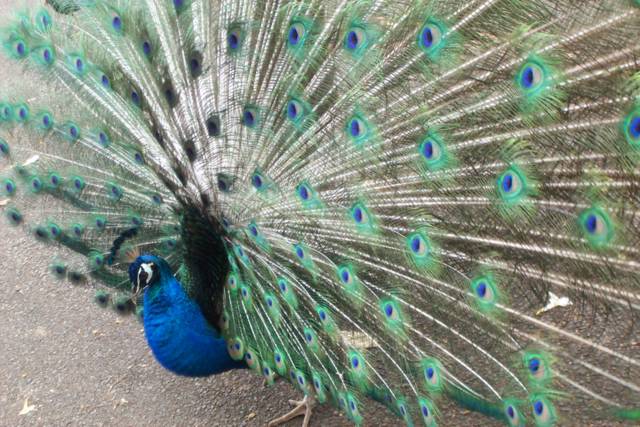
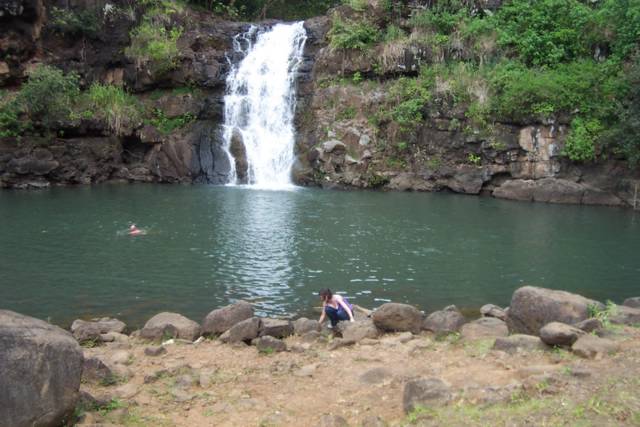
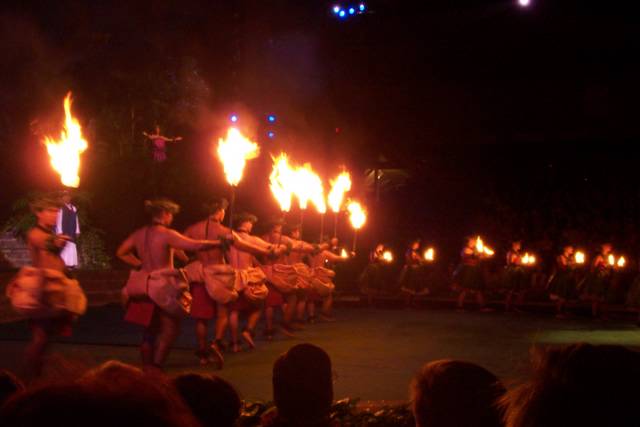

So, my dad has been saving up frequent flier miles for years to take my mom to Hawaii. But my mom wanted to take the whole family. (Thank you, Mom!) The complicated nature of a project like that, and the sheer number of frequent flier miles required, and the way that busy people have of putting off vacations, meant it felt like it was never going to happen.
Until some friends -- they were our next door neighbors twenty years ago in San Antonio, and moved to Colorado shortly after we did, for the first time -- invited us along on their Hawaii trip, to see their daughter's graduation. (These same friends had come along on my parents' trip to see my graduation, in the Seattle area. So there was a kind of symmetry.)
What this meant for Ken and me was that we got a call out of the blue one day: "If we went to Hawaii in May, would you be interested in coming?"
There is only one possible answer to that question. (Well, there are two, but "Duh!" isn't very polite...) That's the kind of prize you usually only win on a game show. On Fear Factor, you'd have to eat a couple of pounds of live insects just for a chance at a prize like that.
Since we had nothing to do in regards to planning this trip, it sort of got pushed out of our minds, as work got more and more stressful and Ken's candidacy came over the horizon. But all of the sudden it was time to go. Frequent flier miles had been spent on tickets in our name. A beach house was reserved with room for six (if two slept on a futon in the living room.) All we had to do was pack our bags the night before, and catch a cab to the aiport. (We caught the cab at 3:00AM, from the lab, where we had stopped to check on the baking vacuum system).
It was a surreal experience (especially with the ten hour flight and the five hour time zone change.) But when we got to the beach house, it was literally on the beach. You could watch surfers from the deck.
And we did. For a week, we watched surfers (including my brother and sister, and also the friends who invited us) and grilled out, and played in the waves. Gorgeous white sand.
And then we did all the activities the guide book told us too, too many to describe. But the highlights were a swim with dolphins who really did seem uncannily human, and, the final night, a luau and show at the Polynesian Cultural Center, complete with Fire Knife Dancers.
I filled up my camera's flash card for the first time ever. And half a dozen rolls of film. So even though it went fast, I'm definitely going to remember it.
Saturday, May 06, 2006
Serendipity
So, two Fridays ago, we were in the lab doing the kind of horrible stuff I described in the "Happy Monday" post. I was trying to shine light onto one end of an especially skinny fiber optic fiber and get it to come out the other end, and not having much success, when I noticed a funny smell. Usually in our lab, when you smell something funny, it means something is burning, probably the insulation on some high current wires... I asked Ken and our post doc if they smelled it. Our post-doc said "that's gas." And we were all confused, because what in our lab uses gas?
Still, we assumed the problem was coming from our lab, and went to tell our advisor. He could smell it in his office, too. And the hallway. Could it be coming from our other lab? Should we see if it smelled so strong in other hallways? He called facilities management to report it. They had no advice for us. As we stood around trying to decide what to investigate, we all began to feel a bit woozy, and went outside.
Other people were pouring out. From all of the hallways. We decided it probably wasn't us. There was some construction on the north side of the building, maybe they hit a pipe. Beautiful, sunny day. We stood around talking with a friend for a while, and then decided to go for lunch. The Fire Department had been called. We could see emergency lighting. We figured the building would be closed for a while.
But when we got to the student union building, on the other side of campus, the power was out. So then we started worrying -- if there's a power outage and our pumps go off, and then later the power goes on but the pressure is high, that can kill the pumps. About $10,000, right there. And if the power wasn't out... Should we tell people the lasers were on? We hadn't wanted to turn them off in case that caused sparks..
So, anyway, we went to our post-doc's place, spent some time on the phone with some very confused people who contradicted each other but finally said the power was on in our building (which seemed very strange, as that's where the gas leak was) and that our equipment was fine, decided we'd done all we could. We enjoyed a delicious lunch, and then a walk by the lake. We eventually went back to check on everything, after the all-clear, but it was basically a really nice day off, outside, out of our darkened lab with its tedious little knobs... We decided there should be a gas leak every Friday.
But what we didn't know, was that the fates were conspiring to give us our nice day off...
I have only two further comments to make on these amazing revelations: First, Eugene S. Sunshine? And second, a "subject" in the lab? Because grad students are subjects of his royal highness, their advisor, I guess...
But for a single day, all us subjects threw off the chains of our oppressors, and enjoyed the sunshine.
Still, we assumed the problem was coming from our lab, and went to tell our advisor. He could smell it in his office, too. And the hallway. Could it be coming from our other lab? Should we see if it smelled so strong in other hallways? He called facilities management to report it. They had no advice for us. As we stood around trying to decide what to investigate, we all began to feel a bit woozy, and went outside.
Other people were pouring out. From all of the hallways. We decided it probably wasn't us. There was some construction on the north side of the building, maybe they hit a pipe. Beautiful, sunny day. We stood around talking with a friend for a while, and then decided to go for lunch. The Fire Department had been called. We could see emergency lighting. We figured the building would be closed for a while.
But when we got to the student union building, on the other side of campus, the power was out. So then we started worrying -- if there's a power outage and our pumps go off, and then later the power goes on but the pressure is high, that can kill the pumps. About $10,000, right there. And if the power wasn't out... Should we tell people the lasers were on? We hadn't wanted to turn them off in case that caused sparks..
So, anyway, we went to our post-doc's place, spent some time on the phone with some very confused people who contradicted each other but finally said the power was on in our building (which seemed very strange, as that's where the gas leak was) and that our equipment was fine, decided we'd done all we could. We enjoyed a delicious lunch, and then a walk by the lake. We eventually went back to check on everything, after the all-clear, but it was basically a really nice day off, outside, out of our darkened lab with its tedious little knobs... We decided there should be a gas leak every Friday.
But what we didn't know, was that the fates were conspiring to give us our nice day off...
From: Eugene S. Sunshine, Vice President for Business and Finance, and C. Bradley Moore, Vice President for Research
On Friday April 21, 2006 at approximately 11:02 AM University Police (UP) began to receive numerous phone calls of a strong odor of natural gas in campus buildings. The Fire Department was immediately notified and responded along with UP officers and Facilities Management personnel.
As building evacuations were proceeding, a member of the Office for Research Safety responded to the incident command post and reported a small spill of the reagent Thiol in the Center for Nanofabrication and Molecular Self-Assembly. This chemical is not harmful but emits a strong odor similar to the smell of natural gas. This chemical spill was later identified as the cause of the natural gas smell in multiple buildings.
At approximately 11:30 AM a power outage occurred affecting a portion of the campus. The outage was caused by tree removal work that damaged a power transformer. The outage affected approximately 16 campus buildings including some of those reporting the smell of natural gas.
At 12:34 PM, after the affected buildings were reopened, a fire was reported in a laboratory hood in the Center for Catalysis and Surface Science. The Fire Department responded and learned that a subject in the lab had utilized a fire extinguisher to extinguish the fire. The subject then left the room and activated the fire alarm system in the building. The Fire Department inspected the affected hood and determined that damage was confined to the inside of the hood. The fire alarm was reset and the building was declared safe.
No injuries were reported in these incidents. No significant damage to facilities occurred. A post-event action report to analyze the response of participating agencies and departments is being developed to identify strengths and areas for improvement.
I have only two further comments to make on these amazing revelations: First, Eugene S. Sunshine? And second, a "subject" in the lab? Because grad students are subjects of his royal highness, their advisor, I guess...
But for a single day, all us subjects threw off the chains of our oppressors, and enjoyed the sunshine.
Monday, May 01, 2006
Happy Monday
Today, I spent trying to turn eight teeny tiny screws by hundredths of a degree at a time (without going too far) in order to line up teeny-tiny reflections, which disappear when you try to see where they are. Oh, and they can only be seen at all through a special viewer. In the dark. And that's not counting a couple of dozen other screws that had to be adjusted before I could even start... And this is also what I did Friday. And Thursday. Except those days, I didn't give myself a 400V shock on the piezo. (I'm fine.) I don't know why this is so hard for me. It shouldn't be. It wasn't, before. Somebody shoot me.
Fortunately, the weekend was spent doing other things. Watched the Cubs get embarrassed twice by the Brewers (just after I posted that last thing about them, with the stuff about Derek Lee being everybody's hero, he broke his wrist on an unlikely collision at first base, and was sidelined for the first half of the season. Because he's a Cub.) Listened to sports radio all day as they covered the Bears draft. I don't even like football that much, but I can tell you all about Danieal ("Dan-yell") Manning's career at Division II Abilene Christian. And we went over to a friend's place (actually, our post-doc's) to watch the Bulls win a playoff game.
Yes, I have watched a lot more sports since I got married, but just in case you think the influence is all one way -- Ken did go to a local farmer's market with me on Saturday.
So, busy weekend, mind-numbing, spirit-destroying workdays = little blog material.
But here's a link I want to put out there as a follow-up to my last post:
More worker riots in Dubai. Most of the deported rioters were construction workers from India. The blurb is short, and mostly interesting because of its context. The blog luxist mostly covers crazy and crazy-expensive products like "beer spas," pet jewelry, and celebrity real-estate. This story belongs because the building they were working on targets "the sophisticated, young and upwardly mobile professional of the middle to high income class" and "offers a very select number of sought after villas and one extravagant penthouse apartment that takes up the complete top floor of the building and is complemented by a private outdoor swimming pool and rooftop entertainment area." It's just a not-quite-ironic contrast.
A commenter links a Washington Post story about the life of workers in Dubai in general -- about what was described in the Tribune's article, but here the "villains" aren't American corporations but only American-style corporations.
But I'm not up for the full length post this deserves, with asides on immigrant rights rallies, and outsourcing.
Maybe later.
Fortunately, the weekend was spent doing other things. Watched the Cubs get embarrassed twice by the Brewers (just after I posted that last thing about them, with the stuff about Derek Lee being everybody's hero, he broke his wrist on an unlikely collision at first base, and was sidelined for the first half of the season. Because he's a Cub.) Listened to sports radio all day as they covered the Bears draft. I don't even like football that much, but I can tell you all about Danieal ("Dan-yell") Manning's career at Division II Abilene Christian. And we went over to a friend's place (actually, our post-doc's) to watch the Bulls win a playoff game.
Yes, I have watched a lot more sports since I got married, but just in case you think the influence is all one way -- Ken did go to a local farmer's market with me on Saturday.
So, busy weekend, mind-numbing, spirit-destroying workdays = little blog material.
But here's a link I want to put out there as a follow-up to my last post:
More worker riots in Dubai. Most of the deported rioters were construction workers from India. The blurb is short, and mostly interesting because of its context. The blog luxist mostly covers crazy and crazy-expensive products like "beer spas," pet jewelry, and celebrity real-estate. This story belongs because the building they were working on targets "the sophisticated, young and upwardly mobile professional of the middle to high income class" and "offers a very select number of sought after villas and one extravagant penthouse apartment that takes up the complete top floor of the building and is complemented by a private outdoor swimming pool and rooftop entertainment area." It's just a not-quite-ironic contrast.
A commenter links a Washington Post story about the life of workers in Dubai in general -- about what was described in the Tribune's article, but here the "villains" aren't American corporations but only American-style corporations.
But I'm not up for the full length post this deserves, with asides on immigrant rights rallies, and outsourcing.
Maybe later.
Wednesday, March 15, 2006
What's the Point of Having a Blog...
If you're not going to brag?

Those are the pieces I made in the machine shop class. Two sets of bookends, four candle-stick holders, a plumb bob, and a paperweight/pencil holder. The silvery ones are aluminum, and the goldish ones are brass. We used a grinder, a horizontal band saw, a vertical band saw, a milling machine, and an oxyacetalene torch, to solder the tubes on the candlestick holders to their bases. It was not, technically, welding. But I did have to light the torch myself.
One of my bookends has an extra set of holes on the bottom. That's because, in trying to make the holes threaded so that I could put a screw in them, I accidentally broke a tap off in one of them. Also, one of the ring-shaped handles on the candlesticks is loose, because they too are held on by little screws, but I went too deep with the center drill and made my hole a little too big for the tap, so that there are only one or two threads in the hole, and the screw doesn't tighten well.
Still, I did better than I thought I would, considering my general level of clumsiness, and the inability to erase mistakes.
The guy who taught the class, Jim, is retiring this quarter after forty-something years of doing this. He has infinite patience and is good at explaing things without making you feel stupid, even if it's the fourth or fifth time you've asked. I feel lucky to have gotten to take the class with him.
All in all an experience I am grateful to have had. Even if I'm also grateful not to have to get up so early on Tuesday mornings anymore...
Those are the pieces I made in the machine shop class. Two sets of bookends, four candle-stick holders, a plumb bob, and a paperweight/pencil holder. The silvery ones are aluminum, and the goldish ones are brass. We used a grinder, a horizontal band saw, a vertical band saw, a milling machine, and an oxyacetalene torch, to solder the tubes on the candlestick holders to their bases. It was not, technically, welding. But I did have to light the torch myself.
One of my bookends has an extra set of holes on the bottom. That's because, in trying to make the holes threaded so that I could put a screw in them, I accidentally broke a tap off in one of them. Also, one of the ring-shaped handles on the candlesticks is loose, because they too are held on by little screws, but I went too deep with the center drill and made my hole a little too big for the tap, so that there are only one or two threads in the hole, and the screw doesn't tighten well.
Still, I did better than I thought I would, considering my general level of clumsiness, and the inability to erase mistakes.
The guy who taught the class, Jim, is retiring this quarter after forty-something years of doing this. He has infinite patience and is good at explaing things without making you feel stupid, even if it's the fourth or fifth time you've asked. I feel lucky to have gotten to take the class with him.
All in all an experience I am grateful to have had. Even if I'm also grateful not to have to get up so early on Tuesday mornings anymore...
Friday, March 03, 2006
The Power of Procrastination
I usually skip the speakers invited to talk by my department. I went a couple of times at first, but didn't find it rewarding. What these speakers are usually trying to do, is impress you. This means they use a lot of jargon and complicated graphs, and try to cram every result they've ever gotten into a one hour presentation. So you, as an audience member, have little to no chance of understanding what they're talking about at all. First, because they don't leave themselves time to explain the basics of their field. Second, because if you understood, you probably wouldn't be as impressed.
But last night I made an exception. Our whole lab attended a talk by Jorge Cham, the creator of Piled Higher and Deeper. You know, that comic strip I keep linking to.
He was great. It was like stand-up comedy with Powerpoint. Why don't more stand-up comedians use Powerpoint?
It was also thereputic. The thing about these comics is, we've all had these experiences. We've all been humiliated. We've all been ignored. We've all panicked. We've all been depressed. We've all been desperate. We've all felt like imposters. We've all considered quitting. According to a study Cham cited, 10% of us have considered suicide, and 1 in 200 actually attempted it. But we never see each other. We all think we're alone. The strip is nice because it tells us we're not. This guy we've never met knows exactly what we're going through. And he has thousands of readers. And he told us to look around the room and see how many people from our own university were laughing at these painful jokes, about being ignored by your advisor. About getting nowhere on your project. About having your ego crushed. About feeling overwhelmed.
At it was really nice to see all these people, to laugh with them. (Our post-doc was laughing so hard he could hardly breathe. That was nice to see.)
The title of the talk was "The Power of Procrastination." The message was -- yes, there are more important things you should be doing right now instead of attending this talk. Or watching TV. Or hanging out with your friends. Or being outside. But there will always be more important things you should be doing. You can't ever be finished with them. So you have no real choice but to put them off, if you ever want to do anything else. Try not to feel so guilty about it.
There were also some words of warning, now that he's graduated -- writing your dissertation will nearly kill you. You will not be happy with your work. And no one will ever read it. But the tenure process makes getting your degree look easy. This is why your professor has no sympathy for you. The academic job market sucks (but you don't have to stay in academia.) Get used to being rejected.
Man, for some reason when I say it, instead of him, this stuff sounds a lot less hilarious...
Interestingly, this morning, I followed a link from Word Munger to a page postulating that the reason there aren't more women in university science departments, is that jobs in university science departments are terrible. Their only attraction is as booby prizes in a sort of pissing contest, and women don't do pissing contests. Those jobs do seem more attractive if you are from China or India, where the standard of living is lower, but immigrant work forces are usually composed mainly of men. (In case you're wondering, Americans are traditionally the minority among physics grad students at major universities.) This sounds pretty cynical, but last night when Cham said the Big Question of grad student life was "Why?!" he got one of his biggest laughs. It's funny 'cause it's true.
Sounds like a depressing talk, but really, it put us in a good mood. It's just so reassuring to be told that it's not us, it's the system. We may feel like failures, but so does everyone else. And there's nothing wrong with a little procrastination. It was exactly what we needed to hear.
Thank you, Jorge Cham.
But last night I made an exception. Our whole lab attended a talk by Jorge Cham, the creator of Piled Higher and Deeper. You know, that comic strip I keep linking to.
He was great. It was like stand-up comedy with Powerpoint. Why don't more stand-up comedians use Powerpoint?
It was also thereputic. The thing about these comics is, we've all had these experiences. We've all been humiliated. We've all been ignored. We've all panicked. We've all been depressed. We've all been desperate. We've all felt like imposters. We've all considered quitting. According to a study Cham cited, 10% of us have considered suicide, and 1 in 200 actually attempted it. But we never see each other. We all think we're alone. The strip is nice because it tells us we're not. This guy we've never met knows exactly what we're going through. And he has thousands of readers. And he told us to look around the room and see how many people from our own university were laughing at these painful jokes, about being ignored by your advisor. About getting nowhere on your project. About having your ego crushed. About feeling overwhelmed.
At it was really nice to see all these people, to laugh with them. (Our post-doc was laughing so hard he could hardly breathe. That was nice to see.)
The title of the talk was "The Power of Procrastination." The message was -- yes, there are more important things you should be doing right now instead of attending this talk. Or watching TV. Or hanging out with your friends. Or being outside. But there will always be more important things you should be doing. You can't ever be finished with them. So you have no real choice but to put them off, if you ever want to do anything else. Try not to feel so guilty about it.
There were also some words of warning, now that he's graduated -- writing your dissertation will nearly kill you. You will not be happy with your work. And no one will ever read it. But the tenure process makes getting your degree look easy. This is why your professor has no sympathy for you. The academic job market sucks (but you don't have to stay in academia.) Get used to being rejected.
Man, for some reason when I say it, instead of him, this stuff sounds a lot less hilarious...
Interestingly, this morning, I followed a link from Word Munger to a page postulating that the reason there aren't more women in university science departments, is that jobs in university science departments are terrible. Their only attraction is as booby prizes in a sort of pissing contest, and women don't do pissing contests. Those jobs do seem more attractive if you are from China or India, where the standard of living is lower, but immigrant work forces are usually composed mainly of men. (In case you're wondering, Americans are traditionally the minority among physics grad students at major universities.) This sounds pretty cynical, but last night when Cham said the Big Question of grad student life was "Why?!" he got one of his biggest laughs. It's funny 'cause it's true.
Sounds like a depressing talk, but really, it put us in a good mood. It's just so reassuring to be told that it's not us, it's the system. We may feel like failures, but so does everyone else. And there's nothing wrong with a little procrastination. It was exactly what we needed to hear.
Thank you, Jorge Cham.
Monday, February 06, 2006
Measure Twice -- Cut Once
Part of me has always been attracted to science because it's not girly. "What's wrong with girly?" you ask. Well, the good feminist in me would rather do non-girly things because she doesn't like the implication that she can't do them. The evil anti-feminist in me likes non-girly things better because girl stuff is boring. It's usually guys who have all the adventures, in books and movies and so on, and when girls do participate (Alien, Alias...) you get the feeling they're not the kind of girls who sew.
So... what could be more manly than machine tools? Drill presses, grinders, band saws, spinning blades of all descriptions, capable of slicing right through steel (and bone! Grr!) Mere "power tools" are for wimps. Oh, and soon we'll be welding!
But what I have learned (and I commented briefly on this before) is that the actual skill sets for these things seriously overlap those of the girlier arts.
For instance -- it is amazing how similar the workings of a vertical band saw are to those of a sewing machine. Sewing machines have a spindle and a bobbin. Vertical band saws have a drive wheel and an idler. The main difference is that the thread keeps unspooling, while the band simply goes round in circles, but the mechanics are the same. On a sewing machine, you can lower the "foot" to hold your material in place and ensure that you stitch a straight line. On a vertical band saw, you can lower a foot to hold your material in place and ensure that you cut a straight line. Except I think they don't call it a "foot." That's just what I've been calling it, in my head. Both are manual drive machines, meaning that the needle (or saw blade) moves up and down and the operator moves the fabric (or metal) across. Stitching a curved line and cutting a curved line are both difficult, but if you can do one, you can do the other. Treat the needle (or blade) as the center of the circle and move the work piece in arc around it as you push it through. Both have adjustable speeds, and you need different needles for different fabrics, just as you need different blades for different metals. And don't kid yourself: a needle through the finger may not be quite as bad as a slice through the tip, but it's nothing you're gonna laugh off, either.
The last step of our first project (a plumb bob) was to put a piece of string through the hole we'd drilled. This was difficult, 'cause the hole was long and the string was floppy. I couldn't resist pointing out that a tool existed for doing this job - the humble needle threader. This is just a fine piece of wire folded into a loop. Stick the loop through the hole in the needle (or screw). Put the thread through the loop. Pull the loop back through the hole. They didn't have any of those in the shop. I have one at home, in the little sewing kit I bought the last time my keys tore through the lining of my coat pocket.
And then there's the whole process of planning, measuring, marking, tracing, leaving extra material around the edges on your first cut, the scrap baskets for small pieces that might come in handy later.... And honestly, is my plumb bob really any more useful than any of the decorative pillows I made in Brownies?
Okay, sewing doesn't involve fire, and machining eventually will. But on the other hand, cooking does, at least if you use a gas stove. (Man, I hope the welding torch lights itself. I hate lighting invisible streams of gas. Stoves, ovens, fireplaces, Bunsen burners... I always panic that either I'm going to somehow light the whole stream of gas, all down the pipe, and explode the building, or fill the room with gas and explode the building.)
I feel like I've made a discovery, here. Like there can't be all that many people who've noticed these similarities, because how many people have actually used both a sewing machine and a vertical band saw? How many people took both shop class and Home Ec in high school? Why are there so few? If you enjoy one of them, you ought to like the other. It's all about working with your hands, making things. If you're good at one, you'll be good at the other. What I think we need, is a class that teaches both.
So... what could be more manly than machine tools? Drill presses, grinders, band saws, spinning blades of all descriptions, capable of slicing right through steel (and bone! Grr!) Mere "power tools" are for wimps. Oh, and soon we'll be welding!
But what I have learned (and I commented briefly on this before) is that the actual skill sets for these things seriously overlap those of the girlier arts.
For instance -- it is amazing how similar the workings of a vertical band saw are to those of a sewing machine. Sewing machines have a spindle and a bobbin. Vertical band saws have a drive wheel and an idler. The main difference is that the thread keeps unspooling, while the band simply goes round in circles, but the mechanics are the same. On a sewing machine, you can lower the "foot" to hold your material in place and ensure that you stitch a straight line. On a vertical band saw, you can lower a foot to hold your material in place and ensure that you cut a straight line. Except I think they don't call it a "foot." That's just what I've been calling it, in my head. Both are manual drive machines, meaning that the needle (or saw blade) moves up and down and the operator moves the fabric (or metal) across. Stitching a curved line and cutting a curved line are both difficult, but if you can do one, you can do the other. Treat the needle (or blade) as the center of the circle and move the work piece in arc around it as you push it through. Both have adjustable speeds, and you need different needles for different fabrics, just as you need different blades for different metals. And don't kid yourself: a needle through the finger may not be quite as bad as a slice through the tip, but it's nothing you're gonna laugh off, either.
The last step of our first project (a plumb bob) was to put a piece of string through the hole we'd drilled. This was difficult, 'cause the hole was long and the string was floppy. I couldn't resist pointing out that a tool existed for doing this job - the humble needle threader. This is just a fine piece of wire folded into a loop. Stick the loop through the hole in the needle (or screw). Put the thread through the loop. Pull the loop back through the hole. They didn't have any of those in the shop. I have one at home, in the little sewing kit I bought the last time my keys tore through the lining of my coat pocket.
And then there's the whole process of planning, measuring, marking, tracing, leaving extra material around the edges on your first cut, the scrap baskets for small pieces that might come in handy later.... And honestly, is my plumb bob really any more useful than any of the decorative pillows I made in Brownies?
Okay, sewing doesn't involve fire, and machining eventually will. But on the other hand, cooking does, at least if you use a gas stove. (Man, I hope the welding torch lights itself. I hate lighting invisible streams of gas. Stoves, ovens, fireplaces, Bunsen burners... I always panic that either I'm going to somehow light the whole stream of gas, all down the pipe, and explode the building, or fill the room with gas and explode the building.)
I feel like I've made a discovery, here. Like there can't be all that many people who've noticed these similarities, because how many people have actually used both a sewing machine and a vertical band saw? How many people took both shop class and Home Ec in high school? Why are there so few? If you enjoy one of them, you ought to like the other. It's all about working with your hands, making things. If you're good at one, you'll be good at the other. What I think we need, is a class that teaches both.
Saturday, January 14, 2006
The Toolmaker
I just read a book by Jill Patton Walsh, who is one of my favorite authors...
I first heard of her when she finished Dorothy Sayers’ unfinished novel Thrones, Dominions. I liked this enough to pick up her book about an atheist in a fantasy Inquisition-era Spain, called Knowledge of Angels. That one really got under my skin, with its portrayal of the suffering of a man of the sort I described in my last entry, a bishop whose faith is built on logic alone, when that faith is undermined by logical counter-arguments. So I read more. A book about aristocratic refugees in an imaginary Eastern European country, during and after their communist revolution (A Desert in Bohemia). A book about survivor guilt, years later, after a lifeboat accident (The Serpentine Cave). And then I discovered that she was primarily known for her children’s books. My university library had one. A story about a family who escapes Earth just before it is destroyed (The Green Book). A (true) story about a light-house keeper’s daughter who goes from isolation to celebrity after she rescues boaters. (Grace). A story about the fall of Byzantium (The Emporer’s Winding Sheet.) A story about the plague ( A Parcel of Patterns.) She is one of the least known of my favorite authors -- probably because she is still alive and writing. And she answered my e-mails a couple of times.
I wrote to her because some of the things she’d written were about women and academia (the Imogen Quy mysteries) and because she was clearly a Dorothy Sayers fan, and Dorothy Sayers was all about the kind of questions I was facing... After a year in grad school, I was starting to feel like I was wasting my time. I was starting to wonder if an academic career was really enough to give my life meaning. This was before I knew Ken (although I’d already seen him in our quantum mechanics class – okay, stared at him in quantum mechanics class – I figured he was way out of my league). The future I pictured for myself, if I stayed in grad school and kept on as I was going, was as bookish spinster. I didn’t really want that future. It didn’t seem like enough. I couldn’t imagine that I would ever do important enough work to justify my life by work alone. I certainly wasn’t doing it as a first year grad student. On the other hand, I didn’t really want to believe that I needed a husband and a family to make my life meaningful. Did I want to say Donna Reed’s life was more meaningful than Emily Noether’s? Did men need families to make their lives meaningful? Now, facing a much different future, I’m embarrassed by the memory of asking these questions of practically every woman I admired, or who was still single. Professors and authors. I put them in an uncomfortable position, and must have sounded hopelessly young. But Jill Patton Walsh was very gentle with me. I think she told me, more or less, that I was going to be disappointed if I was hoping for someone else to give my life meaning. But I couldn’t count on my work doing that for me either.
Okay, so the book of hers I just finished was called Toolmaker. It’s about a man in a prehistoric hunter-gatherer tribe who is better than his fellow tribesmen at making flint axes and arrow heads and so on. So they ask him to do it for them, leaving him no time to hunt. They bring him food. But he becomes too specialized, losing the ability to hunt for himself, and when times are lean, they are no longer interested in his toolmaking ability. He loses his status in his tribe. I won’t tell you how it ends. It’s a sort of parable, but you can take lots of different lessons from it... One of the most obvious being that it’s a bad idea to look down on your toolmakers, just because they don’t hunt. (Another being that it’s dangerous to become too specialized...)
Now, when you hear this story, who do you think of as the modern "toolmakers"? Are you thinking "intellectuals," scientists, professors, etc? ‘Cause I’m not. I’m thinking of the guys in the machine shop, who make the tools. The longer I stay in this field, the more natural the analogy of research scientist as hunter seems to me. (Their elusive prey? Grants.) And too often they do look down at the people who do the real, dangerous, and difficult work of shaping precision instruments capable of probing the smallest scales under the worst extremes of temperature, pressure, and in the presence of dangerous chemicals.
I finally started the machine shop class. The instructor has told us we should not hope to become machinists after only eight weeks (their apprenticeships last for years) but I am hoping to at least gain a better appreciation of what it takes. We spent the first day grinding a cutting tool that we will later use with the milling machine (I don’t know how or why, yet.) And we cut the our raw materials for our other products into rough outlines of the shapes we needed – and I do mean rough.
I still want meaningful work. In some ways the stuff I do in the machine shop seems more meaningful than the stuff I do in the lab. Ken says he felt the same, when he took the class. He misses that. But I also don’t want to rely on work alone to give my life meaning. The toolmaker in the book spends a lot of his time lonely, outcast, at one point, almost suicidal.
It’s so funny. I used to worry about this stuff, and think that what I needed was either to do something more important than homework, real research, or find a man, and I agonized over which was more important... Now I’m in a lab and I’m married, and I see that the problem never really had anything to do with either one.
I first heard of her when she finished Dorothy Sayers’ unfinished novel Thrones, Dominions. I liked this enough to pick up her book about an atheist in a fantasy Inquisition-era Spain, called Knowledge of Angels. That one really got under my skin, with its portrayal of the suffering of a man of the sort I described in my last entry, a bishop whose faith is built on logic alone, when that faith is undermined by logical counter-arguments. So I read more. A book about aristocratic refugees in an imaginary Eastern European country, during and after their communist revolution (A Desert in Bohemia). A book about survivor guilt, years later, after a lifeboat accident (The Serpentine Cave). And then I discovered that she was primarily known for her children’s books. My university library had one. A story about a family who escapes Earth just before it is destroyed (The Green Book). A (true) story about a light-house keeper’s daughter who goes from isolation to celebrity after she rescues boaters. (Grace). A story about the fall of Byzantium (The Emporer’s Winding Sheet.) A story about the plague ( A Parcel of Patterns.) She is one of the least known of my favorite authors -- probably because she is still alive and writing. And she answered my e-mails a couple of times.
I wrote to her because some of the things she’d written were about women and academia (the Imogen Quy mysteries) and because she was clearly a Dorothy Sayers fan, and Dorothy Sayers was all about the kind of questions I was facing... After a year in grad school, I was starting to feel like I was wasting my time. I was starting to wonder if an academic career was really enough to give my life meaning. This was before I knew Ken (although I’d already seen him in our quantum mechanics class – okay, stared at him in quantum mechanics class – I figured he was way out of my league). The future I pictured for myself, if I stayed in grad school and kept on as I was going, was as bookish spinster. I didn’t really want that future. It didn’t seem like enough. I couldn’t imagine that I would ever do important enough work to justify my life by work alone. I certainly wasn’t doing it as a first year grad student. On the other hand, I didn’t really want to believe that I needed a husband and a family to make my life meaningful. Did I want to say Donna Reed’s life was more meaningful than Emily Noether’s? Did men need families to make their lives meaningful? Now, facing a much different future, I’m embarrassed by the memory of asking these questions of practically every woman I admired, or who was still single. Professors and authors. I put them in an uncomfortable position, and must have sounded hopelessly young. But Jill Patton Walsh was very gentle with me. I think she told me, more or less, that I was going to be disappointed if I was hoping for someone else to give my life meaning. But I couldn’t count on my work doing that for me either.
Okay, so the book of hers I just finished was called Toolmaker. It’s about a man in a prehistoric hunter-gatherer tribe who is better than his fellow tribesmen at making flint axes and arrow heads and so on. So they ask him to do it for them, leaving him no time to hunt. They bring him food. But he becomes too specialized, losing the ability to hunt for himself, and when times are lean, they are no longer interested in his toolmaking ability. He loses his status in his tribe. I won’t tell you how it ends. It’s a sort of parable, but you can take lots of different lessons from it... One of the most obvious being that it’s a bad idea to look down on your toolmakers, just because they don’t hunt. (Another being that it’s dangerous to become too specialized...)
Now, when you hear this story, who do you think of as the modern "toolmakers"? Are you thinking "intellectuals," scientists, professors, etc? ‘Cause I’m not. I’m thinking of the guys in the machine shop, who make the tools. The longer I stay in this field, the more natural the analogy of research scientist as hunter seems to me. (Their elusive prey? Grants.) And too often they do look down at the people who do the real, dangerous, and difficult work of shaping precision instruments capable of probing the smallest scales under the worst extremes of temperature, pressure, and in the presence of dangerous chemicals.
I finally started the machine shop class. The instructor has told us we should not hope to become machinists after only eight weeks (their apprenticeships last for years) but I am hoping to at least gain a better appreciation of what it takes. We spent the first day grinding a cutting tool that we will later use with the milling machine (I don’t know how or why, yet.) And we cut the our raw materials for our other products into rough outlines of the shapes we needed – and I do mean rough.
I still want meaningful work. In some ways the stuff I do in the machine shop seems more meaningful than the stuff I do in the lab. Ken says he felt the same, when he took the class. He misses that. But I also don’t want to rely on work alone to give my life meaning. The toolmaker in the book spends a lot of his time lonely, outcast, at one point, almost suicidal.
It’s so funny. I used to worry about this stuff, and think that what I needed was either to do something more important than homework, real research, or find a man, and I agonized over which was more important... Now I’m in a lab and I’m married, and I see that the problem never really had anything to do with either one.
Monday, December 26, 2005
Boxing Day
I got footware, fancy boots and running shoes, from the only person in the world who could possibly buy these things for me without me being there to try them on. I have my mother's feet, right down to our pinky toes. The running shoes have survived two wintery runs of about four miles each, and no blisters. I also got slippers from my sister, who knew I needed them, with wooden floors and my old ones lost and the $1 pink pair I bought at the grocery store not really fitting. And she got me a hat/glove/scarf set that matches the boots, and the blouse and necklace my parents also got. I dressed up in it for the Christmas day Bears game, at Ken's dad's house. And we shared Amazon gift certificate from Patrick, and I got books from Ken's dad, and a shirt, and a chicken soup dinner, at half-time.
I won't list everything Ken got me, but it included oil pastels and grease pencils and a spirograph kit and a globe that goes from earth to star-chart depending on the light level in the room, and a crank-powered flashlight/radio, and a handheld sewing machine, and Nancy Drew's Guide to Life, and a hoodie for those winter runs... He knows me too well, buys better gifts than I would have thought to buy myself.
And I won't list the things everyone else got (even though I think all of it is pretty cool stuff) except to link to the custom M&Ms page, where I ordered my sister's gift, because this possibility is too neat not to share. Unfortunately, they didn't arrive by Christmas, even though I ordered almost a month early, so be warned.
The mood here is pretty good. The Bears are in the playoffs, and we get a semi-vacation from work, because the cooling water is shut down for maintenance which means we can't turn on the lasers. We still have to go in to check on the vaccuum system (which is "baking" -- wrapped in heater wires and tinfoil and slowly heated, to vaporize any microscopic gunk that may be stuck the walls, so that the pump can pump it away) and make sure the building hasn't burned down, but otherwise we are free to spend our days playing with our new toys, books, and video games, watching sports and game shows and mindless reality TV (the guilty pleasures of those without cable), and working our way through "24" on DVD before the start of the new season. We might even leave the apartment at some point! It's like being an undergrad again.
This also probably means more blogging. I promise the next one will be about a topic besides my personal life. The more time I have on my hands, the more opinionated I get.
(Oh, and in case you were wondering -- yes that is the Millennium Falcon on our Christmas tree.)
I won't list everything Ken got me, but it included oil pastels and grease pencils and a spirograph kit and a globe that goes from earth to star-chart depending on the light level in the room, and a crank-powered flashlight/radio, and a handheld sewing machine, and Nancy Drew's Guide to Life, and a hoodie for those winter runs... He knows me too well, buys better gifts than I would have thought to buy myself.
And I won't list the things everyone else got (even though I think all of it is pretty cool stuff) except to link to the custom M&Ms page, where I ordered my sister's gift, because this possibility is too neat not to share. Unfortunately, they didn't arrive by Christmas, even though I ordered almost a month early, so be warned.
The mood here is pretty good. The Bears are in the playoffs, and we get a semi-vacation from work, because the cooling water is shut down for maintenance which means we can't turn on the lasers. We still have to go in to check on the vaccuum system (which is "baking" -- wrapped in heater wires and tinfoil and slowly heated, to vaporize any microscopic gunk that may be stuck the walls, so that the pump can pump it away) and make sure the building hasn't burned down, but otherwise we are free to spend our days playing with our new toys, books, and video games, watching sports and game shows and mindless reality TV (the guilty pleasures of those without cable), and working our way through "24" on DVD before the start of the new season. We might even leave the apartment at some point! It's like being an undergrad again.
This also probably means more blogging. I promise the next one will be about a topic besides my personal life. The more time I have on my hands, the more opinionated I get.
(Oh, and in case you were wondering -- yes that is the Millennium Falcon on our Christmas tree.)
Monday, November 14, 2005
Birthday Gift
Whoever sent the Bears win for Ken's birthday yesterday, thank you. It was much appreciated.
Sunday, October 30, 2005
Daylight Savings Time
Personally I am saving my extra hour for tomorrow morning, and thus my watch says ten to three. Unfortunately my computer clock and television schedule are not cooperating.
I wish the changover were on Sunday night instead, so that we could all have an extra-long breakfast Monday morning before going to work. But the "spring forward should be Friday afternoon, so that everyone gets to go home that much earlier.
Having "spring forward" on Saturday night caused me to be an hour late for my Sunday job at the Botanic Garden in Durham, once, but according to my coworker, it was all right, as she hadn't expected me to be aware of the change-over anyway. How do you react to that?
For more Daylight Saving Time Incidents and Anecdotes check out that link. Ken found it. There's a bit that says every year a bill is introduced in Congress to extend it through Halloween, for the safety of trick-or-treaters. I wonder why it hasn't passed yet? One more week would do. Perhaps trick-or-treaters would just way until dark regardless, though...
Anyway, these are anecdotes that you can repeat in conversation and expect a nice, "Huh. Really?" in response.
I wish the changover were on Sunday night instead, so that we could all have an extra-long breakfast Monday morning before going to work. But the "spring forward should be Friday afternoon, so that everyone gets to go home that much earlier.
Having "spring forward" on Saturday night caused me to be an hour late for my Sunday job at the Botanic Garden in Durham, once, but according to my coworker, it was all right, as she hadn't expected me to be aware of the change-over anyway. How do you react to that?
For more Daylight Saving Time Incidents and Anecdotes check out that link. Ken found it. There's a bit that says every year a bill is introduced in Congress to extend it through Halloween, for the safety of trick-or-treaters. I wonder why it hasn't passed yet? One more week would do. Perhaps trick-or-treaters would just way until dark regardless, though...
Anyway, these are anecdotes that you can repeat in conversation and expect a nice, "Huh. Really?" in response.
Sunday, October 16, 2005
Autumnal Images and Brotherly Birthdays



I like autumn. I like it better than "fall" because the word "autumnal" exists, but there's no corresponding adjective for "fall." "Autumnal" is such an evocative word, poetic, wistful, reminiscent. It brings to mind scenes like these from Lord of the Rings. (Those are all different links.) You know, endings...
It's the end of the baseball season, for one thing. The Cubs weren't even in it, but if the White Sox win their game today, Chicago will nevertheless host a World Series this year. I find that exciting, even if some people I'm married to (naming no names) say I shouldn't care. It's also football season, and the Bears, believe it or not, are first in their division as of today, in spite of having lost more games than they've won. I'm trying, for Ken's sake, to care about that.
It's also horror movie season. I've watched seven Friday the 13th movies (all in one day!) and two Halloween movies, plus Nightmare on Elm Street, and I'm sure there will be more to come. This is the first time I've seen any of them. I never knew, before, what they were.
The villains can always be outrun or even outfought by high school students, provided the high schoolers know they are being hunted. The main protagonists are nearly always young women, and they are usually more than a match for their supernatural stalkers, which I find positively inspiring. And the victims are always the cool kids that you wished would drop dead, back when you were in school. This poetic justice, I think, is the biggest appeal of this kind of movie. The actual violence is too cartoonish, and the characters too paper-thin, for any of the death scenes to really get to me, emotionally. On the whole, I would say slasher flicks are female-nerd empowerment stories (the ones with boyfriends always die first, of course), and how can I not approve of that?
So this Halloween, I'll be carving the masks of Michael Myers and Jason Vorhees into pumpkins, and watching a lot of sequels. Also, dressing up as Natasha from Rocky and Bullwinkle.
Where was I? Ah yes, aside from Halloween, horror movies, baseball playoffs, football optimism, and Rivendell (that one goes to a page of paintings, and incidentally says that Rivendell is based in part on the real-life Lauterbrunnen Valley, which is one of the places Ken and I went on our honeymoon), autumn is also the season of apples, Oktoberfest and other parties, garage sales, and all kinds of fall festivals. Doesn't the color of the sunlight, and the smell of the air, and the trees, and the temperature, make you want to go on a hayride right now?
Finally, it's a good season for family, 'cause Thanksgiving comes at the end, and right in the middle, today, in fact, comes my brother's birthday.
Happy birthday, Patrick!
Subscribe to:
Posts (Atom)