Part of me has always been attracted to science because it's not girly. "What's wrong with girly?" you ask. Well, the good feminist in me would rather do non-girly things because she doesn't like the implication that she can't do them. The evil anti-feminist in me likes non-girly things better because girl stuff is boring. It's usually guys who have all the adventures, in books and movies and so on, and when girls do participate (Alien, Alias...) you get the feeling they're not the kind of girls who sew.
So... what could be more manly than machine tools? Drill presses, grinders, band saws, spinning blades of all descriptions, capable of slicing right through steel (and bone! Grr!) Mere "power tools" are for wimps. Oh, and soon we'll be welding!
But what I have learned (and I commented briefly on this before) is that the actual skill sets for these things seriously overlap those of the girlier arts.
For instance -- it is amazing how similar the workings of a vertical band saw are to those of a sewing machine. Sewing machines have a spindle and a bobbin. Vertical band saws have a drive wheel and an idler. The main difference is that the thread keeps unspooling, while the band simply goes round in circles, but the mechanics are the same. On a sewing machine, you can lower the "foot" to hold your material in place and ensure that you stitch a straight line. On a vertical band saw, you can lower a foot to hold your material in place and ensure that you cut a straight line. Except I think they don't call it a "foot." That's just what I've been calling it, in my head. Both are manual drive machines, meaning that the needle (or saw blade) moves up and down and the operator moves the fabric (or metal) across. Stitching a curved line and cutting a curved line are both difficult, but if you can do one, you can do the other. Treat the needle (or blade) as the center of the circle and move the work piece in arc around it as you push it through. Both have adjustable speeds, and you need different needles for different fabrics, just as you need different blades for different metals. And don't kid yourself: a needle through the finger may not be quite as bad as a slice through the tip, but it's nothing you're gonna laugh off, either.
The last step of our first project (a plumb bob) was to put a piece of string through the hole we'd drilled. This was difficult, 'cause the hole was long and the string was floppy. I couldn't resist pointing out that a tool existed for doing this job - the humble needle threader. This is just a fine piece of wire folded into a loop. Stick the loop through the hole in the needle (or screw). Put the thread through the loop. Pull the loop back through the hole. They didn't have any of those in the shop. I have one at home, in the little sewing kit I bought the last time my keys tore through the lining of my coat pocket.
And then there's the whole process of planning, measuring, marking, tracing, leaving extra material around the edges on your first cut, the scrap baskets for small pieces that might come in handy later.... And honestly, is my plumb bob really any more useful than any of the decorative pillows I made in Brownies?
Okay, sewing doesn't involve fire, and machining eventually will. But on the other hand, cooking does, at least if you use a gas stove. (Man, I hope the welding torch lights itself. I hate lighting invisible streams of gas. Stoves, ovens, fireplaces, Bunsen burners... I always panic that either I'm going to somehow light the whole stream of gas, all down the pipe, and explode the building, or fill the room with gas and explode the building.)
I feel like I've made a discovery, here. Like there can't be all that many people who've noticed these similarities, because how many people have actually used both a sewing machine and a vertical band saw? How many people took both shop class and Home Ec in high school? Why are there so few? If you enjoy one of them, you ought to like the other. It's all about working with your hands, making things. If you're good at one, you'll be good at the other. What I think we need, is a class that teaches both.
Monday, February 06, 2006
Friday, January 27, 2006
Trap Day
Day before yesterday, Ken got a trap.
Yesterday he got it again, only bigger and brighter.
Yay! Hooray! You're cheering, right?
No, you're asking "What's a trap, and why does it matter?" That's the problem with achievements in a field like this -- any specialized field, I guess.
A "trap" is a small collection of atoms held suspended in mid-air -- except actually there can't be any air in the system or it won't work. A small collection of atoms held suspended in mid-vacuum. They aren't touching anything at all. They are surrounded by almost perfect nothingness. What holds them up? Laser beams, and a magnetic field.
The technical name for it is a "magneto-optical trap." You can actually see the atoms hovering there, a small glowing spot a few millimeters to a centimeter in diameter. You can see them because the lasers make them glow. In our case, they glow in the infrared, so you have to use a viewer to see the light, but here is a picture of someone's sodium MOT, that looks just like ours, only glowing with yellow light.
How does it work? Light actually does exert a force when it interacts with atoms. It can slow them as they come out of a nozzle. If you have light beams pushing up, down, left, right, forward, and back, it can keep atoms from escaping in any direction - it can trap them. Now the problem is to make sure that it exerts the right amount of force, and more, that the left-pushing beam only operates on atoms that are moving to the right, and not on those already moving leftward, and likewise for the other beams. This is where the magnetic field comes in. It changes the properties of the atoms, so that atoms in one part of the field interact with a different kind of light then atoms in the other part, and atoms further from the center are pushed harder than those near it. How do you calculate these forces and interaction energies? Um... Ask Ken. But give him time to go through his notes first.
The best explanation of laser cooling and trapping for the non-scientist (OK, and for the scientist as well. I personally need help turning the math into a conceptual picture) is at the University of Colorado's Bose-Einstein Condensate page. It's got little java videogames (hit "next" at the bottom of the page to see more), to let you try your hand at some laser cooling of your own. In our lab, we stop short of the "evaporative cooling" stage, and we don't get BECs. But we do get cold atoms.
What's nice about cold atoms is that they don't bump into each other so much, and they all have about the same velocity (close to zero). Any time you want to do an experiment that involves putting atoms into certain quantum states (you do this with lasers) -- you really want to do it in a trap, because if the atom collides with anything, your state is ruined. Also, you have to use different laser frequencies depending on the velocity of your atom, so if you can arrange for all the atoms to have the same velocity, you get better results.
So, Ken's project involves putting atoms into a certain quantum state, called the "dark state". You can control whether atoms in this state absorb light or not, and if they don't absorb it, what kind of "phase shift" they give it. (A phase shift just makes the peaks and troughs of the wave occur in different places.) This is supposed to be analogous to what some parts of a computer do to electronic signals and would supposedly be useful for some hypothetical quantum-computer, someday. Possibly. Maybe. Whatever. It means Ken is one step closer to graduating.
It's been a long, gruelling, frustrating process. The lab used to have a trap, and Ken worked on it, but with the departure of one of our post-docs, the whole shebang became Ken's responsibility. There are so many working parts to this, what with three lasers, at least nine different beams to align, electronics and optics to lock the lasers, frequency modulators, waveplates, beam expanders, magnetic coils, cooling water, and, oh yes, the vacuum. The pressure has to be on the order of 10^(-10) torr. Atmospheric pressure is 760 torr. Three different pumps, each with their own plumbing, their own gaskets, their own impossible-to-reach nuts and bolts. So many things have to work, all at once...
Only three people ever understood this system. The other two are now gone. Our former post-doc was able to consult a little, and I could help do the two-person jobs if he told me what to do (turn a knob at this end of the table to adjust a beam at that end. Turn the gas on and off to blow sealant through the coils, etc.) but Ken ran the operation, knew what had to be done, and succeeded.
So now you have enough information to understand what these pictures mean, scientifically and emotionally.
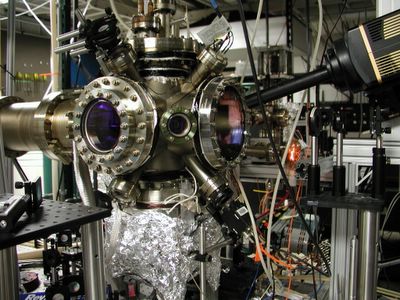
This is the vacuum chamber, in which the atoms are trapped. You can see a camera on the right-hand side.

This is what the camera saw. That bright dot at the center is the trap.
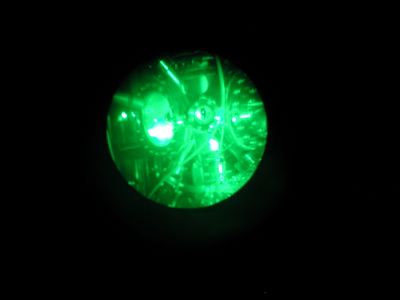
This is my attempt to take a picture through the viewer. The trap is very clear and bright, if you just look through, but it's hard to take pictures through an eye-piece. Anyway, click on the picture to enlarge it, and you can see it, a bright dot at the center of the small window.
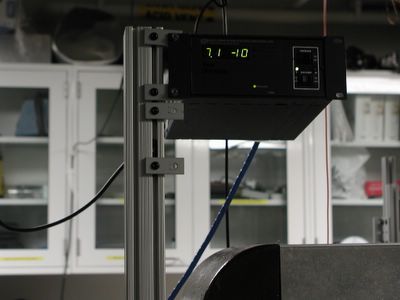
This is what the vacuum gauge reads: 7.1*10^(-10). That's .00000000071 torr. Thank you, vacuum gods!
Yesterday he got it again, only bigger and brighter.
Yay! Hooray! You're cheering, right?
No, you're asking "What's a trap, and why does it matter?" That's the problem with achievements in a field like this -- any specialized field, I guess.
A "trap" is a small collection of atoms held suspended in mid-air -- except actually there can't be any air in the system or it won't work. A small collection of atoms held suspended in mid-vacuum. They aren't touching anything at all. They are surrounded by almost perfect nothingness. What holds them up? Laser beams, and a magnetic field.
The technical name for it is a "magneto-optical trap." You can actually see the atoms hovering there, a small glowing spot a few millimeters to a centimeter in diameter. You can see them because the lasers make them glow. In our case, they glow in the infrared, so you have to use a viewer to see the light, but here is a picture of someone's sodium MOT, that looks just like ours, only glowing with yellow light.
How does it work? Light actually does exert a force when it interacts with atoms. It can slow them as they come out of a nozzle. If you have light beams pushing up, down, left, right, forward, and back, it can keep atoms from escaping in any direction - it can trap them. Now the problem is to make sure that it exerts the right amount of force, and more, that the left-pushing beam only operates on atoms that are moving to the right, and not on those already moving leftward, and likewise for the other beams. This is where the magnetic field comes in. It changes the properties of the atoms, so that atoms in one part of the field interact with a different kind of light then atoms in the other part, and atoms further from the center are pushed harder than those near it. How do you calculate these forces and interaction energies? Um... Ask Ken. But give him time to go through his notes first.
The best explanation of laser cooling and trapping for the non-scientist (OK, and for the scientist as well. I personally need help turning the math into a conceptual picture) is at the University of Colorado's Bose-Einstein Condensate page. It's got little java videogames (hit "next" at the bottom of the page to see more), to let you try your hand at some laser cooling of your own. In our lab, we stop short of the "evaporative cooling" stage, and we don't get BECs. But we do get cold atoms.
What's nice about cold atoms is that they don't bump into each other so much, and they all have about the same velocity (close to zero). Any time you want to do an experiment that involves putting atoms into certain quantum states (you do this with lasers) -- you really want to do it in a trap, because if the atom collides with anything, your state is ruined. Also, you have to use different laser frequencies depending on the velocity of your atom, so if you can arrange for all the atoms to have the same velocity, you get better results.
So, Ken's project involves putting atoms into a certain quantum state, called the "dark state". You can control whether atoms in this state absorb light or not, and if they don't absorb it, what kind of "phase shift" they give it. (A phase shift just makes the peaks and troughs of the wave occur in different places.) This is supposed to be analogous to what some parts of a computer do to electronic signals and would supposedly be useful for some hypothetical quantum-computer, someday. Possibly. Maybe. Whatever. It means Ken is one step closer to graduating.
It's been a long, gruelling, frustrating process. The lab used to have a trap, and Ken worked on it, but with the departure of one of our post-docs, the whole shebang became Ken's responsibility. There are so many working parts to this, what with three lasers, at least nine different beams to align, electronics and optics to lock the lasers, frequency modulators, waveplates, beam expanders, magnetic coils, cooling water, and, oh yes, the vacuum. The pressure has to be on the order of 10^(-10) torr. Atmospheric pressure is 760 torr. Three different pumps, each with their own plumbing, their own gaskets, their own impossible-to-reach nuts and bolts. So many things have to work, all at once...
Only three people ever understood this system. The other two are now gone. Our former post-doc was able to consult a little, and I could help do the two-person jobs if he told me what to do (turn a knob at this end of the table to adjust a beam at that end. Turn the gas on and off to blow sealant through the coils, etc.) but Ken ran the operation, knew what had to be done, and succeeded.
So now you have enough information to understand what these pictures mean, scientifically and emotionally.

This is the vacuum chamber, in which the atoms are trapped. You can see a camera on the right-hand side.

This is what the camera saw. That bright dot at the center is the trap.
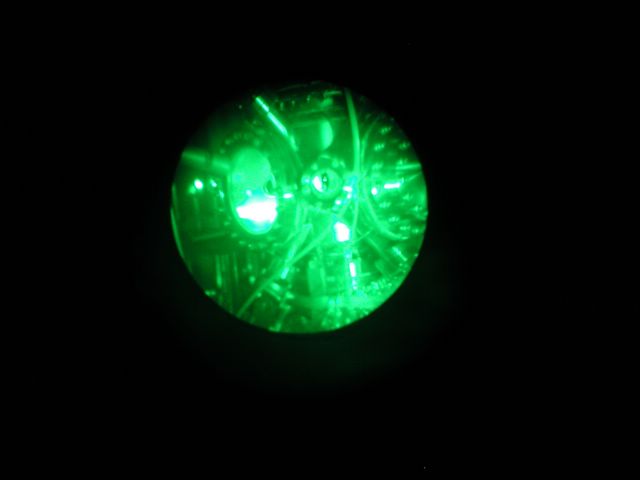
This is my attempt to take a picture through the viewer. The trap is very clear and bright, if you just look through, but it's hard to take pictures through an eye-piece. Anyway, click on the picture to enlarge it, and you can see it, a bright dot at the center of the small window.

This is what the vacuum gauge reads: 7.1*10^(-10). That's .00000000071 torr. Thank you, vacuum gods!
Monday, January 23, 2006
Son of Lunes Links
The funniest art story ever. I have to say this "performance art" cracks me up, which means I enjoy it, which means it's really art? Does the fact that it makes me think about whether it's really art, mean it's really art?
In memoriam for the Bears 2005 season: Shave Kyle Orton's neck beard. Via Ken.
A site that's been linked a couple of times by Jaquandor: Eyesore of the month. The month I link to is funny to me because it doesn't turn out to be the cemetary-strip-mall on Parker Road that I know.
Stop me if I've linked to this before: uglydress.com.
Which reminds me: these recipes probably really will help you lose weight, if only by destroying your appetite.
That's all.
In memoriam for the Bears 2005 season: Shave Kyle Orton's neck beard. Via Ken.
A site that's been linked a couple of times by Jaquandor: Eyesore of the month. The month I link to is funny to me because it doesn't turn out to be the cemetary-strip-mall on Parker Road that I know.
Stop me if I've linked to this before: uglydress.com.
Which reminds me: these recipes probably really will help you lose weight, if only by destroying your appetite.
That's all.
Saturday, January 14, 2006
The Toolmaker
I just read a book by Jill Patton Walsh, who is one of my favorite authors...
I first heard of her when she finished Dorothy Sayers’ unfinished novel Thrones, Dominions. I liked this enough to pick up her book about an atheist in a fantasy Inquisition-era Spain, called Knowledge of Angels. That one really got under my skin, with its portrayal of the suffering of a man of the sort I described in my last entry, a bishop whose faith is built on logic alone, when that faith is undermined by logical counter-arguments. So I read more. A book about aristocratic refugees in an imaginary Eastern European country, during and after their communist revolution (A Desert in Bohemia). A book about survivor guilt, years later, after a lifeboat accident (The Serpentine Cave). And then I discovered that she was primarily known for her children’s books. My university library had one. A story about a family who escapes Earth just before it is destroyed (The Green Book). A (true) story about a light-house keeper’s daughter who goes from isolation to celebrity after she rescues boaters. (Grace). A story about the fall of Byzantium (The Emporer’s Winding Sheet.) A story about the plague ( A Parcel of Patterns.) She is one of the least known of my favorite authors -- probably because she is still alive and writing. And she answered my e-mails a couple of times.
I wrote to her because some of the things she’d written were about women and academia (the Imogen Quy mysteries) and because she was clearly a Dorothy Sayers fan, and Dorothy Sayers was all about the kind of questions I was facing... After a year in grad school, I was starting to feel like I was wasting my time. I was starting to wonder if an academic career was really enough to give my life meaning. This was before I knew Ken (although I’d already seen him in our quantum mechanics class – okay, stared at him in quantum mechanics class – I figured he was way out of my league). The future I pictured for myself, if I stayed in grad school and kept on as I was going, was as bookish spinster. I didn’t really want that future. It didn’t seem like enough. I couldn’t imagine that I would ever do important enough work to justify my life by work alone. I certainly wasn’t doing it as a first year grad student. On the other hand, I didn’t really want to believe that I needed a husband and a family to make my life meaningful. Did I want to say Donna Reed’s life was more meaningful than Emily Noether’s? Did men need families to make their lives meaningful? Now, facing a much different future, I’m embarrassed by the memory of asking these questions of practically every woman I admired, or who was still single. Professors and authors. I put them in an uncomfortable position, and must have sounded hopelessly young. But Jill Patton Walsh was very gentle with me. I think she told me, more or less, that I was going to be disappointed if I was hoping for someone else to give my life meaning. But I couldn’t count on my work doing that for me either.
Okay, so the book of hers I just finished was called Toolmaker. It’s about a man in a prehistoric hunter-gatherer tribe who is better than his fellow tribesmen at making flint axes and arrow heads and so on. So they ask him to do it for them, leaving him no time to hunt. They bring him food. But he becomes too specialized, losing the ability to hunt for himself, and when times are lean, they are no longer interested in his toolmaking ability. He loses his status in his tribe. I won’t tell you how it ends. It’s a sort of parable, but you can take lots of different lessons from it... One of the most obvious being that it’s a bad idea to look down on your toolmakers, just because they don’t hunt. (Another being that it’s dangerous to become too specialized...)
Now, when you hear this story, who do you think of as the modern "toolmakers"? Are you thinking "intellectuals," scientists, professors, etc? ‘Cause I’m not. I’m thinking of the guys in the machine shop, who make the tools. The longer I stay in this field, the more natural the analogy of research scientist as hunter seems to me. (Their elusive prey? Grants.) And too often they do look down at the people who do the real, dangerous, and difficult work of shaping precision instruments capable of probing the smallest scales under the worst extremes of temperature, pressure, and in the presence of dangerous chemicals.
I finally started the machine shop class. The instructor has told us we should not hope to become machinists after only eight weeks (their apprenticeships last for years) but I am hoping to at least gain a better appreciation of what it takes. We spent the first day grinding a cutting tool that we will later use with the milling machine (I don’t know how or why, yet.) And we cut the our raw materials for our other products into rough outlines of the shapes we needed – and I do mean rough.
I still want meaningful work. In some ways the stuff I do in the machine shop seems more meaningful than the stuff I do in the lab. Ken says he felt the same, when he took the class. He misses that. But I also don’t want to rely on work alone to give my life meaning. The toolmaker in the book spends a lot of his time lonely, outcast, at one point, almost suicidal.
It’s so funny. I used to worry about this stuff, and think that what I needed was either to do something more important than homework, real research, or find a man, and I agonized over which was more important... Now I’m in a lab and I’m married, and I see that the problem never really had anything to do with either one.
I first heard of her when she finished Dorothy Sayers’ unfinished novel Thrones, Dominions. I liked this enough to pick up her book about an atheist in a fantasy Inquisition-era Spain, called Knowledge of Angels. That one really got under my skin, with its portrayal of the suffering of a man of the sort I described in my last entry, a bishop whose faith is built on logic alone, when that faith is undermined by logical counter-arguments. So I read more. A book about aristocratic refugees in an imaginary Eastern European country, during and after their communist revolution (A Desert in Bohemia). A book about survivor guilt, years later, after a lifeboat accident (The Serpentine Cave). And then I discovered that she was primarily known for her children’s books. My university library had one. A story about a family who escapes Earth just before it is destroyed (The Green Book). A (true) story about a light-house keeper’s daughter who goes from isolation to celebrity after she rescues boaters. (Grace). A story about the fall of Byzantium (The Emporer’s Winding Sheet.) A story about the plague ( A Parcel of Patterns.) She is one of the least known of my favorite authors -- probably because she is still alive and writing. And she answered my e-mails a couple of times.
I wrote to her because some of the things she’d written were about women and academia (the Imogen Quy mysteries) and because she was clearly a Dorothy Sayers fan, and Dorothy Sayers was all about the kind of questions I was facing... After a year in grad school, I was starting to feel like I was wasting my time. I was starting to wonder if an academic career was really enough to give my life meaning. This was before I knew Ken (although I’d already seen him in our quantum mechanics class – okay, stared at him in quantum mechanics class – I figured he was way out of my league). The future I pictured for myself, if I stayed in grad school and kept on as I was going, was as bookish spinster. I didn’t really want that future. It didn’t seem like enough. I couldn’t imagine that I would ever do important enough work to justify my life by work alone. I certainly wasn’t doing it as a first year grad student. On the other hand, I didn’t really want to believe that I needed a husband and a family to make my life meaningful. Did I want to say Donna Reed’s life was more meaningful than Emily Noether’s? Did men need families to make their lives meaningful? Now, facing a much different future, I’m embarrassed by the memory of asking these questions of practically every woman I admired, or who was still single. Professors and authors. I put them in an uncomfortable position, and must have sounded hopelessly young. But Jill Patton Walsh was very gentle with me. I think she told me, more or less, that I was going to be disappointed if I was hoping for someone else to give my life meaning. But I couldn’t count on my work doing that for me either.
Okay, so the book of hers I just finished was called Toolmaker. It’s about a man in a prehistoric hunter-gatherer tribe who is better than his fellow tribesmen at making flint axes and arrow heads and so on. So they ask him to do it for them, leaving him no time to hunt. They bring him food. But he becomes too specialized, losing the ability to hunt for himself, and when times are lean, they are no longer interested in his toolmaking ability. He loses his status in his tribe. I won’t tell you how it ends. It’s a sort of parable, but you can take lots of different lessons from it... One of the most obvious being that it’s a bad idea to look down on your toolmakers, just because they don’t hunt. (Another being that it’s dangerous to become too specialized...)
Now, when you hear this story, who do you think of as the modern "toolmakers"? Are you thinking "intellectuals," scientists, professors, etc? ‘Cause I’m not. I’m thinking of the guys in the machine shop, who make the tools. The longer I stay in this field, the more natural the analogy of research scientist as hunter seems to me. (Their elusive prey? Grants.) And too often they do look down at the people who do the real, dangerous, and difficult work of shaping precision instruments capable of probing the smallest scales under the worst extremes of temperature, pressure, and in the presence of dangerous chemicals.
I finally started the machine shop class. The instructor has told us we should not hope to become machinists after only eight weeks (their apprenticeships last for years) but I am hoping to at least gain a better appreciation of what it takes. We spent the first day grinding a cutting tool that we will later use with the milling machine (I don’t know how or why, yet.) And we cut the our raw materials for our other products into rough outlines of the shapes we needed – and I do mean rough.
I still want meaningful work. In some ways the stuff I do in the machine shop seems more meaningful than the stuff I do in the lab. Ken says he felt the same, when he took the class. He misses that. But I also don’t want to rely on work alone to give my life meaning. The toolmaker in the book spends a lot of his time lonely, outcast, at one point, almost suicidal.
It’s so funny. I used to worry about this stuff, and think that what I needed was either to do something more important than homework, real research, or find a man, and I agonized over which was more important... Now I’m in a lab and I’m married, and I see that the problem never really had anything to do with either one.
Saturday, January 07, 2006
Logic and Faith
This discussion about evolution and religion on AFP (which I’m not posting to, because I’ve had this discussion enough times) got me thinking again about the appeal of religion for rational thinkers. The thing about science is, it forbids certainty. If you’re a good scientist, you have to be agnostic, not just about the existence of any gods, but about everything, including scientific theories, personal experiences, the evidence of your senses and the evidence of other people’s senses. You can’t be sure that you’re not just dreaming the rest of us. The refusal to take anything on faith leads to what one religious poster calls a “complete fog of unknowing” and a nonreligious poster admits is at least “fairly misty.”
This isn’t a fun position for rational thinkers, who presumably like to think rationally because it leads to conclusions which they can trust more than they can trust their wild guesses. In other words, they like to think rationally because they’re looking for some degree of certainty. But if you aren’t willing to accept the premises on faith, then you can’t accept the conclusions that follow rationally from them either. So people who are looking for answers ultimately have to rely on a combination of faith and reason.
The difference is in what kind of axioms you feel you can accept. What combination of direct personal experience, second hand reports, and consistency with your other experiences does it take to convince you that something is a fact? Scientists look for repeatable, recordable data. Religious people have to rely on subjective experience of God. (Since crazy people have subjective experience of their dogs talking to them, this is rarely convincing to anyone else. Scientists rely on subjective experience too, though, just not for reaching scientific conclusions.) And how willing are you to re-evaluate your position later? Scientists are supposed to only ever accept anything provisionally, always reserving the right to change their minds if contradictory data comes along. They'd like more certainty, but they have to leave room for new theories.
Some people aren’t satisfied with such wishy-washiness. They’re looking for truth without error bars and disclaimers. They want rock-solid foundations, none of this fog or mist, on which to build with iron logic, and religion provides that for them. There are more of these people than most atheists and agnostics think. There was a time when theology, not math or physics, was considered “queen of the sciences.”
It so happens that some of these people claim to have discovered, among other things, that those who reach the wrong conclusions about the way the universe works will meet terrible fates. (This is a testable prediction. Unfortunately, we can’t test it until we’re dead.)
The problem is, not all of these people agree with each other. They are not all of the same religion. So some of them must be wrong, must not have a handle on objective reality after all. Some of them might be right, of course, but how is it possible to tell which ones? Reason won’t help. The premises are the part of the argument you can’t prove, and that’s where they disagree.
The stakes are high, but you can't just pick the most likely sounding. It doesn't count if you say your god is "probably" the only one. That would defeat the whole purpose, which is certainty.
So those who don’t find any of assumptions self-evident, who would love to have rock-solid foundations but find only mist instead, might justifiably worry. (And they can worry about their friends of various religions, some of whom must be doomed if the others are right – even though none of those friends is worried for themselves.)
For those people: Monsignor Lorenzo Albacete says there is hope after all. Slate describes him as “a professor of theology at St. Joseph's Seminary in New York, and president of the Catholic University of Puerto Rico.” Slate says "But if God really loves humankind, shouldn't He let, say, a good Buddhist or Jew through the pearly gates? God goes further than that, says Monsignor Lorenzo Albacete in this clip from his meaningoflife.tv interview: even atheists are eligible for salvation. This radical reinterpretation of scripture, Albacete notes later in the interview, has now become official Catholic doctrine (unbeknownst even to many Catholics)."
I didn't watch the whole interview, so I didn't find the part where he said it was official Catholic doctrine, but I did watch the part where he said atheists and Buddhists might have an easier time getting into heaven than he did. Not that they could get in on good works alone -- it doesn't count if you're doing them to impress someone or make yourself look good -- but if you did them out of love for your neighbor, did them out of faith, if not in Jesus, then in what Jesus stood for, they still counted. This sort of seems consistent with Catholic doctrine to me (although most protestants probably wouldn't like it.) Mind you, he doesn't say that those atheists and Buddhists aren't wrong, just that they won't necessarily be punished for their mistakes.
This isn’t a fun position for rational thinkers, who presumably like to think rationally because it leads to conclusions which they can trust more than they can trust their wild guesses. In other words, they like to think rationally because they’re looking for some degree of certainty. But if you aren’t willing to accept the premises on faith, then you can’t accept the conclusions that follow rationally from them either. So people who are looking for answers ultimately have to rely on a combination of faith and reason.
The difference is in what kind of axioms you feel you can accept. What combination of direct personal experience, second hand reports, and consistency with your other experiences does it take to convince you that something is a fact? Scientists look for repeatable, recordable data. Religious people have to rely on subjective experience of God. (Since crazy people have subjective experience of their dogs talking to them, this is rarely convincing to anyone else. Scientists rely on subjective experience too, though, just not for reaching scientific conclusions.) And how willing are you to re-evaluate your position later? Scientists are supposed to only ever accept anything provisionally, always reserving the right to change their minds if contradictory data comes along. They'd like more certainty, but they have to leave room for new theories.
Some people aren’t satisfied with such wishy-washiness. They’re looking for truth without error bars and disclaimers. They want rock-solid foundations, none of this fog or mist, on which to build with iron logic, and religion provides that for them. There are more of these people than most atheists and agnostics think. There was a time when theology, not math or physics, was considered “queen of the sciences.”
It so happens that some of these people claim to have discovered, among other things, that those who reach the wrong conclusions about the way the universe works will meet terrible fates. (This is a testable prediction. Unfortunately, we can’t test it until we’re dead.)
The problem is, not all of these people agree with each other. They are not all of the same religion. So some of them must be wrong, must not have a handle on objective reality after all. Some of them might be right, of course, but how is it possible to tell which ones? Reason won’t help. The premises are the part of the argument you can’t prove, and that’s where they disagree.
The stakes are high, but you can't just pick the most likely sounding. It doesn't count if you say your god is "probably" the only one. That would defeat the whole purpose, which is certainty.
So those who don’t find any of assumptions self-evident, who would love to have rock-solid foundations but find only mist instead, might justifiably worry. (And they can worry about their friends of various religions, some of whom must be doomed if the others are right – even though none of those friends is worried for themselves.)
For those people: Monsignor Lorenzo Albacete says there is hope after all. Slate describes him as “a professor of theology at St. Joseph's Seminary in New York, and president of the Catholic University of Puerto Rico.” Slate says "But if God really loves humankind, shouldn't He let, say, a good Buddhist or Jew through the pearly gates? God goes further than that, says Monsignor Lorenzo Albacete in this clip from his meaningoflife.tv interview: even atheists are eligible for salvation. This radical reinterpretation of scripture, Albacete notes later in the interview, has now become official Catholic doctrine (unbeknownst even to many Catholics)."
I didn't watch the whole interview, so I didn't find the part where he said it was official Catholic doctrine, but I did watch the part where he said atheists and Buddhists might have an easier time getting into heaven than he did. Not that they could get in on good works alone -- it doesn't count if you're doing them to impress someone or make yourself look good -- but if you did them out of love for your neighbor, did them out of faith, if not in Jesus, then in what Jesus stood for, they still counted. This sort of seems consistent with Catholic doctrine to me (although most protestants probably wouldn't like it.) Mind you, he doesn't say that those atheists and Buddhists aren't wrong, just that they won't necessarily be punished for their mistakes.
Monday, January 02, 2006
Careers
"Careers" by Robert Graves
Father is quite the greatest poet
That ever lived anywhere.
You say you’re going to write great music—
I chose that first: it’s unfair.
Besides, now I can’t be the greatest painter and
do Christ and angels, or lovely pears
and apples and grapes on a green dish,
or storms at sea, or anything lovely,
Because that’s been taken by Claire.
It’s stupid to be an engine-driver,
And soldiers are horrible men.
I won’t be a tailor, I won’t be a sailor,
And gardener’s taken by Ben.
It’s unfair if you say that you’ll write great
music, you horrid, you unkind (I sim-
ply loathe you, though you are my
sister), you beast, cad, coward, cheat,
bully, liar!
Well? Say what’s left for me then!
But we won’t go to your ugly music.
(Listen!) Ben will garden and dig,
And Claire will finish her wondrous pictures
All flaming and splendid and big.
And I’ll be a perfectly marvellous carpenter,
and I’ll make cupboards and benches
and tables and ... and baths, and
nice wooden boxes for studs and
money,
And you’ll be jealous, you pig!
Father is quite the greatest poet
That ever lived anywhere.
You say you’re going to write great music—
I chose that first: it’s unfair.
Besides, now I can’t be the greatest painter and
do Christ and angels, or lovely pears
and apples and grapes on a green dish,
or storms at sea, or anything lovely,
Because that’s been taken by Claire.
It’s stupid to be an engine-driver,
And soldiers are horrible men.
I won’t be a tailor, I won’t be a sailor,
And gardener’s taken by Ben.
It’s unfair if you say that you’ll write great
music, you horrid, you unkind (I sim-
ply loathe you, though you are my
sister), you beast, cad, coward, cheat,
bully, liar!
Well? Say what’s left for me then!
But we won’t go to your ugly music.
(Listen!) Ben will garden and dig,
And Claire will finish her wondrous pictures
All flaming and splendid and big.
And I’ll be a perfectly marvellous carpenter,
and I’ll make cupboards and benches
and tables and ... and baths, and
nice wooden boxes for studs and
money,
And you’ll be jealous, you pig!
Monday, December 26, 2005
Boxing Day
I got footware, fancy boots and running shoes, from the only person in the world who could possibly buy these things for me without me being there to try them on. I have my mother's feet, right down to our pinky toes. The running shoes have survived two wintery runs of about four miles each, and no blisters. I also got slippers from my sister, who knew I needed them, with wooden floors and my old ones lost and the $1 pink pair I bought at the grocery store not really fitting. And she got me a hat/glove/scarf set that matches the boots, and the blouse and necklace my parents also got. I dressed up in it for the Christmas day Bears game, at Ken's dad's house. And we shared Amazon gift certificate from Patrick, and I got books from Ken's dad, and a shirt, and a chicken soup dinner, at half-time.
I won't list everything Ken got me, but it included oil pastels and grease pencils and a spirograph kit and a globe that goes from earth to star-chart depending on the light level in the room, and a crank-powered flashlight/radio, and a handheld sewing machine, and Nancy Drew's Guide to Life, and a hoodie for those winter runs... He knows me too well, buys better gifts than I would have thought to buy myself.
And I won't list the things everyone else got (even though I think all of it is pretty cool stuff) except to link to the custom M&Ms page, where I ordered my sister's gift, because this possibility is too neat not to share. Unfortunately, they didn't arrive by Christmas, even though I ordered almost a month early, so be warned.
The mood here is pretty good. The Bears are in the playoffs, and we get a semi-vacation from work, because the cooling water is shut down for maintenance which means we can't turn on the lasers. We still have to go in to check on the vaccuum system (which is "baking" -- wrapped in heater wires and tinfoil and slowly heated, to vaporize any microscopic gunk that may be stuck the walls, so that the pump can pump it away) and make sure the building hasn't burned down, but otherwise we are free to spend our days playing with our new toys, books, and video games, watching sports and game shows and mindless reality TV (the guilty pleasures of those without cable), and working our way through "24" on DVD before the start of the new season. We might even leave the apartment at some point! It's like being an undergrad again.
This also probably means more blogging. I promise the next one will be about a topic besides my personal life. The more time I have on my hands, the more opinionated I get.
(Oh, and in case you were wondering -- yes that is the Millennium Falcon on our Christmas tree.)
I won't list everything Ken got me, but it included oil pastels and grease pencils and a spirograph kit and a globe that goes from earth to star-chart depending on the light level in the room, and a crank-powered flashlight/radio, and a handheld sewing machine, and Nancy Drew's Guide to Life, and a hoodie for those winter runs... He knows me too well, buys better gifts than I would have thought to buy myself.
And I won't list the things everyone else got (even though I think all of it is pretty cool stuff) except to link to the custom M&Ms page, where I ordered my sister's gift, because this possibility is too neat not to share. Unfortunately, they didn't arrive by Christmas, even though I ordered almost a month early, so be warned.
The mood here is pretty good. The Bears are in the playoffs, and we get a semi-vacation from work, because the cooling water is shut down for maintenance which means we can't turn on the lasers. We still have to go in to check on the vaccuum system (which is "baking" -- wrapped in heater wires and tinfoil and slowly heated, to vaporize any microscopic gunk that may be stuck the walls, so that the pump can pump it away) and make sure the building hasn't burned down, but otherwise we are free to spend our days playing with our new toys, books, and video games, watching sports and game shows and mindless reality TV (the guilty pleasures of those without cable), and working our way through "24" on DVD before the start of the new season. We might even leave the apartment at some point! It's like being an undergrad again.
This also probably means more blogging. I promise the next one will be about a topic besides my personal life. The more time I have on my hands, the more opinionated I get.
(Oh, and in case you were wondering -- yes that is the Millennium Falcon on our Christmas tree.)
Saturday, December 24, 2005



Wednesday, December 21, 2005
Weird News
I know, a lot of other people already read weird news. But if you don't, you wouldn't know that there has been a weird rash of finger bitings-off this week.
"Woman Allegedly Bites Off Officer's Finger",
"Woman Allegedly Bites Off Beau's Fingertip",
and "Taxi Driver Bites Off Customer's Fingertip".
But in trying to find the URL again for one of those, I did at least find one touching story of people helping to re-unite a woman with her finger. (She didn't even realize she'd lost it, at first.)
With all that finger-biting, you can see where people wouldn't want to encourage our children's cannibalistic tendencies with a hilarious looking zombie video game. (Ken points out, "Zombies aren't cannibals. They don't eat other zombies.")
Other stories I like this week:
The same lottery numbers drawn twice in a row.
Man in traction fleas hospital.
Drunk tank painted pink. (The jailers were inspired by a University of Iowa coach who painted the visitor's locker room pink.)
So anyway... Watch your fingers.
"Woman Allegedly Bites Off Officer's Finger",
"Woman Allegedly Bites Off Beau's Fingertip",
and "Taxi Driver Bites Off Customer's Fingertip".
But in trying to find the URL again for one of those, I did at least find one touching story of people helping to re-unite a woman with her finger. (She didn't even realize she'd lost it, at first.)
With all that finger-biting, you can see where people wouldn't want to encourage our children's cannibalistic tendencies with a hilarious looking zombie video game. (Ken points out, "Zombies aren't cannibals. They don't eat other zombies.")
Other stories I like this week:
The same lottery numbers drawn twice in a row.
Man in traction fleas hospital.
Drunk tank painted pink. (The jailers were inspired by a University of Iowa coach who painted the visitor's locker room pink.)
So anyway... Watch your fingers.
Sunday, December 11, 2005
So Much Sci-FI!
I thought about doing a sciency post today, but it seemed like work. I did a little searching on uninspired topics (in the course of which I did learn that the sky is really violet (scroll down)) but figured I was too confused to write about it. I'm more in the mood for mindless entertainment, so instead, you get an entry about sci-fi television.
I will be the first to acknowledge that not all sci-fi TV is mindless. I do know the difference between the good stuff and the bad stuff (I even know the difference between sci-fi and SF). But the thing about me is, I like them both.
So I decided to search for sites about the stuff I grew up watching, first in syndication and then on the Sci-Fi Channel. I figured maybe I could find some hilarious merchandise like this:

and put together a sort of holiday gift list.
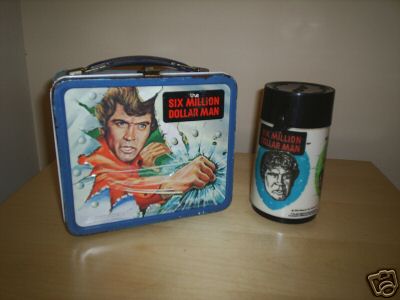
But what shows to include? Well, obviously the Bionic Woman, and the Six Million Dollar Man
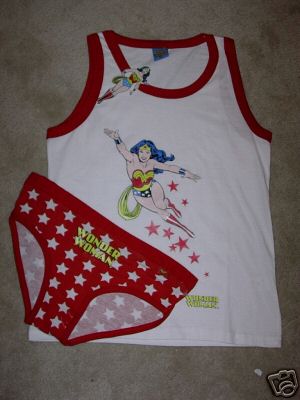
And Wonder Woman
And MacGyver
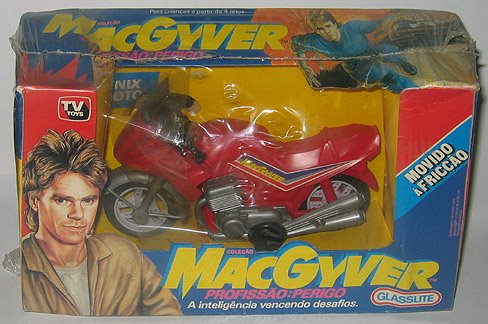
(Is that Portuguese?)
And Quantum Leap
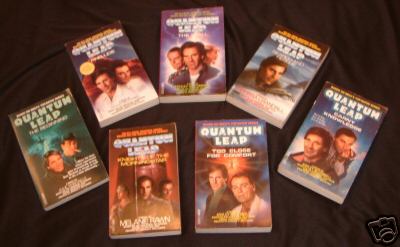
(I read all of those!)
And The Incredible Hulk
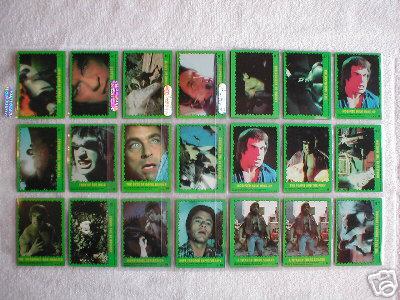
(This and Quantum Leap were by far my favorites of all the shows listed here.)
And I have to include Knight Rider
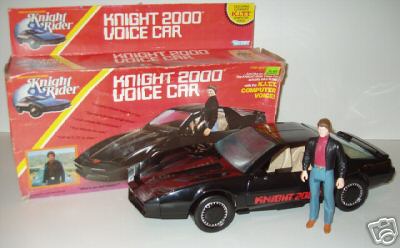
But what about all those great Irwin Allen TV shows? Time Tunnel, Lost in Space, Land of the Giants, Voyage to the Bottom of the Sea?
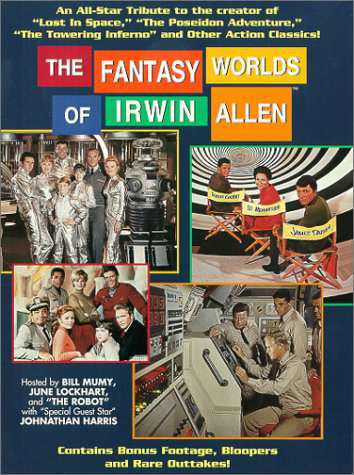
I'm beginning to think this post is going to be even more work than the sciency one would've been, what with all the searching and uploading and formatting. And I haven't even scratched the surface!
What about Mission: Impossible?
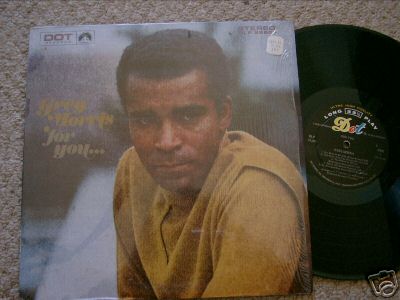
And the shows I never watched regularly, but which definitely belong to the same class, like
Battlestar Gallactica
Probe
VR.5
Forever Knight
Space: 1999
The Powers of Matthew Star
And what about the anthology shows
Twilight Zone,
Ray Bradbury Theater
The Outer Limits
And the British shows?
Dr. Who
Red Dwarf
Blake's Seven
The Prisoner
The Avengers
And the new bad Sci-Fi (I am, of course, not including big, almost mainstream shows like the Star Treks, Buffy, Angel, Babylon 5, Farscape, Firefly, and Alias -- the last of which Ken and I are currently working our way through on DVD). But...
Xena
Hercules
Beastmaster
Stargate (both versions)
Andromeda
Mutant X
Highlander
Land of the Lost
Cleopatra 2525
She Spies
Space, Above and Beyond
Seaqest DSV/2032
JAG
Charmed
Sliders
The Invisible Man
I've watched all of these too, some regularly. I have a deep knowledge of the backstory on many of them, and can name cast members... And I don't have the excuse of having been a kid at the time. These aren't old enough to justify watching for kitch value or nostalgia. I just like them.
And I can think of half a dozen others, too, which I'm not listing mainly because either I can't remember the name (what was that show that got cancelled about the guy in Seattle who was an expert in every field, but couldn't remember his name? John Doe? Something like that) or I don't think anyone else will remember them (Nowhere Man?) or I don't really know anything about them (M.A.N.T.I.S? Robocop? Swamp Thing? V? Never watched)
Enough! I must either draw the line, or decide to write a book.
I can't believe how much TV I watch. I can't believe how many shows like this get made. And I can't believe you can find episodes guides and merchandise for all of them on the internet... This is the power of the internet.
I will be the first to acknowledge that not all sci-fi TV is mindless. I do know the difference between the good stuff and the bad stuff (I even know the difference between sci-fi and SF). But the thing about me is, I like them both.
So I decided to search for sites about the stuff I grew up watching, first in syndication and then on the Sci-Fi Channel. I figured maybe I could find some hilarious merchandise like this:
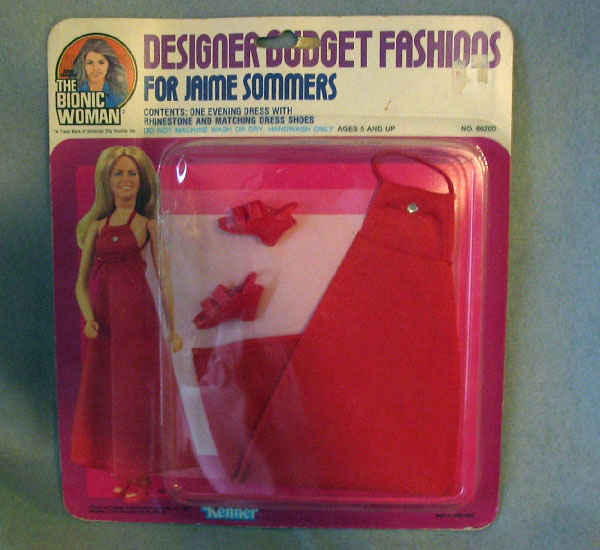
and put together a sort of holiday gift list.
But what shows to include? Well, obviously the Bionic Woman, and the Six Million Dollar Man
And Wonder Woman
And MacGyver
(Is that Portuguese?)
And Quantum Leap
(I read all of those!)
And The Incredible Hulk
(This and Quantum Leap were by far my favorites of all the shows listed here.)
And I have to include Knight Rider
But what about all those great Irwin Allen TV shows? Time Tunnel, Lost in Space, Land of the Giants, Voyage to the Bottom of the Sea?
I'm beginning to think this post is going to be even more work than the sciency one would've been, what with all the searching and uploading and formatting. And I haven't even scratched the surface!
What about Mission: Impossible?
And the shows I never watched regularly, but which definitely belong to the same class, like
Battlestar Gallactica
Probe
VR.5
Forever Knight
Space: 1999
The Powers of Matthew Star
And what about the anthology shows
Twilight Zone,
Ray Bradbury Theater
The Outer Limits
And the British shows?
Dr. Who
Red Dwarf
Blake's Seven
The Prisoner
The Avengers
And the new bad Sci-Fi (I am, of course, not including big, almost mainstream shows like the Star Treks, Buffy, Angel, Babylon 5, Farscape, Firefly, and Alias -- the last of which Ken and I are currently working our way through on DVD). But...
Xena
Hercules
Beastmaster
Stargate (both versions)
Andromeda
Mutant X
Highlander
Land of the Lost
Cleopatra 2525
She Spies
Space, Above and Beyond
Seaqest DSV/2032
JAG
Charmed
Sliders
The Invisible Man
I've watched all of these too, some regularly. I have a deep knowledge of the backstory on many of them, and can name cast members... And I don't have the excuse of having been a kid at the time. These aren't old enough to justify watching for kitch value or nostalgia. I just like them.
And I can think of half a dozen others, too, which I'm not listing mainly because either I can't remember the name (what was that show that got cancelled about the guy in Seattle who was an expert in every field, but couldn't remember his name? John Doe? Something like that) or I don't think anyone else will remember them (Nowhere Man?) or I don't really know anything about them (M.A.N.T.I.S? Robocop? Swamp Thing? V? Never watched)
Enough! I must either draw the line, or decide to write a book.
I can't believe how much TV I watch. I can't believe how many shows like this get made. And I can't believe you can find episodes guides and merchandise for all of them on the internet... This is the power of the internet.
Monday, December 05, 2005
Belated November Poem
CURFEW
Henry Wadsworth Longfellow
I.
Solemnly, mournfully,
Dealing its dole,
The curfew bell
Is beginning to toll.
Cover the embers,
And put out the light;
Toil comes with the morning,
And rest with the night.
Dark grow the windows,
And quenched is the fire;
Sound fades into silence,--
All footsteps retire.
No voice in the chambers,
No sound in the hall!
Sleep and oblivion
Reign over all!
II.
The book is completed,
And closed, like the day;
And the hand that has written it
Lays it away.
Dim grow its fancies;
Forgotten they lie;
Like coals in the ashes,
They darken and die.
Song sinks into silence,
The story is told,
The windows are darkened,
The hearthstone is cold.
Darker and darker
The black shadows fall;
Sleep and oblivion
Reign over all.
Henry Wadsworth Longfellow
I.
Solemnly, mournfully,
Dealing its dole,
The curfew bell
Is beginning to toll.
Cover the embers,
And put out the light;
Toil comes with the morning,
And rest with the night.
Dark grow the windows,
And quenched is the fire;
Sound fades into silence,--
All footsteps retire.
No voice in the chambers,
No sound in the hall!
Sleep and oblivion
Reign over all!
II.
The book is completed,
And closed, like the day;
And the hand that has written it
Lays it away.
Dim grow its fancies;
Forgotten they lie;
Like coals in the ashes,
They darken and die.
Song sinks into silence,
The story is told,
The windows are darkened,
The hearthstone is cold.
Darker and darker
The black shadows fall;
Sleep and oblivion
Reign over all.
Thursday, December 01, 2005
Advent
The season of Advent began last Sunday. I'm sure my mom lit the first candle on her Advent wreath (right, Mom?)
Advent is not supposed to be the same thing as the Christmas season. It's supposed to be more somber, more a waiting hush, bated breath... With the celebrating to come after Christmas morning. If you're already tired of the retail Christmas Carols, the idea probably sounds appealing.
I am one of those apparently rare individuals who enjoys the commercial Christmas carols. For that matter, I enjoy the Christmas commercials. And Christmas episodes of TV shows, and sappy movies, and city lights displays. I'm in favor of all the gaudy, tacky, overblown celebrations that both serious atheists and serious religious people oppose. This is because I am not a serious person. But even I can overdose on all this, and find myself wishing for more understated, sincere rituals of anticipation. Like lighting candles. And opening the doors on an Advent calendar.
I'm easily amused and love surprises, so the tiny pictures revealed behind each door on the traditional calendars I grew up with are treat enough for me. But some offer stickers, chocolate, candy or toys.
Nowadays there are web-based Advent calendars, offering a new page of an illustrated story each day, or facts about Christmas around the world. Or, for an unholy marriage of the secular and religious traditions, there's the advert calendar.
But I think the traditional ones are probably more to the point. Understated, you know. Some can be beautiful.
Happy Advent.
Advent is not supposed to be the same thing as the Christmas season. It's supposed to be more somber, more a waiting hush, bated breath... With the celebrating to come after Christmas morning. If you're already tired of the retail Christmas Carols, the idea probably sounds appealing.
I am one of those apparently rare individuals who enjoys the commercial Christmas carols. For that matter, I enjoy the Christmas commercials. And Christmas episodes of TV shows, and sappy movies, and city lights displays. I'm in favor of all the gaudy, tacky, overblown celebrations that both serious atheists and serious religious people oppose. This is because I am not a serious person. But even I can overdose on all this, and find myself wishing for more understated, sincere rituals of anticipation. Like lighting candles. And opening the doors on an Advent calendar.
I'm easily amused and love surprises, so the tiny pictures revealed behind each door on the traditional calendars I grew up with are treat enough for me. But some offer stickers, chocolate, candy or toys.
Nowadays there are web-based Advent calendars, offering a new page of an illustrated story each day, or facts about Christmas around the world. Or, for an unholy marriage of the secular and religious traditions, there's the advert calendar.
But I think the traditional ones are probably more to the point. Understated, you know. Some can be beautiful.
Happy Advent.
Monday, November 21, 2005
Lunes Links
I haven't had any original thoughts this week, so you get some entertaining links.
Via Ken's dad: A dramatic optical illusion.
Via Making Light: The Grand Illusions Magic Shop. And the rest of their site, which has more optical illusions.
From the same source: How to Read a 12 Digit UPC Barcode.
From Human Under Construction (a blog I just discovered and now read regularly): Grover: the Muppet Behind the Myth.
And from my friend Carol: The remake of the Poseidon Adventure. Let me just say that as much as I love Adam Baldwin, he is no Gene Hackman.
If you've never seen the original, perhaps IMDB's plot keywords will give you the idea: "Capsize, Rescue, Survival, Underwater, Water Disaster, Christmas Tree, Tidal Wave, Heart Attack, New Year's Eve, Obesity, Escape, Ex Prostitute, Fall From Height, Sea Sickness, Self Sacrifice, Corporate Greed, Haberdasher, Mediterranean Sea, Renegade Priest, Swimming Underwater, Disaster Film..."
Yeah, I'd say they about cover it. If you go to their page, you can click on the words, and find other movies featuring, for instance, sermons.
Happy Monday.
Via Ken's dad: A dramatic optical illusion.
Via Making Light: The Grand Illusions Magic Shop. And the rest of their site, which has more optical illusions.
From the same source: How to Read a 12 Digit UPC Barcode.
From Human Under Construction (a blog I just discovered and now read regularly): Grover: the Muppet Behind the Myth.
And from my friend Carol: The remake of the Poseidon Adventure. Let me just say that as much as I love Adam Baldwin, he is no Gene Hackman.
If you've never seen the original, perhaps IMDB's plot keywords will give you the idea: "Capsize, Rescue, Survival, Underwater, Water Disaster, Christmas Tree, Tidal Wave, Heart Attack, New Year's Eve, Obesity, Escape, Ex Prostitute, Fall From Height, Sea Sickness, Self Sacrifice, Corporate Greed, Haberdasher, Mediterranean Sea, Renegade Priest, Swimming Underwater, Disaster Film..."
Yeah, I'd say they about cover it. If you go to their page, you can click on the words, and find other movies featuring, for instance, sermons.
Happy Monday.
Subscribe to:
Posts (Atom)