With thanks to Carol, who gave me the book Sound and Sense (by Laurence Perrine) in which I found this -- short, since last month's was so long:
There's the wonderful love of a beautiful maid,
And the love of a staunch true man,
And the love a baby that's unafraid--
All have existed since time bean.
Bust the most wondeful love, the Love of all loves,
Even greater than the love for a Mother,
Is the infinite, tenderest, passionate love
Of one dead drunk for another.
Thursday, February 24, 2005
Monday, February 21, 2005
Be Afraid!
Via GirlHacker I discover "The Truth About Splenda"- it's made with chlorine!
Wanna hear an even bigger scandal? Table salt is made with chlorine too. That's right. The food industry has been covering up the dark truth - salt is sodium chloride. Worse, unlike the Splenda molecule, the salt molecule ionizes easily, separating into sodium and cloride ions, both viciously reactive. Sodium in its pure form is explosive - we work with it in the lab (industrial uses!) And clorine is deadly.
This reminds me of the dihydrogen monoxide scare. (Everything on that website is true, and yet your government is doing nothing to protect you from DHMO.)
Similar scares about canola oil abound (refuted here) along with soy products, and all kinds of over-the-counter medicines.
And because I haven't linked to them yet, here are snopes and the alt.folklore.urban archive, which are worth a visit whenever something on the internet makes you scared of your food, or anything else that used to seem harmless.
Wanna hear an even bigger scandal? Table salt is made with chlorine too. That's right. The food industry has been covering up the dark truth - salt is sodium chloride. Worse, unlike the Splenda molecule, the salt molecule ionizes easily, separating into sodium and cloride ions, both viciously reactive. Sodium in its pure form is explosive - we work with it in the lab (industrial uses!) And clorine is deadly.
This reminds me of the dihydrogen monoxide scare. (Everything on that website is true, and yet your government is doing nothing to protect you from DHMO.)
Similar scares about canola oil abound (refuted here) along with soy products, and all kinds of over-the-counter medicines.
And because I haven't linked to them yet, here are snopes and the alt.folklore.urban archive, which are worth a visit whenever something on the internet makes you scared of your food, or anything else that used to seem harmless.
Sunday, February 13, 2005
Something to Prove
UPDATE: Several of my favorite bloggers have, not surprisingly, said things that I agree with on this subject.
Physicist Michael Nielsen points out that even if women were on average "worse" (a poorly defined concept) at math and science, it wouldn't preclude the possibility of there being more highly qualified women than men -- and vice versa, of course. His point is that we all have lousy statistical models in mind.
Historian Tim Burke makes the related point that Harvard, in particular, could easily achieve gender balance without compromising standards at all. It needs only a few brilliant women to do so, and they surely exist, and Harvard could surely recruit them. If it wanted to.
Physicist Chad Orzel comments that most of the advice given to women about career success applies to men too, and as a veteran of many seminars, I can confirm it. This includes the advice about blending career and family, which is never easy for anyone.
And artist/physics student "Pyracantha" has two somewhat sad posts about her own reaction to comments like this (last month and this month) which is mostly a deeply rooted fear that they are true, and she is doomed to failure. And that in itself accounts in large part for the shortage of female physicists.
---
I never know exactly what to say about the whole issue of women in physics. Usually when I do say something, I regret it later. But now I have a couple of links I really want to publicize.
So as long as I'm blogging about it, let me just summarize a couple of thoughts briefly.
1) I admit part of me fears it's true, that women really do suck at math and science and computers.
2) But I've mostly been able to convince myself that's crap by getting this far.
3) Lawrence Summers is not courageous for saying that women may be bad at math, and it is not censorship or thought policing to disagree with him. What he says is what most people seem to believe, and have believed for a long, long time, including many women. And someone says it to the press every couple of years. So the best description isn't "courage," it's "conventional wisdom."
(And lots of things that people believed for a long, long time aren't true.)
4) My main theory about why there are so few women in my discipline is that women have more to lose from being nerdy and antisocial than men. This is more the fault of their mothers and their magazines and their female friends than of men. I blame the feminine subculture, and the fact that women mostly believe they can't do it, so why try?
5) Which is not to say that there's no discrimination of any kind. For the most part nowadays, it's just male physicists being condescending. (Historically, it was more about forbidding women access to education outright.)
I really don't believe in any theories of biological inferiority. First of all, because I believe that math and science and logic really are universal. I think aliens would have to discover the same laws we do. If aliens can understand, then women, with really insignificant biological differences, certainly ought to be able to. And secondly because I don't believe biology is destiny anyway. I think hormones influence moods, but I think moods are irrelevant to math. And finally, see above re: "getting this far." I can understand math, and I'm female, so it's not biological. QED, as far as I'm concerned. (Although I've heard everyone's favorite response to this, about statistical outliers. It so happens I know I am not exceptional. I remember what it felt like to hate math and fail at it.)
Now, the links:
Why aren't there more women in physics? For most of the same, complex reasons that there aren't more women in computer science.
If it were really biological, wouldn't it be the same in other countries? (That graph seems hard to argue with, to me.)
But then how can we account for the difference in test scores? Easily. This month's Scientific American shows that stereotypes are almost always self-fulfilling prophesies. (Which is just another reason standardized tests are meaningless, in my opinion.)
Links like that really cheer me up, some days.
Physicist Michael Nielsen points out that even if women were on average "worse" (a poorly defined concept) at math and science, it wouldn't preclude the possibility of there being more highly qualified women than men -- and vice versa, of course. His point is that we all have lousy statistical models in mind.
Historian Tim Burke makes the related point that Harvard, in particular, could easily achieve gender balance without compromising standards at all. It needs only a few brilliant women to do so, and they surely exist, and Harvard could surely recruit them. If it wanted to.
Physicist Chad Orzel comments that most of the advice given to women about career success applies to men too, and as a veteran of many seminars, I can confirm it. This includes the advice about blending career and family, which is never easy for anyone.
And artist/physics student "Pyracantha" has two somewhat sad posts about her own reaction to comments like this (last month and this month) which is mostly a deeply rooted fear that they are true, and she is doomed to failure. And that in itself accounts in large part for the shortage of female physicists.
---
I never know exactly what to say about the whole issue of women in physics. Usually when I do say something, I regret it later. But now I have a couple of links I really want to publicize.
So as long as I'm blogging about it, let me just summarize a couple of thoughts briefly.
1) I admit part of me fears it's true, that women really do suck at math and science and computers.
2) But I've mostly been able to convince myself that's crap by getting this far.
3) Lawrence Summers is not courageous for saying that women may be bad at math, and it is not censorship or thought policing to disagree with him. What he says is what most people seem to believe, and have believed for a long, long time, including many women. And someone says it to the press every couple of years. So the best description isn't "courage," it's "conventional wisdom."
(And lots of things that people believed for a long, long time aren't true.)
4) My main theory about why there are so few women in my discipline is that women have more to lose from being nerdy and antisocial than men. This is more the fault of their mothers and their magazines and their female friends than of men. I blame the feminine subculture, and the fact that women mostly believe they can't do it, so why try?
5) Which is not to say that there's no discrimination of any kind. For the most part nowadays, it's just male physicists being condescending. (Historically, it was more about forbidding women access to education outright.)
I really don't believe in any theories of biological inferiority. First of all, because I believe that math and science and logic really are universal. I think aliens would have to discover the same laws we do. If aliens can understand, then women, with really insignificant biological differences, certainly ought to be able to. And secondly because I don't believe biology is destiny anyway. I think hormones influence moods, but I think moods are irrelevant to math. And finally, see above re: "getting this far." I can understand math, and I'm female, so it's not biological. QED, as far as I'm concerned. (Although I've heard everyone's favorite response to this, about statistical outliers. It so happens I know I am not exceptional. I remember what it felt like to hate math and fail at it.)
Now, the links:
Why aren't there more women in physics? For most of the same, complex reasons that there aren't more women in computer science.
If it were really biological, wouldn't it be the same in other countries? (That graph seems hard to argue with, to me.)
But then how can we account for the difference in test scores? Easily. This month's Scientific American shows that stereotypes are almost always self-fulfilling prophesies. (Which is just another reason standardized tests are meaningless, in my opinion.)
Links like that really cheer me up, some days.
Friday, February 11, 2005
Parking and Property Rights
The hot topic on the blogs I read these days is the ethics of claiming parking spots you dug out of the snow.
Teresa Nielsen Hayden points out an Ebay auction (look quick) selling an authetic parking control system. And Tim Burke ruminates on the role of government in our daily lives.
Usually, he says, government doesn't recognize these spontaneous social contracts.
Chicago's Mayor Daley is an exception, however. See commentary by Tribune columnist and blogger Eric Zorn and the University of Chicago Law Department.
I myself just dug out my very first parking spot a few weeks ago. It was Ken's car, but I had missed my work out, and after all, I ride around in it all the time. I felt compelled to earn my place in the passenger seat. And after I was done (it took an hour, in the cold and blowing snow), I felt entitled to claim that place on the street, as well.
Teresa Nielsen Hayden points out an Ebay auction (look quick) selling an authetic parking control system. And Tim Burke ruminates on the role of government in our daily lives.
Usually, he says, government doesn't recognize these spontaneous social contracts.
Chicago's Mayor Daley is an exception, however. See commentary by Tribune columnist and blogger Eric Zorn and the University of Chicago Law Department.
I myself just dug out my very first parking spot a few weeks ago. It was Ken's car, but I had missed my work out, and after all, I ride around in it all the time. I felt compelled to earn my place in the passenger seat. And after I was done (it took an hour, in the cold and blowing snow), I felt entitled to claim that place on the street, as well.
Saturday, February 05, 2005
Physics Fantasia
I told Ken to find me something to blog about, and he told me I ought to share the glories of Falstad's physics applets with my readers.
Paul Falstead appears to be a California software developer with too much time on his hands. He's written little programs to help scientists visualize the systems that they frequently describe mathematically. Ken is such a nerd that he thinks this is really cool.
The only problem with showing these to a non-physics audience is that there is no explanation included with the applets. If you don't know what a wave function is, how are you supposed to appreciate the full beauty of the breathtakingly complex hyrodgen atom wavefunctions?
I suppose he left off the explanations because they're hard, but let me try, a little. A hydrogen atom is the simplest kind, a heavy, positively charged "proton" with an electron "orbitting" it. Most people have seen pictures that show something like a baseball going in a circle around something like a basketball, but the truth is, the electron is more like the ripple from a rock dropped in a pond, than it is like a baseball. It is a wave pattern, which we call a wavefunction because we're usually describing the pattern mathematically, rather than looking at pictures of it. If I shine light on the atom, I can distort the pattern... The applet shows all of the different patterns I can have, all of the intricate, stunning shapes. Here are the things you should try. First, select "complex orbitals" from the top drop down menu. Go to a high "n" -- like 14. Then give it a big "l" -- like 11. Now look at the different "m" values... Zero and 3 and 4 are pretty cool, but so are some of the less symmetrical shapes you get at the higher numbers. Make sure to turn the resolution up. Now click and hold on the image to drag it around and look at it from different angles. Try turning up the simulation speed or stopping it. Now try to remember, as you're doing this, that these are probably the most accurate depictions of real atoms that you've ever seen. That these shapes occur in nature. That you yourself are nothing but the sum of seven billion billion billion overlapping, ghostly clouds, just like this.
Try making less symmetrical patterns by choosing "complex combos" off of the top drop down menu, and then picking two or three of the circles which appear at the bottom of the picture. (Make sure you have the simulation speed somewhere in the middle of the slider, and don't have it stopped.) Try clicking on the top left circle from each block of circles, and then click on the image again and drag it around. Clear it, and try other combinations. Hypnotic, isn't it? These are real too.
Now try going back to the main page and picking the atomic dipole transitions applet. This shows an animated picture of how light transforms one of these patterns into another. This is what we study all day. These are the pictures in our minds, as we try to provoke atoms into moving and glowing and interacting in the ways we want. Sometimes we even have a specific shape in mind, a specific wavefunction, that we try to prod the atoms into with lasers beams and magnetic fields, vaccuum chambers and heating coils and cavities. When I look at these pictures, I love my job.
There's a lot more there -- the vector field and Fresnel diffraction toys are especially fun to play with if you know what you're looking at... Only I am not up to the challenge of explaining those right now, without using math.
But they're gorgeous, aren't they? Perhaps later I'll attempt to write a poem about them, like the ones Andrew discovered by James Clerk Maxwell... (Or maybe I'll just post that one, as next month's poetry post.)
Physics is beautiful.
Paul Falstead appears to be a California software developer with too much time on his hands. He's written little programs to help scientists visualize the systems that they frequently describe mathematically. Ken is such a nerd that he thinks this is really cool.
The only problem with showing these to a non-physics audience is that there is no explanation included with the applets. If you don't know what a wave function is, how are you supposed to appreciate the full beauty of the breathtakingly complex hyrodgen atom wavefunctions?
I suppose he left off the explanations because they're hard, but let me try, a little. A hydrogen atom is the simplest kind, a heavy, positively charged "proton" with an electron "orbitting" it. Most people have seen pictures that show something like a baseball going in a circle around something like a basketball, but the truth is, the electron is more like the ripple from a rock dropped in a pond, than it is like a baseball. It is a wave pattern, which we call a wavefunction because we're usually describing the pattern mathematically, rather than looking at pictures of it. If I shine light on the atom, I can distort the pattern... The applet shows all of the different patterns I can have, all of the intricate, stunning shapes. Here are the things you should try. First, select "complex orbitals" from the top drop down menu. Go to a high "n" -- like 14. Then give it a big "l" -- like 11. Now look at the different "m" values... Zero and 3 and 4 are pretty cool, but so are some of the less symmetrical shapes you get at the higher numbers. Make sure to turn the resolution up. Now click and hold on the image to drag it around and look at it from different angles. Try turning up the simulation speed or stopping it. Now try to remember, as you're doing this, that these are probably the most accurate depictions of real atoms that you've ever seen. That these shapes occur in nature. That you yourself are nothing but the sum of seven billion billion billion overlapping, ghostly clouds, just like this.
Try making less symmetrical patterns by choosing "complex combos" off of the top drop down menu, and then picking two or three of the circles which appear at the bottom of the picture. (Make sure you have the simulation speed somewhere in the middle of the slider, and don't have it stopped.) Try clicking on the top left circle from each block of circles, and then click on the image again and drag it around. Clear it, and try other combinations. Hypnotic, isn't it? These are real too.
Now try going back to the main page and picking the atomic dipole transitions applet. This shows an animated picture of how light transforms one of these patterns into another. This is what we study all day. These are the pictures in our minds, as we try to provoke atoms into moving and glowing and interacting in the ways we want. Sometimes we even have a specific shape in mind, a specific wavefunction, that we try to prod the atoms into with lasers beams and magnetic fields, vaccuum chambers and heating coils and cavities. When I look at these pictures, I love my job.
There's a lot more there -- the vector field and Fresnel diffraction toys are especially fun to play with if you know what you're looking at... Only I am not up to the challenge of explaining those right now, without using math.
But they're gorgeous, aren't they? Perhaps later I'll attempt to write a poem about them, like the ones Andrew discovered by James Clerk Maxwell... (Or maybe I'll just post that one, as next month's poetry post.)
Physics is beautiful.
Monday, January 31, 2005
The Wood
by Charlotte Bronte (1816-1855)
But two miles more, and then we rest!
Well, there is still an hour of day,
And long the brightness of the West
Will light us on our devious way;
Sit then, awhile, here in this wood--
So total is the solitude,
We safely may delay.
These massive roots afford a seat,
Which seems for weary travellers made.
There rest. The air is soft and sweet
In this sequestered forest glade,
And there are scents of flowers around,
The evening dew draws from the ground;
How soothingly they spread!
Yes; I was tired, but not at heart;
No--that beats full of sweet content,
For now I have my natural part
Of action with adventure blent;
Cast forth on the wide world with thee,
And all my once waste energy
To weighty purpose bent.
Yet--sayst thou, spies around us roam,
Our aims are termed conspiracy?
Haply, no more our English home
An anchorage for us may be?
That there is risk our mutual blood
May redden in some lonely wood
The knife of treachery?
Sayst thou, that where we lodge each night,
In each lone farm, or lonelier hall
Of Norman Peer--ere morning light
Suspicion must as duly fall,
As day returns--such vigilance
Presides and watches over France,
Such rigour governs all?
I fear not, William; dost thou fear?
So that the knife does not divide,
It may be ever hovering near:
I could not tremble at thy side,
And strenuous love--like mine for thee--
Is buckler strong 'gainst treachery,
And turns its stab aside.
I am resolved that thou shalt learn
To trust my strength as I trust thine;
I am resolved our souls shall burn
With equal, steady, mingling shine;
Part of the field is conquered now,
Our lives in the same channel flow,
Along the self-same line;
And while no groaning storm is heard,
Thou seem'st content it should be so,
But soon as comes a warning word
Of danger--straight thine anxious brow
Bends over me a mournful shade,
As doubting if my powers are made
To ford the floods of woe.
Know, then it is my spirit swells,
And drinks, with eager joy, the air
Of freedom--where at last it dwells,
Chartered, a common task to share
With thee, and then it stirs alert,
And pants to learn what menaced hurt
Demands for thee its care.
Remember, I have crossed the deep,
And stood with thee on deck, to gaze
On waves that rose in threatening heap,
While stagnant lay a heavy haze,
Dimly confusing sea with sky,
And baffling, even, the pilot's eye,
Intent to thread the maze--
Of rocks, on Bretagne's dangerous coast,
And find a way to steer our band
To the one point obscure, which lost,
Flung us, as victims, on the strand;--
All, elsewhere, gleamed the Gallic sword,
And not a wherry could be moored
Along the guarded land.
I feared not then--I fear not now;
The interest of each stirring scene
Wakes a new sense, a welcome glow,
In every nerve and bounding vein ;
Alike on turbid Channel sea,
Or in still wood of Normandy,
I feel as born again.
The rain descended that wild morn
When, anchoring in the cove at last,
Our band, all weary and forlorn
Ashore, like wave-worn sailors, cast--
Sought for a sheltering roof in vain,
And scarce could scanty food obtain
To break their morning fast.
Thou didst thy crust with me divide,
Thou didst thy cloak around me fold;
And, sitting silent by thy side,
I ate the bread in peace untold:
Given kindly from thy hand, 'twas sweet
As costly fare or princely treat
On royal plate of gold.
Sharp blew the sleet upon my face,
And, rising wild, the gusty wind
Drove on those thundering waves apace,
Our crew so late had left behind;
But, spite of frozen shower and storm,
So close to thee, my heart beat warm,
And tranquil slept my mind.
So now--nor foot-sore nor opprest
With walking all this August day,
I taste a heaven in this brief rest,
This gipsy-halt beside the way.
England's wild flowers are fair to view,
Like balm is England's summer dew
Like gold her sunset ray.
But the white violets, growing here,
Are sweeter than I yet have seen,
And ne'er did dew so pure and clear
Distil on forest mosses green,
As now, called forth by summer heat,
Perfumes our cool and fresh retreat--
These fragrant limes between.
That sunset! Look beneath the boughs,
Over the copse--beyond the hills;
How soft, yet deep and warm it glows,
And heaven with rich suffusion fills;
With hues where still the opal's tint,
Its gleam of prisoned fire is blent,
Where flame through azure thrills!
Depart we now--for fast will fade
That solemn splendour of decline,
And deep must be the after-shade
As stars alone to-night will shine;
No moon is destined--pale--to gaze
On such a day's vast Phoenix blaze,
A day in fires decayed!
There--hand-in-hand we tread again
The mazes of this varying wood,
And soon, amid a cultured plain,
Girt in with fertile solitude,
We shall our resting-place descry,
Marked by one roof-tree, towering high
Above a farmstead rude.
Refreshed, erelong, with rustic fare,
We'll seek a couch of dreamless ease;
Courage will guard thy heart from fear,
And Love give mine divinest peace:
To-morrow brings more dangerous toil,
And through its conflict and turmoil
We'll pass, as God shall please.
But two miles more, and then we rest!
Well, there is still an hour of day,
And long the brightness of the West
Will light us on our devious way;
Sit then, awhile, here in this wood--
So total is the solitude,
We safely may delay.
These massive roots afford a seat,
Which seems for weary travellers made.
There rest. The air is soft and sweet
In this sequestered forest glade,
And there are scents of flowers around,
The evening dew draws from the ground;
How soothingly they spread!
Yes; I was tired, but not at heart;
No--that beats full of sweet content,
For now I have my natural part
Of action with adventure blent;
Cast forth on the wide world with thee,
And all my once waste energy
To weighty purpose bent.
Yet--sayst thou, spies around us roam,
Our aims are termed conspiracy?
Haply, no more our English home
An anchorage for us may be?
That there is risk our mutual blood
May redden in some lonely wood
The knife of treachery?
Sayst thou, that where we lodge each night,
In each lone farm, or lonelier hall
Of Norman Peer--ere morning light
Suspicion must as duly fall,
As day returns--such vigilance
Presides and watches over France,
Such rigour governs all?
I fear not, William; dost thou fear?
So that the knife does not divide,
It may be ever hovering near:
I could not tremble at thy side,
And strenuous love--like mine for thee--
Is buckler strong 'gainst treachery,
And turns its stab aside.
I am resolved that thou shalt learn
To trust my strength as I trust thine;
I am resolved our souls shall burn
With equal, steady, mingling shine;
Part of the field is conquered now,
Our lives in the same channel flow,
Along the self-same line;
And while no groaning storm is heard,
Thou seem'st content it should be so,
But soon as comes a warning word
Of danger--straight thine anxious brow
Bends over me a mournful shade,
As doubting if my powers are made
To ford the floods of woe.
Know, then it is my spirit swells,
And drinks, with eager joy, the air
Of freedom--where at last it dwells,
Chartered, a common task to share
With thee, and then it stirs alert,
And pants to learn what menaced hurt
Demands for thee its care.
Remember, I have crossed the deep,
And stood with thee on deck, to gaze
On waves that rose in threatening heap,
While stagnant lay a heavy haze,
Dimly confusing sea with sky,
And baffling, even, the pilot's eye,
Intent to thread the maze--
Of rocks, on Bretagne's dangerous coast,
And find a way to steer our band
To the one point obscure, which lost,
Flung us, as victims, on the strand;--
All, elsewhere, gleamed the Gallic sword,
And not a wherry could be moored
Along the guarded land.
I feared not then--I fear not now;
The interest of each stirring scene
Wakes a new sense, a welcome glow,
In every nerve and bounding vein ;
Alike on turbid Channel sea,
Or in still wood of Normandy,
I feel as born again.
The rain descended that wild morn
When, anchoring in the cove at last,
Our band, all weary and forlorn
Ashore, like wave-worn sailors, cast--
Sought for a sheltering roof in vain,
And scarce could scanty food obtain
To break their morning fast.
Thou didst thy crust with me divide,
Thou didst thy cloak around me fold;
And, sitting silent by thy side,
I ate the bread in peace untold:
Given kindly from thy hand, 'twas sweet
As costly fare or princely treat
On royal plate of gold.
Sharp blew the sleet upon my face,
And, rising wild, the gusty wind
Drove on those thundering waves apace,
Our crew so late had left behind;
But, spite of frozen shower and storm,
So close to thee, my heart beat warm,
And tranquil slept my mind.
So now--nor foot-sore nor opprest
With walking all this August day,
I taste a heaven in this brief rest,
This gipsy-halt beside the way.
England's wild flowers are fair to view,
Like balm is England's summer dew
Like gold her sunset ray.
But the white violets, growing here,
Are sweeter than I yet have seen,
And ne'er did dew so pure and clear
Distil on forest mosses green,
As now, called forth by summer heat,
Perfumes our cool and fresh retreat--
These fragrant limes between.
That sunset! Look beneath the boughs,
Over the copse--beyond the hills;
How soft, yet deep and warm it glows,
And heaven with rich suffusion fills;
With hues where still the opal's tint,
Its gleam of prisoned fire is blent,
Where flame through azure thrills!
Depart we now--for fast will fade
That solemn splendour of decline,
And deep must be the after-shade
As stars alone to-night will shine;
No moon is destined--pale--to gaze
On such a day's vast Phoenix blaze,
A day in fires decayed!
There--hand-in-hand we tread again
The mazes of this varying wood,
And soon, amid a cultured plain,
Girt in with fertile solitude,
We shall our resting-place descry,
Marked by one roof-tree, towering high
Above a farmstead rude.
Refreshed, erelong, with rustic fare,
We'll seek a couch of dreamless ease;
Courage will guard thy heart from fear,
And Love give mine divinest peace:
To-morrow brings more dangerous toil,
And through its conflict and turmoil
We'll pass, as God shall please.
Tuesday, January 25, 2005

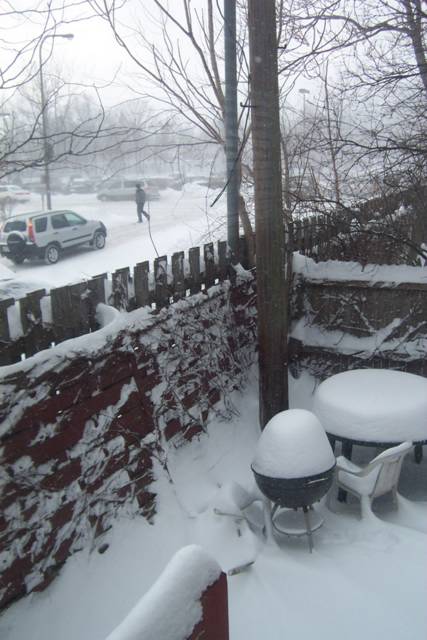
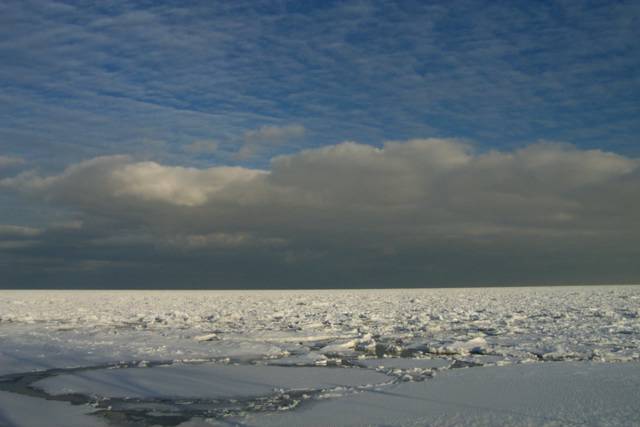

Saturday, January 22, 2005
Beard Board
Ken is currently growing out his beard, and the process is absolutely fascinating to me. I have serious beard-envy. I'm not saying I want a big bushy face-forest (although I'd probably try for one eventually, if I could, out of sheer curiosity), but a little face-foliage, to shape and comb and wax into points, to keep you warm in winter, with that great scratchy-soft texture and lots of colors and natural waves... I could make it into a goatee or a soul patch or a handle-bar moustache, pointy sideburns or mutton chops or any of million combinations, and change it all the time, 'cause it just keeps growing. Oh yes, I'm envious.
But I have to admit, it probably looks better on him than it would on me. And I get to live vicariously through his experiments and artistic efforts. And I get to kiss a guy with a beard, which is probably more fun than just kissing, with a beard.
Anyway, like I said, I'm fascinated by this process. And when Ken goes to the Beard Board I read eagerly over his shoulder, and look at all the pictures. It's not a very active forum. People don't post all that frequently. So the other day we explored some of the links to related sites -- and it was a gold mine.
Probably the best discovery was the Handlebar Club check out the FAQs - "What is a snood, and where can I acquire one?" - and be sure to follow the link for moustache mugs (Ken wants one.) But that's just the set-up. The gallery is the payoff.
Unfortunately, Ken is not eligible to join the club right now, since he has a full beard rather than just a handlebar moustache. But that's okay, because he can still join the "Official Gentlemen's Facial Hair Club" or the "OGFHC". This site provides lots of services for the hirsuite community, such as examples of Facial Hair Stereotypes in Popular Media. But perhaps the most relevant section of the site for me, as an unbearded-American, is the "she would look better..." page. I'll let you imagine what that is, or click on the link for yourself. Some of them really do look better.
There's a lot more links at the bottom of the Beard Board page, under the "beard affiliates" drop down menu (like rate my goatee, an inevitable mutation of the "hot or not?" meme), but Ken drew the line after we visited The Chest Hair Site. I was willing to stop there too.
But I have to admit, it probably looks better on him than it would on me. And I get to live vicariously through his experiments and artistic efforts. And I get to kiss a guy with a beard, which is probably more fun than just kissing, with a beard.
Anyway, like I said, I'm fascinated by this process. And when Ken goes to the Beard Board I read eagerly over his shoulder, and look at all the pictures. It's not a very active forum. People don't post all that frequently. So the other day we explored some of the links to related sites -- and it was a gold mine.
Probably the best discovery was the Handlebar Club check out the FAQs - "What is a snood, and where can I acquire one?" - and be sure to follow the link for moustache mugs (Ken wants one.) But that's just the set-up. The gallery is the payoff.
Unfortunately, Ken is not eligible to join the club right now, since he has a full beard rather than just a handlebar moustache. But that's okay, because he can still join the "Official Gentlemen's Facial Hair Club" or the "OGFHC". This site provides lots of services for the hirsuite community, such as examples of Facial Hair Stereotypes in Popular Media. But perhaps the most relevant section of the site for me, as an unbearded-American, is the "she would look better..." page. I'll let you imagine what that is, or click on the link for yourself. Some of them really do look better.
There's a lot more links at the bottom of the Beard Board page, under the "beard affiliates" drop down menu (like rate my goatee, an inevitable mutation of the "hot or not?" meme), but Ken drew the line after we visited The Chest Hair Site. I was willing to stop there too.
Saturday, January 15, 2005
This is Grand
This is Grand is the name of a blog which features stories from Chicago's El, and is also what the recorded voice announces inaudibly over the tunnel noise, when the train is about to stop at Grand.
The blog had a photo contest, and the twelve winners are posted here. I share the Chicagoist's weakness for scenes that include people, and I don't think these photos are really lying... I think there is something sublime about mass transit.
As further evidence, I'm going to link to these gorgeous 1920s posters for Chicago rapid transit. I've actually linked to them before, but even I had trouble finding where.
One of them is my desktop wallpaper. Another one inspired me to visit the lighthouse just north of campus. Well worth the trip.
Seems like my blogging's been a lot less Chicago-centric lately. It's a shame. But what with the weather and all, it's so much easier to stay in and rent Buffy DVDs (although now that Blockbuster has decided to let everybody keep movies for a month before charging them for the disk, it's going to be harder to find them) than to go down town and explore the city.
We did go down before Christmas. We took the Christmas Train to see the window displays at Marshall Field's and the Daley Plaza Tree and Christkindlmarket (the tree was so much bigger than I expected from the pictures. Ornaments the size of beach balls looked the same size as normal ornaments, in comparison to it) and The Magnificent Mile Lights Festival. That was a great night.
But now that the holidays are over, most of the city is hibernating anyway. There aren't many events to draw me out of my own cave. I guess I'll just have to make do with photoblogs until spring comes again. Cubs tickets on sale soon...
The blog had a photo contest, and the twelve winners are posted here. I share the Chicagoist's weakness for scenes that include people, and I don't think these photos are really lying... I think there is something sublime about mass transit.
As further evidence, I'm going to link to these gorgeous 1920s posters for Chicago rapid transit. I've actually linked to them before, but even I had trouble finding where.
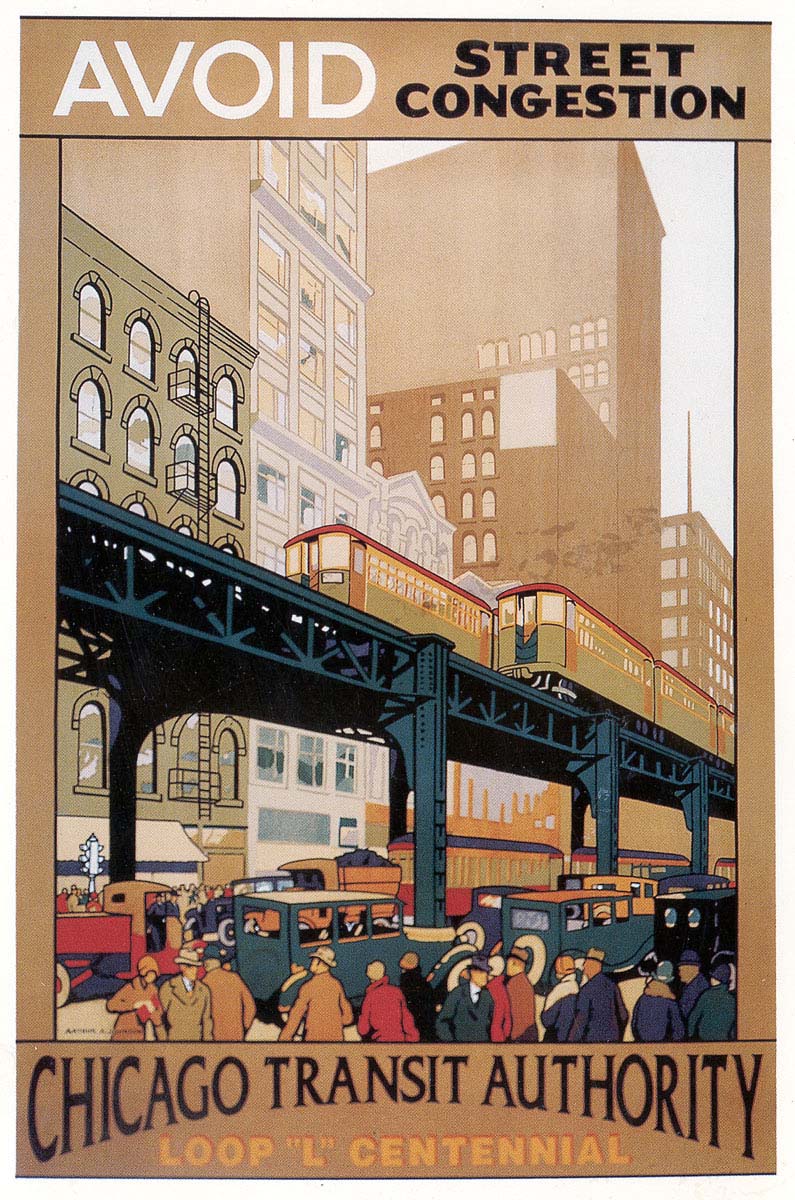
One of them is my desktop wallpaper. Another one inspired me to visit the lighthouse just north of campus. Well worth the trip.

Seems like my blogging's been a lot less Chicago-centric lately. It's a shame. But what with the weather and all, it's so much easier to stay in and rent Buffy DVDs (although now that Blockbuster has decided to let everybody keep movies for a month before charging them for the disk, it's going to be harder to find them) than to go down town and explore the city.
We did go down before Christmas. We took the Christmas Train to see the window displays at Marshall Field's and the Daley Plaza Tree and Christkindlmarket (the tree was so much bigger than I expected from the pictures. Ornaments the size of beach balls looked the same size as normal ornaments, in comparison to it) and The Magnificent Mile Lights Festival. That was a great night.
But now that the holidays are over, most of the city is hibernating anyway. There aren't many events to draw me out of my own cave. I guess I'll just have to make do with photoblogs until spring comes again. Cubs tickets on sale soon...
Thursday, January 06, 2005
What Do You Believe is True, Even Though You Cannot Prove It?
Back in high school I read this book called The Third Culture which was edited by John Brockman. I picked it up because I'd just read C.P. Snow's book The Two Cultures with which I've been obsessed ever since.
Now I don't believe that the people who wrote essays for Brockman's book represent anything like a third culture. They're science types. They're writing about questions which might be considered philosophy, but scientists have always done that. He edited another one, more recently, called The New Humanists which was exactly the same sort of thing. (I have to admit I didn't finish that one, because I lost it before I'd read all the essays. Andy, I think you've forgotten, but I owe you a book...)
Some time ago I heard that he'd started a web page called "Edge." And now, thanks to Peter Woit's reminder, I'm taking a look at it.
It has a feature in which Brockman asks lots of his famous, science type correspondents, the same provocative question. "What do you believe is true, even though you cannot prove it?"
That's the kind of question that takes a lot of nerve to ask. And it takes serious cajones to answer it honestly, for a scientist.
Richard Dawkins admits that he cannot prove that "All life, all intelligence, all creativity and all 'design' anywhere in the universe, is the direct or indirect product of Darwinian natural selection. It follows that design comes late in the universe, after a period of Darwinian evolution. Design cannot precede evolution and therefore cannot underlie the universe."
Physicist Freeman Dyson takes the cowardly route, and goes with an unprovable mathematical conjecture. (I'd be tempted by this sort of answer too, only I'd pick some geometric axioms.)
Biologist Jared Diamond, author of the scientific explanation of human history called Guns, Germs, and Steel, takes the opportunity to explain a hypothesis he says he can't yet prove, and so does Lynn Margulis, the biologist who came up with the currently accepted theory of the origin of eukaryotic life, and so does Daniel Dennett, author of Consciousness Explained.
Gregory Benford, physicist and science fiction writer, ducks the question, and asks one of his own: why should there be laws of nature? I guess we can take it that he believes, but cannot prove, that these laws are universally true. Clifford Pickover, computer scientist and creator of Clifford A. Pickover's homepage (try his ESP experiment) also tries to dodge, by phrasing his answer with "ifs". "If we believe that consciousness is the result of patterns of neurons in the brain, our thoughts, emotions, and memories could be replicated in moving assemblies of Tinkertoys." Be a man, Cliff. Do you believe Tinkertoy brains could think, or not?
The physicists in general do better at acknowledging how little we can actually prove Leonard Susskind, states the assumption that underlies quantum mechanics and statistical mechanics: "If I were to flip a coin a million times I'd be damn sure I wasn't going to get all heads. I'm not a betting man but I'd be so sure that I'd bet my life or my soul. I'd even go the whole way and bet a year's salary. I'm absolutely certain the laws of large numbers—probability theory—will work and protect me. All of science is based on it. But, I can't prove it and I don't really know why it works." (This reminds me of a story I read in the anthology "Fantasia Mathematica" in which someone gets really upset when a collection of monkeys at typewriters actually do start reproducing the works of Shakespeare -- word perfect, from their first keystroke.)
Lee Smolin is "convinced that quantum mechanics is not a final theory. I believe this because I have never encountered an interpretation of the present formulation of quantum mechanics that makes sense to me."
And Leon Lederman (former director of Fermilab, author of The God Particle and a nice guy, who answered a fan e-mail I sent him a long time ago) says: " To believe without knowing it cannot be proved (yet) is the essence of physics. Guys like Einstein, Dirac, Poincaré, etc. extolled the beauty of concepts, in a bizarre sense, placing truth at a lower level of importance."
There are a hundred and twenty contributors, all told, but the responses are short. Browse through them, and see who has the most guts.
Now I don't believe that the people who wrote essays for Brockman's book represent anything like a third culture. They're science types. They're writing about questions which might be considered philosophy, but scientists have always done that. He edited another one, more recently, called The New Humanists which was exactly the same sort of thing. (I have to admit I didn't finish that one, because I lost it before I'd read all the essays. Andy, I think you've forgotten, but I owe you a book...)
Some time ago I heard that he'd started a web page called "Edge." And now, thanks to Peter Woit's reminder, I'm taking a look at it.
It has a feature in which Brockman asks lots of his famous, science type correspondents, the same provocative question. "What do you believe is true, even though you cannot prove it?"
That's the kind of question that takes a lot of nerve to ask. And it takes serious cajones to answer it honestly, for a scientist.
Richard Dawkins admits that he cannot prove that "All life, all intelligence, all creativity and all 'design' anywhere in the universe, is the direct or indirect product of Darwinian natural selection. It follows that design comes late in the universe, after a period of Darwinian evolution. Design cannot precede evolution and therefore cannot underlie the universe."
Physicist Freeman Dyson takes the cowardly route, and goes with an unprovable mathematical conjecture. (I'd be tempted by this sort of answer too, only I'd pick some geometric axioms.)
Biologist Jared Diamond, author of the scientific explanation of human history called Guns, Germs, and Steel, takes the opportunity to explain a hypothesis he says he can't yet prove, and so does Lynn Margulis, the biologist who came up with the currently accepted theory of the origin of eukaryotic life, and so does Daniel Dennett, author of Consciousness Explained.
Gregory Benford, physicist and science fiction writer, ducks the question, and asks one of his own: why should there be laws of nature? I guess we can take it that he believes, but cannot prove, that these laws are universally true. Clifford Pickover, computer scientist and creator of Clifford A. Pickover's homepage (try his ESP experiment) also tries to dodge, by phrasing his answer with "ifs". "If we believe that consciousness is the result of patterns of neurons in the brain, our thoughts, emotions, and memories could be replicated in moving assemblies of Tinkertoys." Be a man, Cliff. Do you believe Tinkertoy brains could think, or not?
The physicists in general do better at acknowledging how little we can actually prove Leonard Susskind, states the assumption that underlies quantum mechanics and statistical mechanics: "If I were to flip a coin a million times I'd be damn sure I wasn't going to get all heads. I'm not a betting man but I'd be so sure that I'd bet my life or my soul. I'd even go the whole way and bet a year's salary. I'm absolutely certain the laws of large numbers—probability theory—will work and protect me. All of science is based on it. But, I can't prove it and I don't really know why it works." (This reminds me of a story I read in the anthology "Fantasia Mathematica" in which someone gets really upset when a collection of monkeys at typewriters actually do start reproducing the works of Shakespeare -- word perfect, from their first keystroke.)
Lee Smolin is "convinced that quantum mechanics is not a final theory. I believe this because I have never encountered an interpretation of the present formulation of quantum mechanics that makes sense to me."
And Leon Lederman (former director of Fermilab, author of The God Particle and a nice guy, who answered a fan e-mail I sent him a long time ago) says: " To believe without knowing it cannot be proved (yet) is the essence of physics. Guys like Einstein, Dirac, Poincaré, etc. extolled the beauty of concepts, in a bizarre sense, placing truth at a lower level of importance."
There are a hundred and twenty contributors, all told, but the responses are short. Browse through them, and see who has the most guts.
Thursday, December 30, 2004
Nothing
So here's what I've been doing for the past week or so, my excuse for neglecting my small-but-faithful audience: nothing.
And I've loved it. Nothing like -- riding in the car fifteen hours each way from Chicago to Denver and back reading out loud to keep Ken awake (The Sword in the Stone, which we finished, reading about the Boxing Day Boar Hunt on the day after Christmas) and watching the New Lemony Snicket movie and reading books seven, eight, nine, ten and eleven of the Series of Unfortunate Events.
The movie just about lives up to the books -- a high standard. All that's missing is the joy the books take in words themselves. In obscure vocabulary and playful definitions, in codes, puns, alliterations, anagrams, and literary allusions. I was extra-pleased by the mention of C.P. Snow's Corridors of Power, and I love all the T.S. Eliot. It's great that you can recognize villains by their fondness for Edgar Guest, while the well-read heroes prefer Herman Melville. I need to look-up some of the references which went over my head -- "Morel" Behavior in a Free Society, Archy and Mahitabel, Comyns, and Carl Van Vechten. I should also read the Gulag Archipelago, one of these days. But I think I got most of the references to Nietzche and Beverly Cleary.
Anyway, even some of that fun makes it into the movie, through Jude Law's pitch perfect narration. So it's worth the ticket price. We also rented "King Arthur" (which doesn't completement The Sword in the Stone as well as you'd think) and "Shaun of the Dead" (which does complement "Dawn of the Dead" -- Ken's favorite movie -- very well indeed.) I give it four stars, and I'm not the zombie-lover.
I picked out a wedding dress with my mom. Wedding plans are being revised, although I'm not making any more announcements yet.
Took Ken to Midnight Mass and to Casa Bonita. He's a good sport.
Christmas shopped up to the last possible moment, and then reaped an amazing haul on Christmas morning -- thanks for the cell-phone service especially, Dad and Mom.
And since we got back, I've spent a lot of time hanging out with Ken while he plays "Fable," which I got him for Christmas, after heavy hinting. I like watching video games. It makes more sense than watching sports -- at least I know the person I'm cheering for. And this game has a great story. I got totally caught up. The most hilarious part was when he took off his helmet and all of the game characters fell in love with him. His "renown" level was very high, as was his "attractiveness" score -- since his hair had grown back after his stint in prison.
There was a lot of recorded West Wing and Gilmore Girls to catch up on (thanks Becca) and more video games, movie rentals, books, and snow ball fights, and walking around on frozen ponds, somewhere in there...
It feels so good to do nothing, for a while.
And I've loved it. Nothing like -- riding in the car fifteen hours each way from Chicago to Denver and back reading out loud to keep Ken awake (The Sword in the Stone, which we finished, reading about the Boxing Day Boar Hunt on the day after Christmas) and watching the New Lemony Snicket movie and reading books seven, eight, nine, ten and eleven of the Series of Unfortunate Events.
The movie just about lives up to the books -- a high standard. All that's missing is the joy the books take in words themselves. In obscure vocabulary and playful definitions, in codes, puns, alliterations, anagrams, and literary allusions. I was extra-pleased by the mention of C.P. Snow's Corridors of Power, and I love all the T.S. Eliot. It's great that you can recognize villains by their fondness for Edgar Guest, while the well-read heroes prefer Herman Melville. I need to look-up some of the references which went over my head -- "Morel" Behavior in a Free Society, Archy and Mahitabel, Comyns, and Carl Van Vechten. I should also read the Gulag Archipelago, one of these days. But I think I got most of the references to Nietzche and Beverly Cleary.
Anyway, even some of that fun makes it into the movie, through Jude Law's pitch perfect narration. So it's worth the ticket price. We also rented "King Arthur" (which doesn't completement The Sword in the Stone as well as you'd think) and "Shaun of the Dead" (which does complement "Dawn of the Dead" -- Ken's favorite movie -- very well indeed.) I give it four stars, and I'm not the zombie-lover.
I picked out a wedding dress with my mom. Wedding plans are being revised, although I'm not making any more announcements yet.
Took Ken to Midnight Mass and to Casa Bonita. He's a good sport.
Christmas shopped up to the last possible moment, and then reaped an amazing haul on Christmas morning -- thanks for the cell-phone service especially, Dad and Mom.
And since we got back, I've spent a lot of time hanging out with Ken while he plays "Fable," which I got him for Christmas, after heavy hinting. I like watching video games. It makes more sense than watching sports -- at least I know the person I'm cheering for. And this game has a great story. I got totally caught up. The most hilarious part was when he took off his helmet and all of the game characters fell in love with him. His "renown" level was very high, as was his "attractiveness" score -- since his hair had grown back after his stint in prison.
There was a lot of recorded West Wing and Gilmore Girls to catch up on (thanks Becca) and more video games, movie rentals, books, and snow ball fights, and walking around on frozen ponds, somewhere in there...
It feels so good to do nothing, for a while.
Wednesday, December 22, 2004
Even Though My Sister Hates the Poetry Posts...
The Journey of the Magi
by T.S. Eliot
'A cold coming we had of it,
Just the worst time of the year
For a journey, and such a long journey:
The ways deep and the weather sharp,
The very dead of winter.'
And the camels galled, sore-footed, refractory,
Lying down in the melting snow.
There were times we regretted
The summer palaces on slopes, the terraces,
And the silken girls bringing sherbet.
Then the camel men cursing and grumbling
And running away, and wanting their liquor and women,
And the night-fires going out, and the lack of shelters,
And the cities hostile and the towns unfriendly
And the villages dirty and charging high prices:
A hard time we had of it.
At the end we preferred to travel all night,
Sleeping in snatches,
With the voices singing in our ears, saying
That this was all folly.
Then at dawn we came down to a temperate valley,
Wet, below the snow line, smelling of vegetation;
With a running stream and a water-mill beating the darkness,
And three trees on the low sky,
And an old white horse galloped away in the meadow.
Then we came to a tavern with vine-leaves over the lintel,
Six hands at an open door dicing for pieces of silver,
And feet kicking the empty wine-skins.
But there was no information, and so we continued
And arrived at evening, not a moment too soon
Finding the place; it was (you may say) satisfactory.
All this was a long time ago, I remember,
And I would do it again, but set down
This set down
This: were we led all that way for
Birth or Death? There was a Birth, certainly,
We had evidence and no doubt. I had seen birth and death,
But had thought they were different; this Birth was
Hard and bitter agony for us, like Death, our death.
We returned to our places, these Kingdoms,
But no longer at ease here, in the old dispensation,
With an alien people clutching their gods.
I should be glad of another death.
by T.S. Eliot
'A cold coming we had of it,
Just the worst time of the year
For a journey, and such a long journey:
The ways deep and the weather sharp,
The very dead of winter.'
And the camels galled, sore-footed, refractory,
Lying down in the melting snow.
There were times we regretted
The summer palaces on slopes, the terraces,
And the silken girls bringing sherbet.
Then the camel men cursing and grumbling
And running away, and wanting their liquor and women,
And the night-fires going out, and the lack of shelters,
And the cities hostile and the towns unfriendly
And the villages dirty and charging high prices:
A hard time we had of it.
At the end we preferred to travel all night,
Sleeping in snatches,
With the voices singing in our ears, saying
That this was all folly.
Then at dawn we came down to a temperate valley,
Wet, below the snow line, smelling of vegetation;
With a running stream and a water-mill beating the darkness,
And three trees on the low sky,
And an old white horse galloped away in the meadow.
Then we came to a tavern with vine-leaves over the lintel,
Six hands at an open door dicing for pieces of silver,
And feet kicking the empty wine-skins.
But there was no information, and so we continued
And arrived at evening, not a moment too soon
Finding the place; it was (you may say) satisfactory.
All this was a long time ago, I remember,
And I would do it again, but set down
This set down
This: were we led all that way for
Birth or Death? There was a Birth, certainly,
We had evidence and no doubt. I had seen birth and death,
But had thought they were different; this Birth was
Hard and bitter agony for us, like Death, our death.
We returned to our places, these Kingdoms,
But no longer at ease here, in the old dispensation,
With an alien people clutching their gods.
I should be glad of another death.
Friday, December 17, 2004
Running Out of Classes
I feel ripped off.
I thought by this point in my education, I would know a lot more. I still look at papers, and feel like they're in a foreign language. I still look at the math, and feel like you'd have to be much smarter than me to understand it. (Including math that I've written.)
I do not feel like an expert. And this is bad, 'cause they're letting me help teach classes...
You know how they promise you, your whole life, "You'll understand when you're older"? They say, "Well, we can't explain this to you yet. You don't have enough math. You have to learn all this other stuff first."
But now I've done all that, I've sat through all their classes, almost. They haven't lived up to their side of the bargain. There's still so much I don't understand. And now I begin to suspect that they don't really understand either.
There are still lots of people above me, but they are not so far above me now. I'm getting to the point where it's not so much about people who know more than you, as people who know about different things than you, where we start to specialize.
So now, when I listen to physicists talk, I'm much less likely to believe they really know what they're talking about. I don't, and I've gotten this far, so why should I believe they do? And I feel the same way about people in other fields now, too. A doctorate is so much less impressive now that I think I actually might get one. Any club that would have me as a member, etc...
So running out of classes has made me feel a little cynical. Also smug, though. And old. (But I like feeling old.) Mainly, though, I'm just outraged about all the questions I now see I'm never going to get answers to. After so much work, and such a long time... Man! That sucks!
I thought by this point in my education, I would know a lot more. I still look at papers, and feel like they're in a foreign language. I still look at the math, and feel like you'd have to be much smarter than me to understand it. (Including math that I've written.)
I do not feel like an expert. And this is bad, 'cause they're letting me help teach classes...
You know how they promise you, your whole life, "You'll understand when you're older"? They say, "Well, we can't explain this to you yet. You don't have enough math. You have to learn all this other stuff first."
But now I've done all that, I've sat through all their classes, almost. They haven't lived up to their side of the bargain. There's still so much I don't understand. And now I begin to suspect that they don't really understand either.
There are still lots of people above me, but they are not so far above me now. I'm getting to the point where it's not so much about people who know more than you, as people who know about different things than you, where we start to specialize.
So now, when I listen to physicists talk, I'm much less likely to believe they really know what they're talking about. I don't, and I've gotten this far, so why should I believe they do? And I feel the same way about people in other fields now, too. A doctorate is so much less impressive now that I think I actually might get one. Any club that would have me as a member, etc...
So running out of classes has made me feel a little cynical. Also smug, though. And old. (But I like feeling old.) Mainly, though, I'm just outraged about all the questions I now see I'm never going to get answers to. After so much work, and such a long time... Man! That sucks!
Subscribe to:
Posts (Atom)