On science related topics:
Peter Woit writes about "open access" journals.. You probably know that scientific theories and experimental results are supposed to be published in "peer reviewed" journals. You may not know that the only subscribers to the physical copies of these journals are university libraries. That's because those subscriptions are expensive. Or that no one these days ever really looks at the physical copies. The university library usually has a subscription to the electronic edition too, you see, much easier to access. (But also expensive.)
Also these days many papers are available on the so-called "arXiv". (The X is a greek Chi. Get it?) Papers on the arXiv have not been peer reviewed yet, may not ever actually be published. But since results appear there months earlier than in the journals, and since papers which will end up in all different journals are available there in a single place, it's very popular.
So to me, the question is, does it make sense to write papers to fit the limitations of print? The shortage of space in print journals means that there is usually no room for a whole derivation, so equations are presented without justification. Results taken from huge data sets are summarized in single graphs. Basically, everything has to be compressed until it's so cryptic that even "peer" reviewers (who are not always specialists in the precise sub-fields of the papers they're sent) have little chance of working out whether the equations make sense or whether the results are reasonable.
And, of course, lots of papers are rejected by the more prestigious journals, not because they're wrong, but because you can only fit so much in an issue. This makes the ego-driven, status-seeking aspects of "publication" even worse.
But the "Open Access" movement apparently doesn't want to move to electronic journals, but to pay-to-publish print journals!
Speaking of the ego-driven, status seeking aspects of publishing: Piled Higher and Deeper has a simple diagram of how it works.
Okay, but before I get too cynical, I'll go on to "Cocktail Party Physics," a non-academic, un-mathematical blog by science writer and Buffy fan Jennifer Ouellette. Her enthusiasm for the subject usually restores my own a little, (so does Pyracantha's.) Inspired by the internet holiday called "Talk Like a Pirate Day," she proposes Talk like physicist day. I think we should combine them. Argh, matey, that plank is a simple harmonic oscillator and you're about to find out its natural frequency!
And Chad Orzel, a working researcher in (more or less) my own field, reminds me that as frustrating as the impossible experiments we try to do on our cold atoms may be, the basic idea of laser cooling is still pretty awesome. He describes the first time he heard of it, as an undergraduate "Right about there, I was hooked, just because it's such a wonderfully counter-intuitive idea. When you think about hitting something with a laser, you don't imagine that it'll get cold.". He then describes the basic concepts involved, continued in the following post. This is the theory behind a lot of the stuff our lab does, if you're at all curious. Ken is the university's laser cooling and trapping expert, these days, as the operator of the only working atom trap. Even when the research is stalled, that's still a pretty cool position to hold.
Finally, Mark Chu-Carroll has a post about working in a academia versus working in industry from the point of view of someone who works in industry. Of course, his field is computer science, but a lot of what he says seems to be true in general. He says, "When I started working on my PhD, I had no intention of going to work at an industry research lab. I went to get my PhD specifically because I wanted to teach." The story of how he wound up where he is, especially the parts about not having as many publications as he'd've liked, and research politics, and the constraints of being married to someone with her own career, and the fun he had working at his current lab as an intern compared with the pressure to get grants and get papers published in academia, are all really interesting to me. And the fact that he's so happy with how it worked out is very encouraging.
It's also really encouraging that some post-doc friends of mine recently got permanent jobs of their own, outside the academic track (and in very diverse places.) We'll probably see one of them, at least, at a conference we're attending next month (my first one! I'm nervous about it.)
In the end, the best advice is probably Timothy Burke's. Accept that your first job out of college or grad school is not going to be great. Accept that you're going to be paying some dues. Just because you don't get the cool job right away, doesn't mean you never will... So I should relax.
I'll try.
Sunday, September 24, 2006
Wednesday, September 20, 2006
September Poem
Dunno what this one means, but it suits my mood.
W.H. Auden
For what as easy
For what thought small,
For what is well
Because between,
To you simply
From me I mean.
Who goes with who
The bedclothes say,
As I and you
Go kissed away,
The data given,
The senses even.
Fate is not late,
Nor the speech rewritten,
Nor one word forgotten,
Said at the start
About heart,
By heart, for heart.
W.H. Auden
For what as easy
For what thought small,
For what is well
Because between,
To you simply
From me I mean.
Who goes with who
The bedclothes say,
As I and you
Go kissed away,
The data given,
The senses even.
Fate is not late,
Nor the speech rewritten,
Nor one word forgotten,
Said at the start
About heart,
By heart, for heart.
Monday, September 11, 2006
The Final Frontier
I'm a fan of the space program. Not a hardcore fan, maybe, not a self-made expert like some I've known. But, y'know, I watched Apollo 13 four or five times in theaters and the HBO series "From the Earth to the Moon" and "The Right Stuff" and then I read some of the books that those are based on. And yesterday I picked up We Seven, purporting to be an account of the "most magnificent adventure of modern times, told by the heroes who achieved it" -- the Mercury astronauts.
And then there's all the science fiction dating back to the early days of the space program that I still love. When I bought the Mercury book, I also picked up Stowaway to Mars by John Wyndham. "An international prize of over a million dollars was being offered to the first man to complete an interplanetary journey. Target -- Mars. [...] Dale Curtance of England didn't need the fortune. He was a millionaire. He was an eccentric. But most of all he was an adventurer and he was determined to win. [...] There were going to be many surprises. And they all began with the stowaway aboard Curtance's ship. A stowaway to Mars. A woman."
Who could resist that?
The great part about space travel is that it blurs the line between science fiction and reality. For instance, there is the X Prize Cup, which has already awarded a ten million dollar prize to a spacecraft developed by a billionaire. Now they plan to offer more prizes. And a British billionaire has joined forces with the American one to try to put the prize-winning craft to use.
And NASA really is planning to go to Mars, and back to the moon. The Constellation program borrows ideas from Apollo (and so resembles the science fiction of that era too) for the design of a vehicle versatile enough to handle both, supposedly, and dock with a space station too. Lockheed Martin got the contract. They're hiring in Colorado. My mom sent me an e-mail alert. But I don't really want to build it, so much as fly in it... Maybe I'll stow away.
Realistically, private space tourism is probably is the only way I'm ever going to get any kind of taste of space. Right now it's a little out of my price range, around $20 million to go up aboard a Russian Soyuz and an extra $15 million if you actually want to do a spacewalk. I'm saving up.
There is one other option. You can move to a small country and talk them into buying fighter planes from Russia, and hope the Russians throw a trip in to "sweeten the deal". That's how Malaysia's getting its first astronaut to space. Whoever it is will attempt to make Teh Tarik (pulled tea) in space. This will be a challenge because, normally, it involves pouring "boiling-hot milky tea swiftly and repeatedly from one vessel held high in one hand into another held low, producing a distinctive layer of froth."
If I ever go into space, I'm going to drink my national beverage: Diet Coke. I can think of all kinds of experiments to do with that. Shaking the can, ditching the can altogether, maybe even bringing along some Mentos.
And then there's all the science fiction dating back to the early days of the space program that I still love. When I bought the Mercury book, I also picked up Stowaway to Mars by John Wyndham. "An international prize of over a million dollars was being offered to the first man to complete an interplanetary journey. Target -- Mars. [...] Dale Curtance of England didn't need the fortune. He was a millionaire. He was an eccentric. But most of all he was an adventurer and he was determined to win. [...] There were going to be many surprises. And they all began with the stowaway aboard Curtance's ship. A stowaway to Mars. A woman."
Who could resist that?
The great part about space travel is that it blurs the line between science fiction and reality. For instance, there is the X Prize Cup, which has already awarded a ten million dollar prize to a spacecraft developed by a billionaire. Now they plan to offer more prizes. And a British billionaire has joined forces with the American one to try to put the prize-winning craft to use.
And NASA really is planning to go to Mars, and back to the moon. The Constellation program borrows ideas from Apollo (and so resembles the science fiction of that era too) for the design of a vehicle versatile enough to handle both, supposedly, and dock with a space station too. Lockheed Martin got the contract. They're hiring in Colorado. My mom sent me an e-mail alert. But I don't really want to build it, so much as fly in it... Maybe I'll stow away.
Realistically, private space tourism is probably is the only way I'm ever going to get any kind of taste of space. Right now it's a little out of my price range, around $20 million to go up aboard a Russian Soyuz and an extra $15 million if you actually want to do a spacewalk. I'm saving up.
There is one other option. You can move to a small country and talk them into buying fighter planes from Russia, and hope the Russians throw a trip in to "sweeten the deal". That's how Malaysia's getting its first astronaut to space. Whoever it is will attempt to make Teh Tarik (pulled tea) in space. This will be a challenge because, normally, it involves pouring "boiling-hot milky tea swiftly and repeatedly from one vessel held high in one hand into another held low, producing a distinctive layer of froth."
If I ever go into space, I'm going to drink my national beverage: Diet Coke. I can think of all kinds of experiments to do with that. Shaking the can, ditching the can altogether, maybe even bringing along some Mentos.
Sunday, September 03, 2006
Happy Birthday to Me
Actually I did have a happy birthday yesterday. I love that my birthday falls 1) on or near a three day weekend, every year 2) at the beginning of my favorite season. And now that it's not "back to school time" for me anymore (I never left), my only worry is allergies. What the heck is it that blooms in September and makes my nose go nuts?
But the season is worth the sneezing. In Chicagoland, fall is by far the nicest time of year. Seventy degree days with golden sunshine and cool lake breezes. And yesterday was the most beautiful day in the history of the Earth. I went for a long run, interrupted in the middle by a little while laying on a bench and watching the sailboats pass in front of the skyline and letting myself be hypnotized by the sunlight flashing on the water.
I got a bracelet, money, flowers and (yet to come) running shoes from my parents. I asked for the running shoes. From my husband, I got, not the new watch I had asked for, but my beloved old one, repaired. He snuck out and got this done while I was making copies the other day, never even knew he'd left. I also got a new wallet (the one I had was in shreds, but I hadn't been able to find one like it) and and candy and glow in the dark solar system and Star Wars stickers. I will be taking general relativity soon, after all. A girl's got to decorate her binder.
He also took me out to dinner -- capellini pomodoro, red wine, and chocolate cheese cake, with a candle. Mmmm.
Then we went for a walk, back out in that beautiful sunshine. And I got phone calls from family, and fell asleep watching the Saturday night B-movie on Svengoolie. I tell ya -- this is the life.
But the season is worth the sneezing. In Chicagoland, fall is by far the nicest time of year. Seventy degree days with golden sunshine and cool lake breezes. And yesterday was the most beautiful day in the history of the Earth. I went for a long run, interrupted in the middle by a little while laying on a bench and watching the sailboats pass in front of the skyline and letting myself be hypnotized by the sunlight flashing on the water.
I got a bracelet, money, flowers and (yet to come) running shoes from my parents. I asked for the running shoes. From my husband, I got, not the new watch I had asked for, but my beloved old one, repaired. He snuck out and got this done while I was making copies the other day, never even knew he'd left. I also got a new wallet (the one I had was in shreds, but I hadn't been able to find one like it) and and candy and glow in the dark solar system and Star Wars stickers. I will be taking general relativity soon, after all. A girl's got to decorate her binder.
He also took me out to dinner -- capellini pomodoro, red wine, and chocolate cheese cake, with a candle. Mmmm.
Then we went for a walk, back out in that beautiful sunshine. And I got phone calls from family, and fell asleep watching the Saturday night B-movie on Svengoolie. I tell ya -- this is the life.
Sunday, August 27, 2006
Real and Imaginary
I've got a few blog entries marked "keep new" in my Bloglines feed, because I keep meaning to get around to writing about them. The problem is that they're on intimidating subjects, which deserve long, thoughtful posts, and it's hard to muster that much mental energy. But they nag at me, and so perhaps I'll just try to say something about them, and link to them, and get it over with.
One is a sort of rambling post by Lance Mannion called The Purpose of Religion.
In it, he says
That sounds harsh, and later he backs off it a little -- he seems to be trying to say that he can see the appeal, unlike some atheists. But seeing the appeal is not the same as approving.
By contrast, Pyracantha posted a nice series of short essays beginning with Science Religion Imagination Realities, part I (and continuing with part II, III, IV, and V) wherein she summarizes the conflict between those who believe in the supernatural and those who do not, and places herself somewhere outside of that, as someone who believes that the supernatural exists in our minds, and that this kind of existence, while unphysical, is still real.
She thinks that scientists will scorn this unempirical, irrational view of the world. But I think that if they do, they're hypocrites. The thing is, scientists believe in math. Math is unphysical. And yet you'll have a hard time finding a scientist who doesn't believe the person who discovered the value of pi (or rather, the means to calculate it to as many digits as you please) didn't discover something real about the universe.
I had this argument with a philosophy professor in college. I said, "Pi doesn't exist." He said, "Yes, of course it does." I said, "Show me where." He said, "It's implicit in every circle." I said, "Show me a perfect circle."
I don't remember how he answered that. It seems to me unanswerable. There are no perfect circles. Pi is an idealization, and abstraction, an idea.
The same goes for every theorem ever "discovered" by mathematicians. They are really invented. They rest explicitly on unprovable assumptions. Some of those assumptions are even acknowledged to be inconsistent with what we see about the universe around is, and yet scientists believe theorems about hypothetical spaces where triangles have more than 180 degrees to be, nevertheless, "discovered," to be in some sense, facts.
But it doesn't stop at math. If pressed, most scientists will admit that they believe in such abstractions as justice, friendship, and personal identity. All the fictions that human beings live by. You can't kick justice, you can't measure friendship, and no one is really the same person from moment to moment; nobody is consistent or predictable enough in their behavior to qualify as a real scientific phenomenon.
The metaphor that I like, I got from Buckminster Fuller. It's something like this: these abstract things are like knots tied in a rope. You can't have the knot without the rope, of course. The knot, by itself, isn't a physical thing. It's just a pattern. The physical thing is the rope. But the knot is really there, nevertheless. Another metaphor for the same thing: a mosaic. Let's say a mosaic depicting an elephant. The stones are physically there. The elephant is not, has no existence beyond the stones. It's true, there is no elephant. And yet everyone who sees it knows exactly what it is.
Buckminster Fuller said that energy was the rope, and even matter was just a knot in it. Because matter is created and destroyed (in nuclear reactions, usually) but energy, on average, is not.
You can extend these metaphors. What if I make a pattern out of knots, two and then one, two and then one? Is the pattern really there? But it only exists in the knots, which only exist in the rope. You could even imagine using the knots to make morse code, or the mosaic tiles to make letters, and spelling out the word "apple." In what sense is the apple "really there"? (It must be a little bit really there, because if I show it to people and tell them to go fetch one, they'll consistently -- repeatably! -- come back with real, physical apples.)
So that's my take. The difference between a real person and a fictional character is a level of abstraction, the difference between a knot and a pattern made out of knots.
Now believing that a God exists at some level of abstraction is not likely to satisfy a genuinely religious person, since Sherlock Holmes also exists, at some level of abstraction. The question is, is God a pattern in the universe, or a pattern in our minds? What level of abstraction? This ambiguity is sort of like a Rorschach test or an optical illusion -- is the image on the page or in your head? But maybe either way, it hardly matters. The mind is so many levels of abstraction away from matter and energy anyway, what's one more, give or take? If it exists in the mind, it's only a little further from the physical than we ourselves are. And it can still have consequences in the world, can still make people fetch apples. Of course, the only difference between a right theory and a wrong theory in science is also the level of abstraction (wrong theories exist only in your head), but if God is not a scientific theory, is more like a work of art? Does it really matter if a this still life was painted from a model or simply created in the artists' imagination? Does it matter if he got the details "wrong"?
Statements like Lance Mannion's seem to me like someone looking at a mosaic and insisting that there is no elephant, only a bunch of stones.
One is a sort of rambling post by Lance Mannion called The Purpose of Religion.
In it, he says
Faith, that is the belief in things unseen, is willful stupidity. Faith is believing that what your eyes and ears tell you is secondary to what your imagination allows you to wish were true instead. Faith is a belief in nonsense. To have even a little faith is to believe in nonsense and to open your mind up to all kinds of other nonsense.
That sounds harsh, and later he backs off it a little -- he seems to be trying to say that he can see the appeal, unlike some atheists. But seeing the appeal is not the same as approving.
By contrast, Pyracantha posted a nice series of short essays beginning with Science Religion Imagination Realities, part I (and continuing with part II, III, IV, and V) wherein she summarizes the conflict between those who believe in the supernatural and those who do not, and places herself somewhere outside of that, as someone who believes that the supernatural exists in our minds, and that this kind of existence, while unphysical, is still real.
She thinks that scientists will scorn this unempirical, irrational view of the world. But I think that if they do, they're hypocrites. The thing is, scientists believe in math. Math is unphysical. And yet you'll have a hard time finding a scientist who doesn't believe the person who discovered the value of pi (or rather, the means to calculate it to as many digits as you please) didn't discover something real about the universe.
I had this argument with a philosophy professor in college. I said, "Pi doesn't exist." He said, "Yes, of course it does." I said, "Show me where." He said, "It's implicit in every circle." I said, "Show me a perfect circle."
I don't remember how he answered that. It seems to me unanswerable. There are no perfect circles. Pi is an idealization, and abstraction, an idea.
The same goes for every theorem ever "discovered" by mathematicians. They are really invented. They rest explicitly on unprovable assumptions. Some of those assumptions are even acknowledged to be inconsistent with what we see about the universe around is, and yet scientists believe theorems about hypothetical spaces where triangles have more than 180 degrees to be, nevertheless, "discovered," to be in some sense, facts.
But it doesn't stop at math. If pressed, most scientists will admit that they believe in such abstractions as justice, friendship, and personal identity. All the fictions that human beings live by. You can't kick justice, you can't measure friendship, and no one is really the same person from moment to moment; nobody is consistent or predictable enough in their behavior to qualify as a real scientific phenomenon.
The metaphor that I like, I got from Buckminster Fuller. It's something like this: these abstract things are like knots tied in a rope. You can't have the knot without the rope, of course. The knot, by itself, isn't a physical thing. It's just a pattern. The physical thing is the rope. But the knot is really there, nevertheless. Another metaphor for the same thing: a mosaic. Let's say a mosaic depicting an elephant. The stones are physically there. The elephant is not, has no existence beyond the stones. It's true, there is no elephant. And yet everyone who sees it knows exactly what it is.
Buckminster Fuller said that energy was the rope, and even matter was just a knot in it. Because matter is created and destroyed (in nuclear reactions, usually) but energy, on average, is not.
You can extend these metaphors. What if I make a pattern out of knots, two and then one, two and then one? Is the pattern really there? But it only exists in the knots, which only exist in the rope. You could even imagine using the knots to make morse code, or the mosaic tiles to make letters, and spelling out the word "apple." In what sense is the apple "really there"? (It must be a little bit really there, because if I show it to people and tell them to go fetch one, they'll consistently -- repeatably! -- come back with real, physical apples.)
So that's my take. The difference between a real person and a fictional character is a level of abstraction, the difference between a knot and a pattern made out of knots.
Now believing that a God exists at some level of abstraction is not likely to satisfy a genuinely religious person, since Sherlock Holmes also exists, at some level of abstraction. The question is, is God a pattern in the universe, or a pattern in our minds? What level of abstraction? This ambiguity is sort of like a Rorschach test or an optical illusion -- is the image on the page or in your head? But maybe either way, it hardly matters. The mind is so many levels of abstraction away from matter and energy anyway, what's one more, give or take? If it exists in the mind, it's only a little further from the physical than we ourselves are. And it can still have consequences in the world, can still make people fetch apples. Of course, the only difference between a right theory and a wrong theory in science is also the level of abstraction (wrong theories exist only in your head), but if God is not a scientific theory, is more like a work of art? Does it really matter if a this still life was painted from a model or simply created in the artists' imagination? Does it matter if he got the details "wrong"?
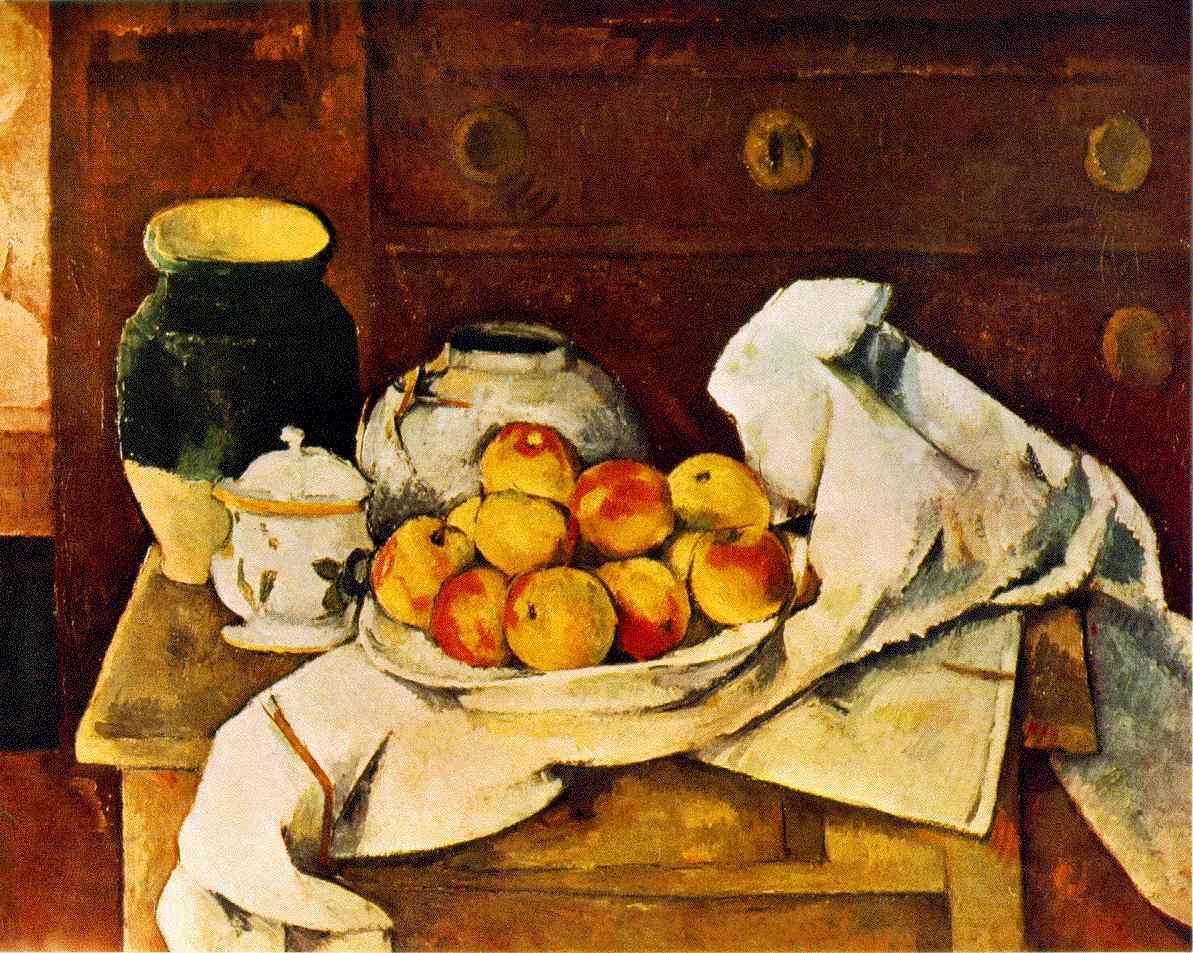
Statements like Lance Mannion's seem to me like someone looking at a mosaic and insisting that there is no elephant, only a bunch of stones.
Tuesday, August 22, 2006
You Say You Want a Revolution
Maybe the odds are a bit better for Big New Physics being developed in my lifetime than I thought.
It appears "dark matter" is no longer just speculation. Here's some observational evidence that there is something out there that we can't see.
Short explanation for those who've never heard of dark matter before: for a long while, it's appeared that the galaxies and other astronomical objects we can see don't move the way we'd expect them to for the mass they appear to have, if they were just acting under the influence of gravity. So physicists speculated that either they were more massive than they look (by a lot!) or our understanding of gravity was wrong.
But there are apparently reasons to believe that if they are more massive than they look, that mass doesn't come in the form of stuff made of neutrons and protons and electrons. It seems it has to come from something that doesn't interact with normal matter by almost any means except through gravity, otherwise we'd be able to detect it. So ghostly "dark matter" was invoked. Such convenient substances have been hypothesized before, though, and eventually disproved, as in the case of luminiferous aether
Only all of the sudden it's no longer so mysterious, so speculative. It seems that some astronomers have found a couple of galactic clusters which collided, and the collision knocked the matter in them away from the gravitational center of mass. Now normally the center of mass is, you know surrounded by mass. That is to say, surrounded by matter. But here all the matter's been pushed away, and the gravity is still pulling things toward where it used it be. It's as if the Sun got knocked out of the solar system but the earth kept orbiting the point where it once was. You'd have to assume there was something else there, right?
The revolution will come when and if we ever figure out what dark matter actually is, besides all around us.
(Actually dark matter still isn't enough to completely explain the dynamics of the stars. Something else, called "dark energy" or sometimes "the cosmological constant," is invoked to explain some aspects. But that remains in the realm of speculation and controversy for now. Anyway, I'm looking forward to finally taking that general relativity class this winter, and I'm sort of glad I'll be taking it after this dark matter discovery.)
It appears "dark matter" is no longer just speculation. Here's some observational evidence that there is something out there that we can't see.
Short explanation for those who've never heard of dark matter before: for a long while, it's appeared that the galaxies and other astronomical objects we can see don't move the way we'd expect them to for the mass they appear to have, if they were just acting under the influence of gravity. So physicists speculated that either they were more massive than they look (by a lot!) or our understanding of gravity was wrong.
But there are apparently reasons to believe that if they are more massive than they look, that mass doesn't come in the form of stuff made of neutrons and protons and electrons. It seems it has to come from something that doesn't interact with normal matter by almost any means except through gravity, otherwise we'd be able to detect it. So ghostly "dark matter" was invoked. Such convenient substances have been hypothesized before, though, and eventually disproved, as in the case of luminiferous aether
Only all of the sudden it's no longer so mysterious, so speculative. It seems that some astronomers have found a couple of galactic clusters which collided, and the collision knocked the matter in them away from the gravitational center of mass. Now normally the center of mass is, you know surrounded by mass. That is to say, surrounded by matter. But here all the matter's been pushed away, and the gravity is still pulling things toward where it used it be. It's as if the Sun got knocked out of the solar system but the earth kept orbiting the point where it once was. You'd have to assume there was something else there, right?
The revolution will come when and if we ever figure out what dark matter actually is, besides all around us.
(Actually dark matter still isn't enough to completely explain the dynamics of the stars. Something else, called "dark energy" or sometimes "the cosmological constant," is invoked to explain some aspects. But that remains in the realm of speculation and controversy for now. Anyway, I'm looking forward to finally taking that general relativity class this winter, and I'm sort of glad I'll be taking it after this dark matter discovery.)
Sunday, August 20, 2006
Low Sodium Soup
This is an advertisement. Why? Because I want this product to do well so that there is a market for similar products.
No salt added minestrone: low sodium soup from Health Valley.
Do you know how hard it is to find low sodium products?! Much harder than low fat or low calorie or even "low carb."
If anyone has tips or recommendations, leave a comment.
No salt added minestrone: low sodium soup from Health Valley.
Do you know how hard it is to find low sodium products?! Much harder than low fat or low calorie or even "low carb."
If anyone has tips or recommendations, leave a comment.
Friday, August 18, 2006
August Poem
I have been away, attending the funeral of my great aunt Mary, and then visiting my family for my mother's birthday and my sister's sixteenth birthday. It's been a strange trip, a funny mixture of sad and happy. My parents had to work during our visit, but my grandfather was there during the day. He was fun to hang out with, in spite of some medical problems of his own. My mom took us out to fancy dinners and then took me shopping on her birthday. Ken drove us, more than 2500 miles in all. That was stressful. And while we were there he drove my sister around to see some friends, get a haircut. He's a good brother-in-law. She passed her driving test yesterday and will soon be driving herself around.
I'm tired, after sixteen hours in the car yesterday, so it seems like a good opportunity to post the August poem:
On The Meaning Of Things
by Ana Castillo
(In memory of Dieter Herms)
He took me to my first opera.
I was 38 and he was dying.
He looked elegantly gaunt rather than infirmed
in an off-white double breasted jacket
suitable for summer.
It was 'Don Giovanni', in Italian with
German subtitles projected onto a screen.
"The plot is rather stupid," he said and already knew,
but enjoyed hearing Mozart again, the high point for him
being when he recognized an aria and could fit it
into the story.
He listened throughout near-faint
with the thinness of air, the crowded theatre,
and the constant drilling pain.
At intermission, he reserved a table
and we had champagne.
"This will be the last time we see each other,"
he said. "What is hardest for me to give up is memory."
I moved my seat closer to his, "Perhaps, memory too,
will be transformed," I said.
"Will I remember you?" he asked.
"In another way," I speculated,
as is all we can do
with the meaning of greetings and partings, and love
that resists death.
--Originally printed in Poesía, Ollantay Press, 1995
My aunt Mary never took me to see an opera, but she did own opera glasses, and used them for watching TV, or watching the pastor in church. She was going blind, her last years, and resented it, but the opera glasses helped. Aunt Mary worked as the admissions director for a fancy girls school in Dallas for 37 years (I went there for preschool and kindergarten) and moved in a set of rich and famous people who did go to operas. She did take me to breakfast and then to school, when I was about five years old, and we lived in Dallas. She did give me old books signed by famous authors she'd met, for my birthdays. It's funny how as soon as someone dies, they stop being old. They're every age at once. She's as much the person I remember from my childhood, now, as the person who was sick in the nursing home these last few years. She's the person I've heard stories about, who went to college and then began a career in Chicago before World War II, and then moved to Wichita to work for Boeing as a part of the war effort. The happier, younger Mary is as real now as the older, sadder one, who had already given up a lot of her memories... That's a comforting thought for me.
I'm tired, after sixteen hours in the car yesterday, so it seems like a good opportunity to post the August poem:
On The Meaning Of Things
by Ana Castillo
(In memory of Dieter Herms)
He took me to my first opera.
I was 38 and he was dying.
He looked elegantly gaunt rather than infirmed
in an off-white double breasted jacket
suitable for summer.
It was 'Don Giovanni', in Italian with
German subtitles projected onto a screen.
"The plot is rather stupid," he said and already knew,
but enjoyed hearing Mozart again, the high point for him
being when he recognized an aria and could fit it
into the story.
He listened throughout near-faint
with the thinness of air, the crowded theatre,
and the constant drilling pain.
At intermission, he reserved a table
and we had champagne.
"This will be the last time we see each other,"
he said. "What is hardest for me to give up is memory."
I moved my seat closer to his, "Perhaps, memory too,
will be transformed," I said.
"Will I remember you?" he asked.
"In another way," I speculated,
as is all we can do
with the meaning of greetings and partings, and love
that resists death.
--Originally printed in Poesía, Ollantay Press, 1995
My aunt Mary never took me to see an opera, but she did own opera glasses, and used them for watching TV, or watching the pastor in church. She was going blind, her last years, and resented it, but the opera glasses helped. Aunt Mary worked as the admissions director for a fancy girls school in Dallas for 37 years (I went there for preschool and kindergarten) and moved in a set of rich and famous people who did go to operas. She did take me to breakfast and then to school, when I was about five years old, and we lived in Dallas. She did give me old books signed by famous authors she'd met, for my birthdays. It's funny how as soon as someone dies, they stop being old. They're every age at once. She's as much the person I remember from my childhood, now, as the person who was sick in the nursing home these last few years. She's the person I've heard stories about, who went to college and then began a career in Chicago before World War II, and then moved to Wichita to work for Boeing as a part of the war effort. The happier, younger Mary is as real now as the older, sadder one, who had already given up a lot of her memories... That's a comforting thought for me.
Wednesday, August 09, 2006
Mini Blog
I wrote a short story this weekend, so my writing muscles were too tired for blogging. Before I wanted to be a physics major, I wanted to be a science fiction writer. I figured a PhD was a good fallback... Turns out, it takes up a lot of your time. Who knew? But I recently joined a writer's group, as a way of having a social life, and it's motivated me a bit. People have weirder hobbies, right?
Only I still can't think of anything to blog about. So you get a little lazy blogging, which means, "repeating something I read in the Tribune." You heard it here second (or more likely, twenty-second. This must've gotten some publicity that I missed):
One Laptop Per Child.
That's the name of an organization that's developing cheap laptops for kids in developing countries. They give the village a wireless router and the kids computers, and presto, internet for everyone.
Apparently, Microsoft has problems with this idea. From the Tribune story:
Annoying Microsoft isn't the actual point, of course. The point is raising a generation of literate kids with technological tools and expanded horizons.
There's a view of the prototype here.
There seem to be lots of practical features built in, like a low-power black and white mode, and a hand crank for temporarily recharging it. But I wonder...
Are parents going to really let their kids use these? I mean, it looks like something for kids, but you'd think it would be such a precious possession. And these will get broken. I can imagine hundreds and hundreds of ways for kids to break these things. Their parents will be so furious... If your computer were irreplacable, would you trust your kid with it?
Then again, will the parents be able to use them at all? Or does it take a kid to figure it out? Technology, like language, seems to be a skill learned best when learned young. That seems to be the idea behind the project. Maybe parents will let their kids play with them, because the parents won't actually understand their value.
Only I still can't think of anything to blog about. So you get a little lazy blogging, which means, "repeating something I read in the Tribune." You heard it here second (or more likely, twenty-second. This must've gotten some publicity that I missed):
One Laptop Per Child.
That's the name of an organization that's developing cheap laptops for kids in developing countries. They give the village a wireless router and the kids computers, and presto, internet for everyone.
Apparently, Microsoft has problems with this idea. From the Tribune story:
At long last, MIT-associated computer experts gave a demonstration of a seriously working model of the final machine to be distributed to worldwide poverty pockets, to the dismay of some industry stalwarts, notably the folks running Microsoft Corp.
...
Craig Mundie, top new technology planner at Microsoft, has been quoted saying that a better solution would be to build such a computer around a cell phone--preferably one running Windows Mobile PC.
By picking the open-source and free Linux instead of Microsoft's products, if successful, the project could affect Microsoft's overseas sales to one degree or another.
Additionally, by picking small-fry chip fabricators instead of Intel for the 500 megahertz central microprocessor, the project has shunned the American industrial establishment since it was introduced by Nicholas Negroponte at the World Economic Summit in Davos, Switzerland, on Jan. 28, 2005.
Annoying Microsoft isn't the actual point, of course. The point is raising a generation of literate kids with technological tools and expanded horizons.
There's a view of the prototype here.
There seem to be lots of practical features built in, like a low-power black and white mode, and a hand crank for temporarily recharging it. But I wonder...
Are parents going to really let their kids use these? I mean, it looks like something for kids, but you'd think it would be such a precious possession. And these will get broken. I can imagine hundreds and hundreds of ways for kids to break these things. Their parents will be so furious... If your computer were irreplacable, would you trust your kid with it?
Then again, will the parents be able to use them at all? Or does it take a kid to figure it out? Technology, like language, seems to be a skill learned best when learned young. That seems to be the idea behind the project. Maybe parents will let their kids play with them, because the parents won't actually understand their value.
Sunday, July 30, 2006
Blue Man Group
A cheerful post to push the last one down the page a bit. Yesterday as an anniversary present, Ken took me to see the Blue Man Group.
I don't want to describe it in too much detail. Part of the fun was realizing how closely "confusion" and "delight" are related. Part of the fun is being constantly surprised.
But before I went I was really curious to know what I was going to see. They were expensive tickets. How could I be sure this was really up my alley?
So the whole time I was there I was trying to think of how to describe it, what I would tell people so that they would know what alley it was up.
When you first enter the lobby (of the Briar St. Theater in Chicago which has hosted the Blue Men every night of the week since 1997) the network of pipes and tubes above your head -- like the intestines of some plastic-and-metal animal -- and the weird lighting, and the wire sculptures, and the surrealist paintings made even more surreal by the insertion of blue men into them, give you the sense of being in line for a theme park ride. It reminded me a bit of the Heineken Experience in Amsterdam, not that I expect that will help anyone else. That was billed as "multimedia experience," which I suppose is what the Blue Man lobby also is. Look out for tubes that seem to be breathing. Or those labelled "chat tubes." Use the bathroom before taking your seat and enjoy the "Blue Man Lobby Bathroom" song. Damn catchy.
When the show started, it was hard to be sure whether it had started at all. I felt like a subject in a psychology experiment. Something about group dynamics and susceptibility to suggestion. The whole crowd was reacting... Started to feel like the call and response parts of church, or when the whole congregation welcomes new parishoners. And yet we were all still waiting for the lights to go down and the curtains to open, at that point.
But when it did really begin, it was with a bang. Literally. The Blue Men are all drummers. That is probably the simplest true description you could give. They don't talk except through the drums (although that doesn't mean there are no words in the show. Just that they don't say them) so they might be called the loudest mimes you've ever seen. But the percussion is not the only thing going on, although it is amazing, and they do have an album. The drumming parts of the performance are also a light show of sorts. The parts in between the drum performances are not without music -- there is another live, three piece band above the stage. They play while the Blue Men do prop comedy or magic or puppet theater or concept art or hilariously surreal improv with victims from the audience. The prop comedy is also surreal. You keep thinking, "where did that come from?" Like Wyle E. Coyote pulling signs from behind his back. Where did he get them?
They keep straight faces, always. Can't crack that blue paint. It makes them seem even more otherworldly. It's like being entertained by aliens -- aliens from the future.
When we first arrived, what I was expecting was something maybe a little like the luau show we went to in Hawaii, which did have lots of drums and dancing and light... And it was like that. If the luau were hosted by aliens. Ken said it reminded him a little of the people who filled the time at his high school variety show between acts, interacting with the audience. If those people were aliens.
When we were actually seated and confused about whether the show had begun or not and I asked him for the last time what to expect, he told me to expect "a party." And that was maybe the best description. Except it was a party without anyone standing apart and feeling awkward. At no time was the audience not involved. Everybody there was having a good time. This is an experience that I wouldn't hestitate to recommend to anyone, of any age, no matter what your tastes -- unless you're an alien from the future, this isn't like anything you've ever seen anyway.
So just to recap, here are the things the Blue Man Group is "just like":
A theme park ride
The Heineken Experience
Church
A rock concert
A mime show
A magic show
A light show
A puppet show
Stand up comedy
Concept art
Wyle E. Coyote cartoons
Aliens from the future
A luau
A variety show continuity act
A party
If any of that sounds like something you would like, you should go see them.
I don't want to describe it in too much detail. Part of the fun was realizing how closely "confusion" and "delight" are related. Part of the fun is being constantly surprised.
But before I went I was really curious to know what I was going to see. They were expensive tickets. How could I be sure this was really up my alley?
So the whole time I was there I was trying to think of how to describe it, what I would tell people so that they would know what alley it was up.
When you first enter the lobby (of the Briar St. Theater in Chicago which has hosted the Blue Men every night of the week since 1997) the network of pipes and tubes above your head -- like the intestines of some plastic-and-metal animal -- and the weird lighting, and the wire sculptures, and the surrealist paintings made even more surreal by the insertion of blue men into them, give you the sense of being in line for a theme park ride. It reminded me a bit of the Heineken Experience in Amsterdam, not that I expect that will help anyone else. That was billed as "multimedia experience," which I suppose is what the Blue Man lobby also is. Look out for tubes that seem to be breathing. Or those labelled "chat tubes." Use the bathroom before taking your seat and enjoy the "Blue Man Lobby Bathroom" song. Damn catchy.
When the show started, it was hard to be sure whether it had started at all. I felt like a subject in a psychology experiment. Something about group dynamics and susceptibility to suggestion. The whole crowd was reacting... Started to feel like the call and response parts of church, or when the whole congregation welcomes new parishoners. And yet we were all still waiting for the lights to go down and the curtains to open, at that point.
But when it did really begin, it was with a bang. Literally. The Blue Men are all drummers. That is probably the simplest true description you could give. They don't talk except through the drums (although that doesn't mean there are no words in the show. Just that they don't say them) so they might be called the loudest mimes you've ever seen. But the percussion is not the only thing going on, although it is amazing, and they do have an album. The drumming parts of the performance are also a light show of sorts. The parts in between the drum performances are not without music -- there is another live, three piece band above the stage. They play while the Blue Men do prop comedy or magic or puppet theater or concept art or hilariously surreal improv with victims from the audience. The prop comedy is also surreal. You keep thinking, "where did that come from?" Like Wyle E. Coyote pulling signs from behind his back. Where did he get them?
They keep straight faces, always. Can't crack that blue paint. It makes them seem even more otherworldly. It's like being entertained by aliens -- aliens from the future.
When we first arrived, what I was expecting was something maybe a little like the luau show we went to in Hawaii, which did have lots of drums and dancing and light... And it was like that. If the luau were hosted by aliens. Ken said it reminded him a little of the people who filled the time at his high school variety show between acts, interacting with the audience. If those people were aliens.
When we were actually seated and confused about whether the show had begun or not and I asked him for the last time what to expect, he told me to expect "a party." And that was maybe the best description. Except it was a party without anyone standing apart and feeling awkward. At no time was the audience not involved. Everybody there was having a good time. This is an experience that I wouldn't hestitate to recommend to anyone, of any age, no matter what your tastes -- unless you're an alien from the future, this isn't like anything you've ever seen anyway.
So just to recap, here are the things the Blue Man Group is "just like":
A theme park ride
The Heineken Experience
Church
A rock concert
A mime show
A magic show
A light show
A puppet show
Stand up comedy
Concept art
Wyle E. Coyote cartoons
Aliens from the future
A luau
A variety show continuity act
A party
If any of that sounds like something you would like, you should go see them.
Wednesday, July 26, 2006
Career Paths
I don't want to say anything here that I will regret. I don't want to stand up and declare "I am done with academia! No more!" and then be embarrassed by that someday, when I'm feeling less disillusioned and less scared, and am after all applying for professorial jobs. And, of course, I don't want any potential employer to find out I've written anything like that.
But I don't think professorial jobs are the ones I will be applying for when I finish grad school. I'll try to summarize the reasons why not. What's a blog for if not working through your angst? And maybe there are some insights to be had from my experience, who knows?
I didn't start my college career dreaming of being a professor. That was an ambition I picked up as an undergraduate, which is probably when most people who become professors decide that's what they want to be... As an undergrad, you're being exposed to all of these new ideas. It's a thrill. If you're lucky enough to go to a small teaching institution like I did (The University of Puget Sound), you're talking about all of these ideas with your professors. You want to keep talking about exciting, important ideas, to keep making discoveries, to contribute something to humanity. And the way to do that seems to be, become a professor. Because they're right there with you, having these conversations, only getting paid for it. Only it's even better for them, because they're experts, with the respect and attention of everyone else in the conversation...
And then, if you're lucky enough to go to a small teaching school, you sometimes get invited over to their houses (beautiful! Hardwood floors, views of the Sound and the mountains, basement workshops, cute families) and even out on their boat (thanks, Professor Thorndike!). And they travel. Take sabbaticals! Who wouldn't want that? It looks like a dream job. And to get it, you think, all you have to do is stay in school. Undergraduate you doesn't mind that idea at all. You're good at school. And it's a lot less scary than the idea of getting a "real job". You wouldn't even know where to begin to find one of those. And besides, you now realize college hasn't really trained you for a real job (unless you majored in business). Maybe you thought vaguely that you would be a "scholar" or a "philosopher" or a "scientist," but now it starts to sink in that all of those words are just synonyms for "professor." The idea of wasting all that education on an office job, coming home every night to your own empty apartment (assuming you're not married or engaged by the end of college) and no guarentee that there will ever be more... Well, it's depressing. And besides all of that, if you're a scientist, they offer to pay you to go to school! Not a lot by your parents' standards, but more money than you've ever made, more than you've had to live on for the last four years. So you start applying for grad school, and on all your grad school application essays, you say that you want to be a professor, and have a view of the mountains, and make important, meaningful discoveries and contribute to humanity. And you do want that.
So what could possibly have changed in three years that this no longer sounds like a dream come true?
Well, I guess it does still sound like a dream come true, in the same way that winning the lottery does. But I have come to realize that saying "I want to be a professor like the ones I had at Puget Sound" is only a little more realistic than saying "I want to win the lottery when I grow up." As an undergraduate at a place like that, you have a skewed sample set. Every person you meet who went to grad school, also has a faculty position. But as a graduate student, you meet all of the people who didn't get that golden ticket. You meet some people pushing forty who are still grad students (and some who have dropped out after spending ten years of their life in grad school, with nothing to show for it.) You meet post docs, who have earned their PhDs and make a little more money than you do, but who are basically still doing what grad students do: low status lab work, taking orders and sometimes abuse from their faculty advisors, often living in dorms. They are on temporary five or three or one year contracts. After that they are on their own again. You eventually find that you know some unemployed post docs. You meet "adjunct professors," "visiting professors," and "research faculty." These people are older than the post docs, in their forties and fifties and even sixties, but they too are on temporary contracts, which you think must make it hard to have kids or buy a house or even a car. How can they know what they'll be able to afford in five years, after their current employment has ended? You realize that many of them don't have those things, houses or cars or families. You meet tenure track professors who are then denied tenure, which is to say, fired, and the houses and cars and families in which they recklessly invested are now in jeopardy. You come to realize that even the professors who get tenure still have little real job security. Part of their salary comes from research grants which they are expected to get (mostly from the government.) These grants are highly competitive, and are awarded for one or three or five years...
You realize that in all this cut-throat competition for jobs and grants, the ones who succeed aren't necessarily the ones who deserve to succeed. The people who make the hiring decisions and give the grants aren't usually experts in the fields the research is in. So they have two things to rely on, when making these decisions: the applicants' own claims about themselves and their research, and the applicants' record of publications in various journals. So the people who are the most arrogant, the most self-promoting, the most prone to exaggeration and incomprehensible jargon... They win. Assuming they have also published a lot of papers, at least. Hence the phrase "publish or perish". So it's the stressed out, frantic, intensely career oriented, arrogant self-promoters who actually win. Do you really want to be like them?
Worse, you see the incentives to exaggerate the importance of one's research, to make bigger claims for its potential applications than it really warrents. To make it sound more impressive and more successful than it is. And you begin working on research of your own, which you realize cannot possibly live up to the claims made for it in the funding applications. If you are a scientist, you learn that science is hard. That most ambitious projects aren't going to succeed, at least in the short term, because that's what "hard" means. The better you understand your field, and other people's research in it, the more skeptical you get. You don't feel like you are contributing anything signficant to humanity after all. You feel like a fraud. And you suspect that some of the other people in your field, making even bigger claims, are frauds too.
The transition from coddled undergraduate at a teaching institution (a paying customer) to cheap labor at a research institution is a rude awakening generally, for ambitious and academically talented students. Your education is no longer about taking classes, certainly not after the first year. It is more like an apprenticeship. But there are few protections in place for you. If your advisor wants you to work nights and weekends, and you really think they might punish you for refusal in any of the hundreds of ways available to them -- assigning you to meaningless and tedious tasks, grading you harshly in their classes, declining to put your name on papers summarizing your groups' research, even failing you on your qualifying exams or thesis proposal (or simply failing to schedule them), or refusing to graduate you, or refusing to give references and recommendations if you do graduate -- then you'd better work nights and weekends. No overtime pay. (Not that my advisor has punished anyone in any of these ways. But the fact that the potential exists is oppressive enough to make it hard to object to anything he asks us to do.) In grad school, you are not made to feel special. You are not made to feel like a smart person with a lot of potential. You are now (especially when you first start your research) the stupidest person in the room, the lowest person on the totem poll. The things you are asked to do seem impossible. You get used to failure. The ambitions that motivated you as an undergraduate now seem unachievable.
Finally, if you have met someone, if you are no longer facing the prospect of a lonely studio apartment after graduation, you start to wonder how you're going to make it work. You are twenty-five or twenty-eight or thirty years old. Your parents had a kid or three by this age. If your significant other is also in academia (and if you met them in grad school, the odds are good that they are) then you faced the two body problem. Getting any kind of permanent position seems impossible, but getting two in the same state, much less the same city? If you take temporary positions, what are you going to do when one of them ends and the other does not? It seems you will have prioritize. How important is this academic career to you after all, after everything you've seen? Now that you've lost your illusions?
Paints a pretty depressing picture, doesn't it?
Well, that picture is an illusion too, to some extent. Things have been getting better, this past year or so. I am not so new, anymore, and I no longer feel like stupidest person in the room, for starters. I feel more confident about the work that I'm doing, confident of my own abilities. I have gotten over some of my disappointment with the gap between the claims people make and what research can actually achieve. Anyway, not everything fails. some useful stuff does come out of this kind of research. A lot of people do find ways to make families work. The job market is tough, but not necessarily any tougher than the one my mom faced with her law degree, for instance. Making two careers and a family work is difficult for anyone, in any job, and you do have to make sacrifices, but you don't have to sacrifice either one completely.
Finally, and this is an important one for me to remember, because I often lose sight of it in my worry about the future... My life right now does not suck. I have a great apartment near the lake in one of the best cities in the world. My job, while stressful and hard on the ego and low paying and distressingly temporary, is also mentally challenging, with flexible hours, and not what you would call a dead end. I expect to make quite a bit more, not too far in the future, regardless of whether I stay in academia or not. Even post docs make twice what we're paid now, and more than the national average wage. And, of course, I'm married to an amazing guy. I already have a family. Just because we'd like to make it bigger some day doesn't mean it's not happy now. And furthermore, I have wonderful parents and siblings. And great in-laws. And I've been to Hawaii and Europe in the past two years. So really, I need to quit whining and start enjoying it, right?
But taking all of that into account, trying to keep everything in perspective... I think I'd rather go into industry than academia after this. The prospects for job security are better. There is (I hope!) less direct competition with your colleagues, less "publish or perish" pressure, less risk of perishing, in general. And I have been humbled by this experience so that I no longer look at abstract "contributions to mankind" as the only worthwhile thing to do with one's life. I think I would now like to do something a little less grandiose and a little more useful. Like designing products that people actually want. If the justification for doing science is that its discoveries allows us to develop new technologies which then make people's lives better... Well, I wouldn't mind being involved in the developing new technologies part, instead of the discoveries part. There just aren't enough significant "discoveries" out there to really support all of the people who want to make them, anyway.
Of course, that's only part of the justification for doing science. The other part has to do with the value of understanding for its own sake. But I feel like, in a weird way, I now know enough about the universe. I know calculus and quantum mechanics and a bit of particle physics (quantum field theory) and once I've learned a bit more relativity (this winter, hopefully) I will have satisfied the curiosity that led me to major in physics in the first place. As much as I'm likely to really satisfy it, anyway. Unless significant new insights, on par with relativity or quantum mechanics, are found in my lifetime. Odds are they won't be. They're pretty rare, in human history. Odds are I wouldn't be the one of the find them, if they were found. And even if I were likely to find such insights, other people would be equally capable. Things like this are usually discovered independently a couple of times. I'll let them have the fun... Generous, of me, right? If such a revolution happens, there will be nothing to stop me from reading a few papers on it even if I'm not in academia at the time. And nothing to guarentee I'd understand them, even if I were.
And who knows, maybe one day when I'm sitting at the computer designing lenses or lasers or whatever, inspiration will strike. Einstein was a patent clerk, wasn't he?
But I don't think professorial jobs are the ones I will be applying for when I finish grad school. I'll try to summarize the reasons why not. What's a blog for if not working through your angst? And maybe there are some insights to be had from my experience, who knows?
I didn't start my college career dreaming of being a professor. That was an ambition I picked up as an undergraduate, which is probably when most people who become professors decide that's what they want to be... As an undergrad, you're being exposed to all of these new ideas. It's a thrill. If you're lucky enough to go to a small teaching institution like I did (The University of Puget Sound), you're talking about all of these ideas with your professors. You want to keep talking about exciting, important ideas, to keep making discoveries, to contribute something to humanity. And the way to do that seems to be, become a professor. Because they're right there with you, having these conversations, only getting paid for it. Only it's even better for them, because they're experts, with the respect and attention of everyone else in the conversation...
And then, if you're lucky enough to go to a small teaching school, you sometimes get invited over to their houses (beautiful! Hardwood floors, views of the Sound and the mountains, basement workshops, cute families) and even out on their boat (thanks, Professor Thorndike!). And they travel. Take sabbaticals! Who wouldn't want that? It looks like a dream job. And to get it, you think, all you have to do is stay in school. Undergraduate you doesn't mind that idea at all. You're good at school. And it's a lot less scary than the idea of getting a "real job". You wouldn't even know where to begin to find one of those. And besides, you now realize college hasn't really trained you for a real job (unless you majored in business). Maybe you thought vaguely that you would be a "scholar" or a "philosopher" or a "scientist," but now it starts to sink in that all of those words are just synonyms for "professor." The idea of wasting all that education on an office job, coming home every night to your own empty apartment (assuming you're not married or engaged by the end of college) and no guarentee that there will ever be more... Well, it's depressing. And besides all of that, if you're a scientist, they offer to pay you to go to school! Not a lot by your parents' standards, but more money than you've ever made, more than you've had to live on for the last four years. So you start applying for grad school, and on all your grad school application essays, you say that you want to be a professor, and have a view of the mountains, and make important, meaningful discoveries and contribute to humanity. And you do want that.
So what could possibly have changed in three years that this no longer sounds like a dream come true?
Well, I guess it does still sound like a dream come true, in the same way that winning the lottery does. But I have come to realize that saying "I want to be a professor like the ones I had at Puget Sound" is only a little more realistic than saying "I want to win the lottery when I grow up." As an undergraduate at a place like that, you have a skewed sample set. Every person you meet who went to grad school, also has a faculty position. But as a graduate student, you meet all of the people who didn't get that golden ticket. You meet some people pushing forty who are still grad students (and some who have dropped out after spending ten years of their life in grad school, with nothing to show for it.) You meet post docs, who have earned their PhDs and make a little more money than you do, but who are basically still doing what grad students do: low status lab work, taking orders and sometimes abuse from their faculty advisors, often living in dorms. They are on temporary five or three or one year contracts. After that they are on their own again. You eventually find that you know some unemployed post docs. You meet "adjunct professors," "visiting professors," and "research faculty." These people are older than the post docs, in their forties and fifties and even sixties, but they too are on temporary contracts, which you think must make it hard to have kids or buy a house or even a car. How can they know what they'll be able to afford in five years, after their current employment has ended? You realize that many of them don't have those things, houses or cars or families. You meet tenure track professors who are then denied tenure, which is to say, fired, and the houses and cars and families in which they recklessly invested are now in jeopardy. You come to realize that even the professors who get tenure still have little real job security. Part of their salary comes from research grants which they are expected to get (mostly from the government.) These grants are highly competitive, and are awarded for one or three or five years...
You realize that in all this cut-throat competition for jobs and grants, the ones who succeed aren't necessarily the ones who deserve to succeed. The people who make the hiring decisions and give the grants aren't usually experts in the fields the research is in. So they have two things to rely on, when making these decisions: the applicants' own claims about themselves and their research, and the applicants' record of publications in various journals. So the people who are the most arrogant, the most self-promoting, the most prone to exaggeration and incomprehensible jargon... They win. Assuming they have also published a lot of papers, at least. Hence the phrase "publish or perish". So it's the stressed out, frantic, intensely career oriented, arrogant self-promoters who actually win. Do you really want to be like them?
Worse, you see the incentives to exaggerate the importance of one's research, to make bigger claims for its potential applications than it really warrents. To make it sound more impressive and more successful than it is. And you begin working on research of your own, which you realize cannot possibly live up to the claims made for it in the funding applications. If you are a scientist, you learn that science is hard. That most ambitious projects aren't going to succeed, at least in the short term, because that's what "hard" means. The better you understand your field, and other people's research in it, the more skeptical you get. You don't feel like you are contributing anything signficant to humanity after all. You feel like a fraud. And you suspect that some of the other people in your field, making even bigger claims, are frauds too.
The transition from coddled undergraduate at a teaching institution (a paying customer) to cheap labor at a research institution is a rude awakening generally, for ambitious and academically talented students. Your education is no longer about taking classes, certainly not after the first year. It is more like an apprenticeship. But there are few protections in place for you. If your advisor wants you to work nights and weekends, and you really think they might punish you for refusal in any of the hundreds of ways available to them -- assigning you to meaningless and tedious tasks, grading you harshly in their classes, declining to put your name on papers summarizing your groups' research, even failing you on your qualifying exams or thesis proposal (or simply failing to schedule them), or refusing to graduate you, or refusing to give references and recommendations if you do graduate -- then you'd better work nights and weekends. No overtime pay. (Not that my advisor has punished anyone in any of these ways. But the fact that the potential exists is oppressive enough to make it hard to object to anything he asks us to do.) In grad school, you are not made to feel special. You are not made to feel like a smart person with a lot of potential. You are now (especially when you first start your research) the stupidest person in the room, the lowest person on the totem poll. The things you are asked to do seem impossible. You get used to failure. The ambitions that motivated you as an undergraduate now seem unachievable.
Finally, if you have met someone, if you are no longer facing the prospect of a lonely studio apartment after graduation, you start to wonder how you're going to make it work. You are twenty-five or twenty-eight or thirty years old. Your parents had a kid or three by this age. If your significant other is also in academia (and if you met them in grad school, the odds are good that they are) then you faced the two body problem. Getting any kind of permanent position seems impossible, but getting two in the same state, much less the same city? If you take temporary positions, what are you going to do when one of them ends and the other does not? It seems you will have prioritize. How important is this academic career to you after all, after everything you've seen? Now that you've lost your illusions?
Paints a pretty depressing picture, doesn't it?
Well, that picture is an illusion too, to some extent. Things have been getting better, this past year or so. I am not so new, anymore, and I no longer feel like stupidest person in the room, for starters. I feel more confident about the work that I'm doing, confident of my own abilities. I have gotten over some of my disappointment with the gap between the claims people make and what research can actually achieve. Anyway, not everything fails. some useful stuff does come out of this kind of research. A lot of people do find ways to make families work. The job market is tough, but not necessarily any tougher than the one my mom faced with her law degree, for instance. Making two careers and a family work is difficult for anyone, in any job, and you do have to make sacrifices, but you don't have to sacrifice either one completely.
Finally, and this is an important one for me to remember, because I often lose sight of it in my worry about the future... My life right now does not suck. I have a great apartment near the lake in one of the best cities in the world. My job, while stressful and hard on the ego and low paying and distressingly temporary, is also mentally challenging, with flexible hours, and not what you would call a dead end. I expect to make quite a bit more, not too far in the future, regardless of whether I stay in academia or not. Even post docs make twice what we're paid now, and more than the national average wage. And, of course, I'm married to an amazing guy. I already have a family. Just because we'd like to make it bigger some day doesn't mean it's not happy now. And furthermore, I have wonderful parents and siblings. And great in-laws. And I've been to Hawaii and Europe in the past two years. So really, I need to quit whining and start enjoying it, right?
But taking all of that into account, trying to keep everything in perspective... I think I'd rather go into industry than academia after this. The prospects for job security are better. There is (I hope!) less direct competition with your colleagues, less "publish or perish" pressure, less risk of perishing, in general. And I have been humbled by this experience so that I no longer look at abstract "contributions to mankind" as the only worthwhile thing to do with one's life. I think I would now like to do something a little less grandiose and a little more useful. Like designing products that people actually want. If the justification for doing science is that its discoveries allows us to develop new technologies which then make people's lives better... Well, I wouldn't mind being involved in the developing new technologies part, instead of the discoveries part. There just aren't enough significant "discoveries" out there to really support all of the people who want to make them, anyway.
Of course, that's only part of the justification for doing science. The other part has to do with the value of understanding for its own sake. But I feel like, in a weird way, I now know enough about the universe. I know calculus and quantum mechanics and a bit of particle physics (quantum field theory) and once I've learned a bit more relativity (this winter, hopefully) I will have satisfied the curiosity that led me to major in physics in the first place. As much as I'm likely to really satisfy it, anyway. Unless significant new insights, on par with relativity or quantum mechanics, are found in my lifetime. Odds are they won't be. They're pretty rare, in human history. Odds are I wouldn't be the one of the find them, if they were found. And even if I were likely to find such insights, other people would be equally capable. Things like this are usually discovered independently a couple of times. I'll let them have the fun... Generous, of me, right? If such a revolution happens, there will be nothing to stop me from reading a few papers on it even if I'm not in academia at the time. And nothing to guarentee I'd understand them, even if I were.
And who knows, maybe one day when I'm sitting at the computer designing lenses or lasers or whatever, inspiration will strike. Einstein was a patent clerk, wasn't he?
Tuesday, July 18, 2006
Chicago: City of the Future
In "I, Robot" they had a great computer generated future skyline for Chicago, but this guy has them beat: his computer models show buildings which are actually under construction, or whose construction has been approved. Particularly stunning:
The skyline at sunset, from the lake
That central peak is the still hypothetical Fordham Spire, which appears in close up here.
Here's a daytime view of the skyline.
And another, with stronger shadows.
The view from an expensive condo building.
The view of an expensive condo building, specifically, Trump Tower, which is about eight floors high right now.
There's a lot of new construction going on in Chicago right now, much of it shown in those skylines, which I haven't identified. The city is in a sort of renassaince. Cranes everywhere. The Fordham Spire is certainly the most inspired, though. Check out these artists' impressions from the Sun Times. Breathtaking.
Close runner up is the much smaller Aqua. That's a brochure to day dream over...
Some of the new construction is sponsored by the city itself. For instance, the peerless Millennium Park. And Daley famously bulldozed an airport in the middle of the night to put another park in its place. He's been planting gardens on public land and encouraging green roofs.
And by the way, he wants to bring the Olympics to Chicago, building a temporary stadium and revitalizing the south lakefront in the process.
I believe Daley is the definition of "benevolent dictator." What can you do?
Chicago is my favorite big city, and I've been to quite a few. It's so much fun to see it grow, right before my eyes... And still retain its unique character, become even more itself. Daley is like a symbol of that. Chicagoans love him, because they love Chicago.
The skyline at sunset, from the lake

That central peak is the still hypothetical Fordham Spire, which appears in close up here.

Here's a daytime view of the skyline.

And another, with stronger shadows.

The view from an expensive condo building.

The view of an expensive condo building, specifically, Trump Tower, which is about eight floors high right now.

There's a lot of new construction going on in Chicago right now, much of it shown in those skylines, which I haven't identified. The city is in a sort of renassaince. Cranes everywhere. The Fordham Spire is certainly the most inspired, though. Check out these artists' impressions from the Sun Times. Breathtaking.
Close runner up is the much smaller Aqua. That's a brochure to day dream over...
Some of the new construction is sponsored by the city itself. For instance, the peerless Millennium Park. And Daley famously bulldozed an airport in the middle of the night to put another park in its place. He's been planting gardens on public land and encouraging green roofs.

And by the way, he wants to bring the Olympics to Chicago, building a temporary stadium and revitalizing the south lakefront in the process.
I believe Daley is the definition of "benevolent dictator." What can you do?
Chicago is my favorite big city, and I've been to quite a few. It's so much fun to see it grow, right before my eyes... And still retain its unique character, become even more itself. Daley is like a symbol of that. Chicagoans love him, because they love Chicago.
Monday, July 10, 2006
July Poem
Nationality
I have grown past hate and bitterness,
I see the world as one;
But though I can no longer hate,
My son is still my son.
All men at God's round table sit,
and all men must be fed;
But this loaf in my hand,
This loaf is my son's bread.
Dame Mary Gilmore
Because I'm not quite done thinking about patriotism, even though the holiday is over.
She's Australian. I thought I ought to find some poets who weren't American or British. She was a socialist who tried to help found an ideal communist community in Paraguay. Now she appears on the Australian $10 bill. That would not happen here.
Here's a little bio.
I also wanted to link to a post of Jaquandor's that I thought made some very good points, about how being disappointed in a person, or a nation, doesn't mean you don't love them; you can only be truly disappointed in those you do love.
I have grown past hate and bitterness,
I see the world as one;
But though I can no longer hate,
My son is still my son.
All men at God's round table sit,
and all men must be fed;
But this loaf in my hand,
This loaf is my son's bread.
Dame Mary Gilmore
Because I'm not quite done thinking about patriotism, even though the holiday is over.
She's Australian. I thought I ought to find some poets who weren't American or British. She was a socialist who tried to help found an ideal communist community in Paraguay. Now she appears on the Australian $10 bill. That would not happen here.
Here's a little bio.
I also wanted to link to a post of Jaquandor's that I thought made some very good points, about how being disappointed in a person, or a nation, doesn't mean you don't love them; you can only be truly disappointed in those you do love.
Subscribe to:
Posts (Atom)